Trump's toughened 'good moral character' requirement ups the anti for citizenship applicants
International International NewsPosted by AI on 2025-08-22 07:46:32 | Last Updated by AI on 2026-08-15 19:57:03
Share: Facebook | Twitter | Whatsapp | Linkedin Visits: 32
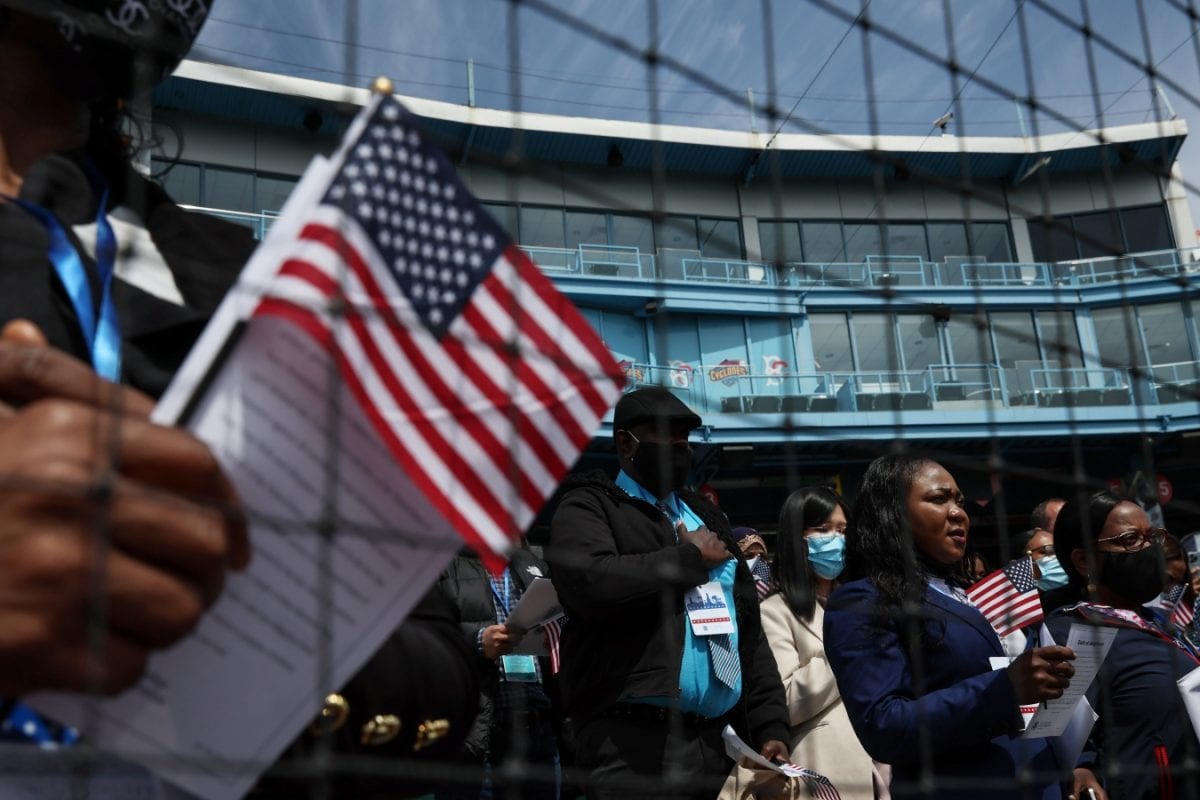
Donald Trump's new policy on obtaining US citizenship includes a toughened requirement on applicants, leaving immigration officials with more leeway to deny applications. Here's the lowdown on the expanded 'good moral character' test, and how it might affect applicants
Ever since Donald Trump took office, tightening immigration rules has been one of his administration's key initiatives. Now, his latest policy change is aimed at those seeking US citizenship, primarily through naturalization.
The US Citizenship and Immigration Services (USCIS) agency has recently updated its naturalization handbook, issuing new guidelines to immigration officials on evaluating applicants' good moral character. The notion of good moral character is a requirement that has long been in the naturalization process. Still, the new guidelines significantly expand the circumstances in which an applicant can be denied, thereby widening the grounds for denial and leaving immigration officials with more leeway to deny applications.
Under the revised rules, officials can now consider instances where someone has ever been convicted of a felony or aggravated felony, which includes various categories of crimes such as murder and sexual abuse. Officials can also deny citizenship if an applicant has been convicted of a controlled substance violation, unless the applicant can prove that it was a single offense of simple possession of 30 grams or less of marijuana.
Moreover, the updated guidelines add a new ground for denial: if an applicant has engaged in sexual abuse of a minor, committed domestic abuse, been involved in gang activity, or received public benefits (with some exceptions). Applicants are also required to prove that they have not engaged in these activities during the statutory period, which weighs up five years (or three if married to a US citizen) immediately preceding the date of their application for naturalization.
Under the new policy, applicants who have served in the military or have been employed in certain public interest positions, such as law enforcement, are at risk of having their applications denied if they fail to meet the good moral character requirement.
While the new guidelines certainly up the ante for citizenship applicants, applicants who have a clean record will not automatically face problems. They still need to pass other requirements and tests, including on-language, history, and civics tests, to become US citizens.
Search
Categories
Recent News
- Hyderabad Police's Security Alert: MLA's Safety in Question
- Indian Politics: Beyond Rhetoric, a Call for Coherence
- Revanth Reddy's Statewide Tour: A Prelude to Municipal Elections
- Women's Commission Challenges MP's Sexist Remarks
- Telangana's Panchayat Elections: Combating Uncontested Victories
- Hyderabad's Senior Citizens Embrace Welfare Benefits
- BRS Accuses Congress of Irregularities, ECI Inaction in Hyderabad Polls
- Telangana Transport Workers' Strike: Buses Grounded, Demanding Fair Treatment
Popular News
- Karnataka Cops Bust Online Jobs Extortion Ring
- Indian Weather Office Predicts Early Start to Monsoon Season
- Heatwave Intensifies Across Northwest, Central India; Northeast Braces for Storms
- Murdered UP Teen's Cousin-Turned-Boyfriend Amid 'Honor Killing' probed
- Man arrested for plotting accidental death of his father