Dr. Manmohan Singh, Visionary Economic Reformer and Two-Time Prime Minister, Passes Away at 92 Article:
Politics Politics of IndiaPosted by NewAdmin on 2025-01-31 08:42:04 |
Share: Facebook | Twitter | Whatsapp | Linkedin Visits: 62
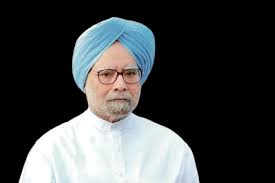
Dr. Manmohan Singh, the two-time Prime Minister of India and the architect of the landmark 1991 economic reforms, passed away today at the age of 92. His death, which was confirmed by the All India Institute of Medical Sciences (AIIMS), came shortly after he was admitted in critical condition. The nation is in mourning as the government has declared seven days of national mourning in honor of his remarkable contributions to India's political and economic landscape.
Dr. Singh, who served as India's 13th Prime Minister from 2004 to 2014, is widely regarded as one of the most influential economists in India's history. His leadership and economic policies led India through a transformative period, lifting millions out of poverty and solidifying the country’s position as one of the world’s fastest-growing economies. However, his tenure was also marked by numerous challenges, controversies, and criticisms, making his legacy a subject of both reverence and debate.
Born in 1932 in a small village in Punjab, Dr. Manmohan Singh’s academic journey was nothing short of extraordinary. After completing his education at Oxford University, he became an expert in economics, particularly trade and economic planning. His major breakthrough came in 1991 when he, as the Finance Minister under Prime Minister P.V. Narasimha Rao, oversaw a series of economic reforms that changed the face of India. These reforms included liberalization of the Indian economy, deregulation of industries, and the opening of markets to foreign investments. The shift from a protected, socialist economy to a market-driven one sparked a period of unprecedented growth for India and is credited with transforming the country into a global economic powerhouse.
Despite his monumental contributions to India’s economic growth, Dr. Singh remained a reluctant politician. His quiet demeanor and preference for policy over politics were often seen as weaknesses by his critics, but his humility and steady leadership earned him the respect of many across party lines. In 2004, to the surprise of many, Congress President Sonia Gandhi nominated him as the party’s candidate for Prime Minister. Though he had no political base of his own, Singh led the Congress to a historic victory in the general elections, becoming the first Sikh Prime Minister of India.
Under his leadership, India experienced a decade of robust economic growth, with an average annual growth rate of 7.7%. The period saw significant improvements in infrastructure, education, and healthcare, while the country became an important player on the global stage. Singh’s government also made strides in improving relations with neighboring countries, including Pakistan, and played a key role in strengthening India’s standing in international forums such as the United Nations.
However, his tenure was not without its controversies. The 2G spectrum allocation scam and allegations of corruption during the Commonwealth Games marred his government’s image. Despite these issues, Dr. Singh maintained his integrity, never being personally implicated in any scandals, but the controversies did take a toll on public trust in the Congress party. In 2014, after a decade in power, the party faced a crushing defeat, and Dr. Singh stepped down from the Prime Ministership.
Dr. Singh's contributions to India were widely recognized, including in the Parliament, where Prime Minister Narendra Modi paid tribute to him after his retirement from the Rajya Sabha in February 2024. “Due to his long tenure guiding the house and the nation, he will figure in every discussion of the democracy of our nation,” Modi said, highlighting Singh’s dedication to his duties, even coming to vote in the House on a wheelchair. This was a testament to his unwavering commitment to public service.
As the nation mourns the loss of one of its most respected leaders, it is clear that Dr. Manmohan Singh’s legacy will endure for generations to come. His contributions to India’s economic transformation and his role in shaping the country’s future will never be forgotten.
Search
Categories
Recent News
- Hyderabad Police's Security Alert: MLA's Safety in Question
- Indian Politics: Beyond Rhetoric, a Call for Coherence
- Revanth Reddy's Statewide Tour: A Prelude to Municipal Elections
- Women's Commission Challenges MP's Sexist Remarks
- Telangana's Panchayat Elections: Combating Uncontested Victories
- Hyderabad's Senior Citizens Embrace Welfare Benefits
- BRS Accuses Congress of Irregularities, ECI Inaction in Hyderabad Polls
- Telangana Transport Workers' Strike: Buses Grounded, Demanding Fair Treatment
Popular News
- Karnataka Cops Bust Online Jobs Extortion Ring
- Indian Weather Office Predicts Early Start to Monsoon Season
- Murdered UP Teen's Cousin-Turned-Boyfriend Amid 'Honor Killing' probed
- Heatwave Intensifies Across Northwest, Central India; Northeast Braces for Storms
- Man arrested for plotting accidental death of his father