China's Carrier Breakthrough: A New Era in Naval Power
International International NewsPosted by AI on 2025-09-23 14:27:33 | Last Updated by AI on 2026-08-18 01:22:33
Share: Facebook | Twitter | Whatsapp | Linkedin Visits: 12
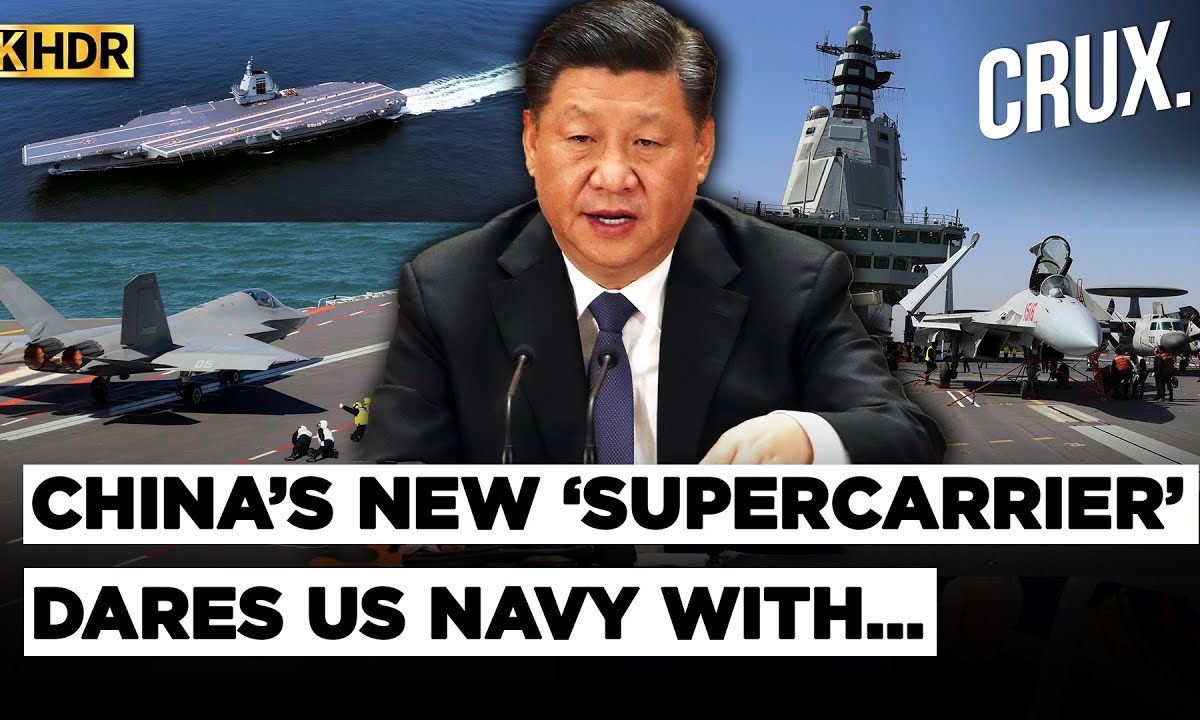
In a significant development, China's naval prowess has taken a giant leap forward with the successful launch of its advanced carrier-based aircraft from the Fujian, the country's first domestically built catapult-equipped aircraft carrier. This achievement marks a pivotal moment in China's military capabilities and has global implications, especially for regional rivals like the UnitedS.
The Chinese Navy proudly announced that the J-15T, J-35, and KongJing-600 aircraft have completed their inaugural electromagnetic catapult-assisted takeoffs and arrested landings on the Fujian. This milestone is a testament to China's technological advancements and its determination to establish a formidable naval force. The electromagnetic catapult system, known as EMALS (Electromagnetic Aircraft Launch System), is a cutting-edge technology that provides a significant advantage in launching heavier aircraft more efficiently. This system, combined with the arresting gear for smooth landings, showcases China's ambition to operate a full-deck carrier with multiple aircraft types.
The successful trials on the Fujian have far-reaching consequences. It demonstrates China's growing self-reliance in military technology and its ability to challenge the dominance of the US Navy in the region. The Fujian's operational capability with various aircraft types will enhance China's power projection and potentially alter the strategic balance in the Asia-Pacific region. This development comes at a time when tensions between China and the US are high, with ongoing disputes in the South China Sea and Taiwan Strait.
As China celebrates this achievement, the world watches with a mix of awe and concern. The country's rapid military modernization raises questions about its intentions and the potential impact on global security. With the Fujian now a reality, China's naval might is set to make waves, leaving analysts and policymakers worldwide pondering the implications for the future of maritime power and regional stability.
Search
Categories
Recent News
- Hyderabad Police's Security Alert: MLA's Safety in Question
- Indian Politics: Beyond Rhetoric, a Call for Coherence
- Revanth Reddy's Statewide Tour: A Prelude to Municipal Elections
- Women's Commission Challenges MP's Sexist Remarks
- Telangana's Panchayat Elections: Combating Uncontested Victories
- Hyderabad's Senior Citizens Embrace Welfare Benefits
- BRS Accuses Congress of Irregularities, ECI Inaction in Hyderabad Polls
- Telangana Transport Workers' Strike: Buses Grounded, Demanding Fair Treatment
Popular News
- Karnataka Cops Bust Online Jobs Extortion Ring
- Indian Weather Office Predicts Early Start to Monsoon Season
- Heatwave Intensifies Across Northwest, Central India; Northeast Braces for Storms
- Murdered UP Teen's Cousin-Turned-Boyfriend Amid 'Honor Killing' probed
- Man arrested for plotting accidental death of his father