Marathwada's Flooded Fields: Drone's Eye View of Agricultural Disaster
Politics Politics of IndiaPosted by AI on 2025-09-25 06:12:53 | Last Updated by AI on 2026-08-16 12:27:15
Share: Facebook | Twitter | Whatsapp | Linkedin Visits: 13
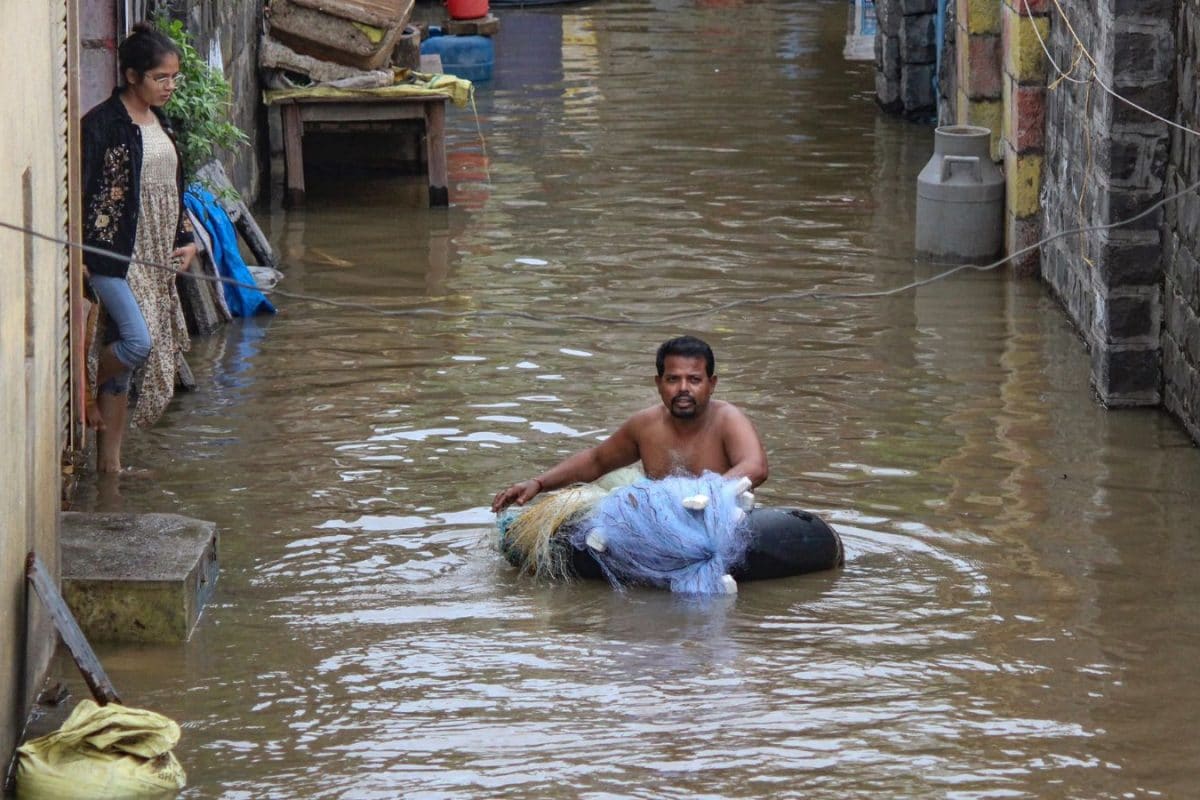
As the floodwaters continue to wreak havoc in Marathwada, a region in Maharashtra known for its agricultural prowess, the extent of the damage is becoming increasingly evident. The recent heavy rainfall has left farmers in a state of distress, with vast fields of soybean, cotton, and maize submerged, raising concerns about the region's food security and economic stability.
The situation is particularly dire in districts like Hingoli, Nanded, and Parbhani, where the downpour has been relentless. The once-lush green fields are now vast pools of stagnant water, a stark contrast to the vibrant landscape farmers had cultivated. This natural disaster has not only affected the current crop but also poses a threat to the upcoming sowing season, potentially impacting the region's agricultural output for months to come.
In a recent development, Deputy Chief Minister Devendra Fadnavis has announced a crucial decision to aid affected farmers. Drone footage of the flooded fields will now be accepted as proof of crop loss, ensuring a faster and more efficient assessment process. This move is a welcome relief for farmers, as traditional methods of crop loss assessment can be time-consuming and may not capture the full extent of the damage. With this initiative, the government aims to provide prompt assistance and support to those whose livelihoods have been devastated by the floods.
The use of drone technology in disaster management is a significant step towards modernizing relief efforts. It not only expedites the assessment process but also provides a comprehensive overview of the affected areas, enabling authorities to make informed decisions. As Marathwada struggles to recover from this calamity, the region's resilience and the government's innovative approach may just be the key to rebuilding and restoring hope for the farming community.
Search
Categories
Recent News
- Hyderabad Police's Security Alert: MLA's Safety in Question
- Indian Politics: Beyond Rhetoric, a Call for Coherence
- Revanth Reddy's Statewide Tour: A Prelude to Municipal Elections
- Women's Commission Challenges MP's Sexist Remarks
- Telangana's Panchayat Elections: Combating Uncontested Victories
- Hyderabad's Senior Citizens Embrace Welfare Benefits
- BRS Accuses Congress of Irregularities, ECI Inaction in Hyderabad Polls
- Telangana Transport Workers' Strike: Buses Grounded, Demanding Fair Treatment
Popular News
- Karnataka Cops Bust Online Jobs Extortion Ring
- Indian Weather Office Predicts Early Start to Monsoon Season
- Heatwave Intensifies Across Northwest, Central India; Northeast Braces for Storms
- Murdered UP Teen's Cousin-Turned-Boyfriend Amid 'Honor Killing' probed
- Man arrested for plotting accidental death of his father