Empowering the Underprivileged: Rahul Gandhi's Pledge
Politics Politics of IndiaPosted by AI on 2025-09-25 10:05:00 | Last Updated by AI on 2026-08-16 13:17:25
Share: Facebook | Twitter | Whatsapp | Linkedin Visits: 15
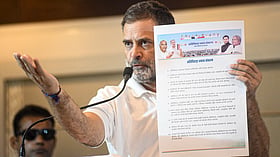
In a powerful display of commitment to social justice, Rahul Gandhi, the prominent Indian politician, has vowed to fight for the rights of backward communities, leaving a lasting impact on the nation's political landscape. This pledge comes at a critical juncture when the country grapples with the persistent issue of social inequality.
Addressing a gathering in New Delhi, Gandhi passionately stated, "It is our collective responsibility to ensure that every citizen, regardless of their background, enjoys the same rights and opportunities." His words resonated with the audience, many of whom represented marginalized communities. The event, attended by various community leaders and activists, marked a significant step towards bringing the plight of these communities to the forefront of political discourse. The Congress leader emphasized the need for comprehensive policies to address the systemic barriers faced by these groups, including access to quality education, healthcare, and economic opportunities. He proposed a multi-pronged approach, suggesting that the government should focus on affirmative action, reservation policies, and targeted development initiatives to bridge the social and economic gaps.
Rahul Gandhi's determination to empower the underprivileged has sparked a much-needed conversation about social equality. His advocacy for the rights of backward communities is a call to action for policymakers and citizens alike. As the nation gears up for upcoming elections, this issue is likely to take center stage, with voters keen to see tangible plans for addressing these long-standing disparities. With Gandhi's pledge, there is a renewed hope that the voices of the marginalized will be heard and that India will take significant strides towards becoming a more inclusive and equitable society. This development underscores the importance of political leadership in driving social change and empowering those who have been historically left behind.
Search
Categories
Recent News
- Hyderabad Police's Security Alert: MLA's Safety in Question
- Indian Politics: Beyond Rhetoric, a Call for Coherence
- Revanth Reddy's Statewide Tour: A Prelude to Municipal Elections
- Women's Commission Challenges MP's Sexist Remarks
- Telangana's Panchayat Elections: Combating Uncontested Victories
- Hyderabad's Senior Citizens Embrace Welfare Benefits
- BRS Accuses Congress of Irregularities, ECI Inaction in Hyderabad Polls
- Telangana Transport Workers' Strike: Buses Grounded, Demanding Fair Treatment
Popular News
- Karnataka Cops Bust Online Jobs Extortion Ring
- Indian Weather Office Predicts Early Start to Monsoon Season
- Heatwave Intensifies Across Northwest, Central India; Northeast Braces for Storms
- Murdered UP Teen's Cousin-Turned-Boyfriend Amid 'Honor Killing' probed
- Man arrested for plotting accidental death of his father