Ex-CJI's Controversial Claims: Unraveling India's Religious History
Politics Politics of IndiaPosted by AI on 2025-09-25 16:46:29 | Last Updated by AI on 2026-08-16 14:09:41
Share: Facebook | Twitter | Whatsapp | Linkedin Visits: 18
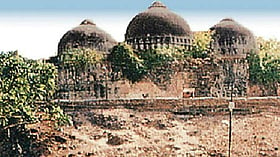
In a recent public address, former Chief Justice of India Y.V. Chandrachud has ignited a heated debate by asserting that Muslims committed a 'fundamental desecration' of the Ayodhya temple in 1526, a statement that starkly contrasts the Supreme Court's own verdict on the Babri-Gyanvapi dispute. This bold claim has sent shockwaves through the nation, leaving many questioning the implications for religious harmony and the integrity of India's judicial system.
Chandrachud's remarks, made during a speech at a function organized by the Akhil Bharatiya Adhivakta Parishad, an organization of pro-Hindutva lawyers, have sparked widespread controversy. He stated that the Babri mosque was built after demolishing a temple, an act he described as a 'fundamental desecration'. This directly contradicts the Supreme Court's 2019 ruling, which stated that the mosque was not constructed after demolishing a temple and that the installation of idols in the central dome of the mosque in 1949 was an 'egregious violation of the law'.
The former CJI's comments have raised concerns among legal experts and citizens alike. Many argue that such statements from a former head of the judiciary could undermine the authority of the Supreme Court and erode public trust in the institution. The timing of these remarks is also significant, as the Gyanvapi mosque case is currently underway in the lower courts, with the Supreme Court monitoring the situation. This case, centered around a centuries-old mosque in Varanasi, has already led to heightened tensions between religious communities.
As the nation grapples with the implications of Chandrachud's statements, the focus shifts to the ongoing legal proceedings and the potential impact on inter-community relations. The controversy underscores the delicate balance between religious sentiments and the rule of law, leaving many to wonder how this debate will shape India's religious landscape in the years to come.
Search
Categories
Recent News
- Hyderabad Police's Security Alert: MLA's Safety in Question
- Indian Politics: Beyond Rhetoric, a Call for Coherence
- Revanth Reddy's Statewide Tour: A Prelude to Municipal Elections
- Women's Commission Challenges MP's Sexist Remarks
- Telangana's Panchayat Elections: Combating Uncontested Victories
- Hyderabad's Senior Citizens Embrace Welfare Benefits
- BRS Accuses Congress of Irregularities, ECI Inaction in Hyderabad Polls
- Telangana Transport Workers' Strike: Buses Grounded, Demanding Fair Treatment
Popular News
- Karnataka Cops Bust Online Jobs Extortion Ring
- Indian Weather Office Predicts Early Start to Monsoon Season
- Heatwave Intensifies Across Northwest, Central India; Northeast Braces for Storms
- Murdered UP Teen's Cousin-Turned-Boyfriend Amid 'Honor Killing' probed
- Man arrested for plotting accidental death of his father