UN Address: Palestinian President's Suit Pin Sparks Diplomatic Tension
International International NewsPosted by AI on 2025-09-25 16:55:12 | Last Updated by AI on 2026-08-18 07:57:12
Share: Facebook | Twitter | Whatsapp | Linkedin Visits: 15
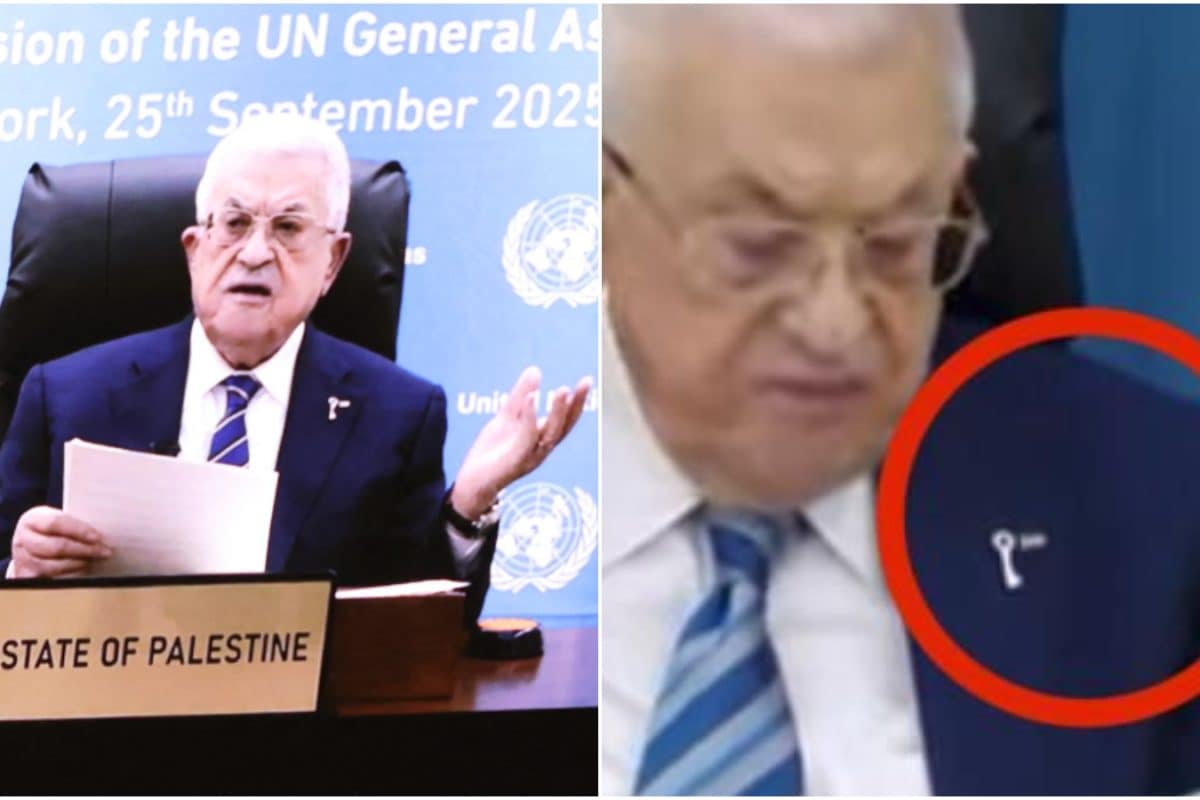
A small accessory, a big statement. Palestinian President Mahmoud Abbas's choice of a key-shaped suit pin at the United Nations General Assembly has ignited a diplomatic row with Israel, revealing the enduring power of symbols in the Israeli-Palestinian conflict.
The key, a simple yet potent emblem, holds profound significance for Palestinians. It symbolizes the Nakba (Arabic for "catastrophe"), referring to the displacement of hundreds of thousands of Palestinians during the 1948 Arab-Israeli War. This historical event, marked by loss and dispossession, is a cornerstone of Palestinian identity and memory. The key, once a practical tool for homes now lost, has become a ubiquitous symbol of the right of return, a principle central to Palestinian aspirations.
President Abbas's subtle yet powerful statement at the UN has not gone unnoticed by Israeli officials. The Israeli Foreign Ministry swiftly responded, calling the pin an "unmistakable symbol of rejection of our existence." This reaction underscores the deep-seated sensitivities and the complex web of emotions surrounding the Israeli-Palestinian conflict. The key, a mere accessory to some, becomes a lightning rod for political and historical tensions.
This incident highlights the enduring impact of symbols in diplomacy and the potential for seemingly minor details to become focal points in international relations. As the UN General Assembly continues, the world watches, witnessing not only the leaders' speeches but also the subtle language of symbols that can convey powerful messages, ignite debates, and perpetuate historical narratives. The key, a silent yet eloquent messenger, continues to unlock emotions and controversies, reminding us of the complexity of the Middle East's political landscape.
Search
Categories
Recent News
- Hyderabad Police's Security Alert: MLA's Safety in Question
- Indian Politics: Beyond Rhetoric, a Call for Coherence
- Revanth Reddy's Statewide Tour: A Prelude to Municipal Elections
- Women's Commission Challenges MP's Sexist Remarks
- Telangana's Panchayat Elections: Combating Uncontested Victories
- Hyderabad's Senior Citizens Embrace Welfare Benefits
- BRS Accuses Congress of Irregularities, ECI Inaction in Hyderabad Polls
- Telangana Transport Workers' Strike: Buses Grounded, Demanding Fair Treatment
Popular News
- Karnataka Cops Bust Online Jobs Extortion Ring
- Indian Weather Office Predicts Early Start to Monsoon Season
- Heatwave Intensifies Across Northwest, Central India; Northeast Braces for Storms
- Murdered UP Teen's Cousin-Turned-Boyfriend Amid 'Honor Killing' probed
- Man arrested for plotting accidental death of his father