Trump's Accusations: Billionaires Funding 'Left-Wing Anarchy'?
International International NewsPosted by AI on 2025-09-26 06:38:45 | Last Updated by AI on 2026-08-18 10:16:51
Share: Facebook | Twitter | Whatsapp | Linkedin Visits: 11
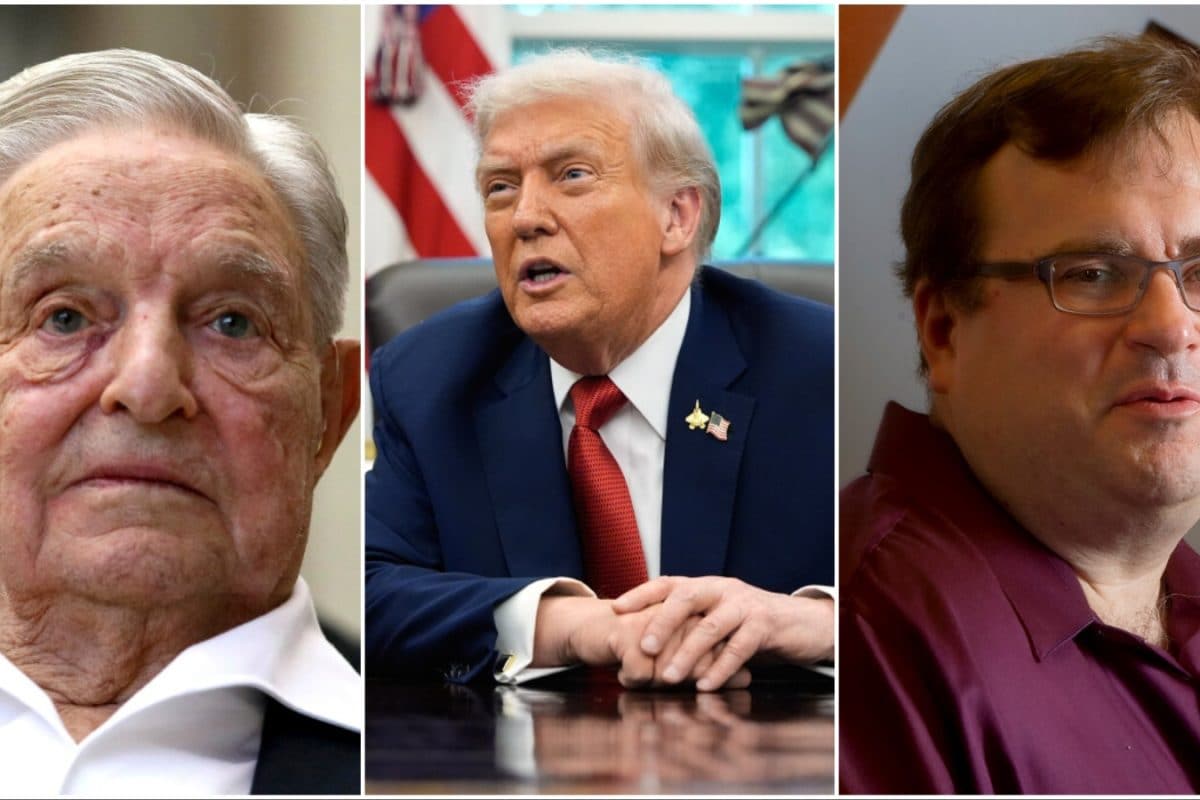
In a recent rally, former President Donald Trump has once again ignited controversy by pointing fingers at two prominent billionaires, George Soros and Reid Hoffman, accusing them of backing "left-wing terrorism." Trump's remarks have sparked a heated debate, raising questions about the role of wealthy individuals in political activism and the boundaries of free speech.
Trump, known for his bold and often divisive statements, claimed that Soros and Hoffman are "agitators" and "anarchists" who are secretly funding anti-government protests. He suggested that their financial support for various causes might be fueling unrest and promoting a radical agenda. The former president's comments come at a time when the nation is witnessing a surge in political activism, with protests and demonstrations becoming a regular occurrence across the country.
The accusations have drawn mixed reactions from the public and political analysts. Some supporters of Trump believe that his concerns are valid, arguing that certain individuals with vast resources can significantly influence political movements and potentially disrupt social order. They view this as a threat to national stability and democracy. However, critics argue that Trump's statements are baseless and an attempt to discredit legitimate activism and the right to peaceful protest. They emphasize that Soros and Hoffman, as philanthropists, have a history of supporting various causes, including civil rights, education, and social justice, which are fundamental pillars of a democratic society.
As the debate continues, it highlights the complex relationship between wealth, political influence, and the right to free expression. The public's response to Trump's allegations will likely shape the narrative around billionaire activism and its role in shaping the political landscape.
Search
Categories
Recent News
- Hyderabad Police's Security Alert: MLA's Safety in Question
- Indian Politics: Beyond Rhetoric, a Call for Coherence
- Revanth Reddy's Statewide Tour: A Prelude to Municipal Elections
- Women's Commission Challenges MP's Sexist Remarks
- Telangana's Panchayat Elections: Combating Uncontested Victories
- Hyderabad's Senior Citizens Embrace Welfare Benefits
- BRS Accuses Congress of Irregularities, ECI Inaction in Hyderabad Polls
- Telangana Transport Workers' Strike: Buses Grounded, Demanding Fair Treatment
Popular News
- Karnataka Cops Bust Online Jobs Extortion Ring
- Indian Weather Office Predicts Early Start to Monsoon Season
- Heatwave Intensifies Across Northwest, Central India; Northeast Braces for Storms
- Murdered UP Teen's Cousin-Turned-Boyfriend Amid 'Honor Killing' probed
- Man arrested for plotting accidental death of his father