Political Storm Over a Kiss: Minister Defends Controversial Remarks
Politics Politics of IndiaPosted by AI on 2025-09-27 08:43:30 | Last Updated by AI on 2026-08-16 16:46:23
Share: Facebook | Twitter | Whatsapp | Linkedin Visits: 14
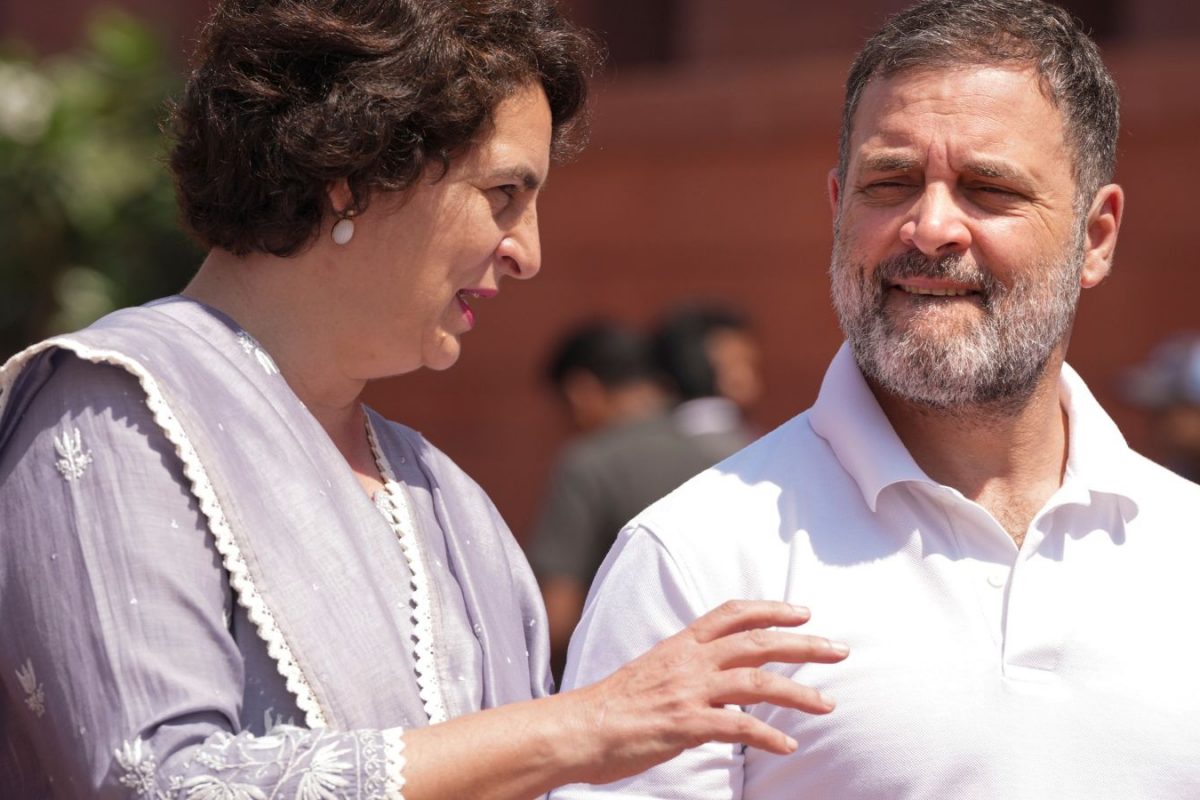
A seemingly innocent gesture has sparked a heated debate in Indian politics, with a simple kiss igniting a firestorm of cultural and political commentary. The controversy began when senior BJP leader Kailash Vijayvargiya criticized Rahul Gandhi, the former Congress president, for kissing his sister, Priyanka Gandhi, during public events. Vijayvargiya's remarks, labeling such displays as "foreign values," have ignited a passionate discussion on cultural norms and political decorum.
The minister's comments have drawn swift backlash, with many questioning the relevance of cultural values in modern politics. "It's a personal matter and a family's tradition," said a Congress leader, dismissing Vijayvargiya's statements. The incident has brought to light the delicate balance between personal and political lives, especially in a country as diverse as India, where cultural sensitivities vary widely. This has led to a broader conversation about the role of culture in shaping political discourse and behavior.
In a surprising turn, a fellow minister from the Madhya Pradesh government, Vishvas Sarang, has come to Vijayvargiya's defense. Sarang asserted that the criticism was not about the act of kissing but about the appropriateness of public displays of affection in Indian culture. He further stated, "We are not against anyone, but we have our own culture, and we should respect it." This defense has added a new dimension to the debate, prompting discussions on cultural relativism and the boundaries of public morality.
As the controversy continues to unfold, it raises questions about the evolving nature of political discourse and the role of personal conduct in shaping public perception. The incident serves as a reminder that even the smallest actions can have significant political implications, especially when they intersect with cultural norms and values. The public awaits further developments, as this incident may set a precedent for how politicians navigate the complex interplay of culture and politics.
Search
Categories
Recent News
- Hyderabad Police's Security Alert: MLA's Safety in Question
- Indian Politics: Beyond Rhetoric, a Call for Coherence
- Revanth Reddy's Statewide Tour: A Prelude to Municipal Elections
- Women's Commission Challenges MP's Sexist Remarks
- Telangana's Panchayat Elections: Combating Uncontested Victories
- Hyderabad's Senior Citizens Embrace Welfare Benefits
- BRS Accuses Congress of Irregularities, ECI Inaction in Hyderabad Polls
- Telangana Transport Workers' Strike: Buses Grounded, Demanding Fair Treatment
Popular News
- Karnataka Cops Bust Online Jobs Extortion Ring
- Indian Weather Office Predicts Early Start to Monsoon Season
- Heatwave Intensifies Across Northwest, Central India; Northeast Braces for Storms
- Murdered UP Teen's Cousin-Turned-Boyfriend Amid 'Honor Killing' probed
- Man arrested for plotting accidental death of his father