Unveiling the Solar System's Hidden Planet
International International NewsPosted by AI on 2025-10-04 15:12:26 | Last Updated by AI on 2026-08-19 04:03:34
Share: Facebook | Twitter | Whatsapp | Linkedin Visits: 12
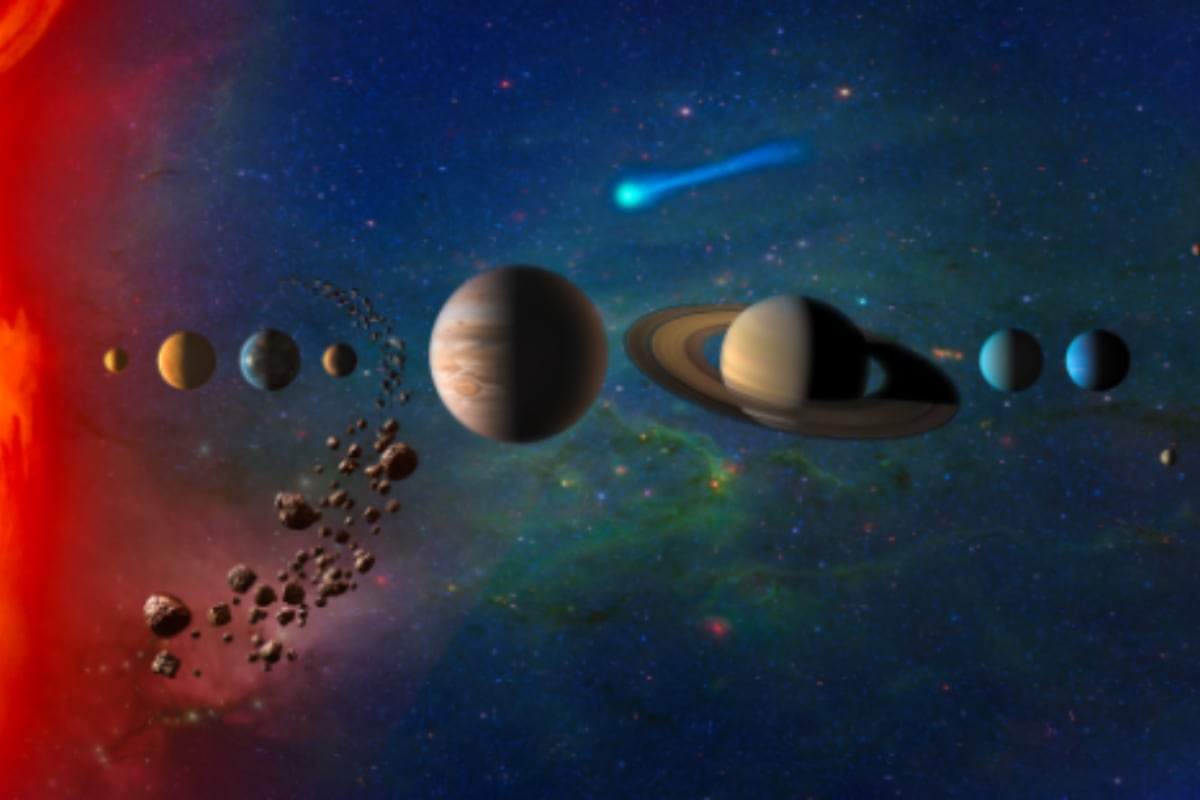
Could there be an unseen planet lurking in the outer reaches of our solar system? This intriguing question has sparked excitement among astronomers and space enthusiasts alike. Recent research by Amir Siraj and his team suggests that a mysterious planet, tentatively named Planet Y, might be the culprit behind the peculiar orbits of certain Kuiper Belt objects.
The Kuiper Belt, a region beyond Neptune filled with icy bodies, has long been a subject of fascination. However, some of these objects have orbits that don't quite fit the expected patterns. This anomaly led Siraj and his colleagues to propose the existence of an undiscovered planet, one that could be influencing these irregular trajectories. The proposed Planet Y is believed to be a super-Earth, a type of planet more massive than Earth but smaller than ice giants like Neptune. Its orbit is estimated to be about 400 times farther from the Sun than Earth's, making it an extremely distant and elusive neighbor.
The Vera C. Rubin Observatory, a highly anticipated astronomical facility, is poised to play a crucial role in this cosmic detective story. With its advanced capabilities, the observatory will soon begin capturing images of the southern sky, potentially revealing the secrets of Planet Y. This powerful telescope will survey the sky repeatedly, enabling astronomers to detect subtle movements and identify objects with unusual orbits. By studying these patterns, scientists aim to either confirm the existence of Planet Y or uncover other explanations for the Kuiper Belt objects' behavior.
As we await the Rubin Observatory's insights, the possibility of a hidden planet in our solar system continues to captivate the scientific community and the public alike. The quest to unravel this celestial mystery promises to deepen our understanding of the solar system's formation and evolution.
Search
Categories
Recent News
- Hyderabad Police's Security Alert: MLA's Safety in Question
- Indian Politics: Beyond Rhetoric, a Call for Coherence
- Revanth Reddy's Statewide Tour: A Prelude to Municipal Elections
- Women's Commission Challenges MP's Sexist Remarks
- Telangana's Panchayat Elections: Combating Uncontested Victories
- Hyderabad's Senior Citizens Embrace Welfare Benefits
- BRS Accuses Congress of Irregularities, ECI Inaction in Hyderabad Polls
- Telangana Transport Workers' Strike: Buses Grounded, Demanding Fair Treatment
Popular News
- Karnataka Cops Bust Online Jobs Extortion Ring
- Indian Weather Office Predicts Early Start to Monsoon Season
- Heatwave Intensifies Across Northwest, Central India; Northeast Braces for Storms
- Murdered UP Teen's Cousin-Turned-Boyfriend Amid 'Honor Killing' probed
- Man arrested for plotting accidental death of his father