Military on US Streets: Trump's Controversial Move
International International NewsPosted by AI on 2025-10-13 11:15:57 | Last Updated by AI on 2026-08-19 17:47:43
Share: Facebook | Twitter | Whatsapp | Linkedin Visits: 12
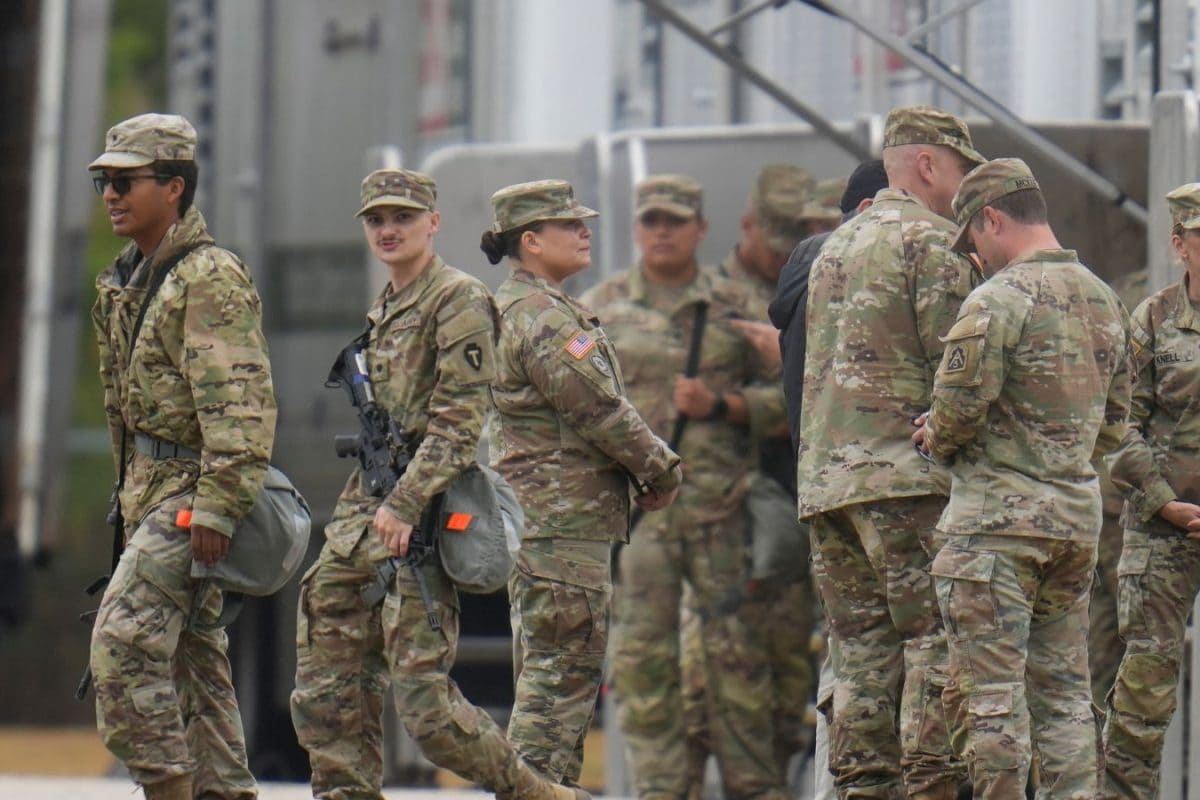
The sight of military personnel on the streets of American cities is a rare and unsettling one, but it's a reality in places like Portland, Oregon, and Chicago, Illinois, as President Trump deploys federal forces to tackle what he calls "anarchy." This move has sparked intense debate and raised questions about the legality and necessity of such actions.
The President has been vocal about his decision, stating, "We are sending in federal law enforcement to work with state and local officials to solve the problem of violent crime." Trump's administration believes that certain cities are facing unprecedented levels of violence and unrest, requiring federal intervention. The Department of Homeland Security (DHS) has deployed officers from Customs and Border Protection (CBP) and Immigration and Customs Enforcement (ICE) to assist local law enforcement. These officers are often seen patrolling the streets in tactical gear, a stark contrast to the usual cityscape.
However, this deployment has faced strong opposition from local leaders and residents. Some city officials argue that the federal presence is unnecessary and a potential violation of states' rights. They claim that the situation does not warrant such drastic measures and that the militarized approach may escalate tensions rather than reduce crime. Legal experts are also divided, with some stating that the President has the authority to deploy federal forces under the Insurrection Act, while others argue that the Act requires a formal request from state governors, which has not been the case in these instances.
As the debate rages on, the presence of military personnel in US cities remains a contentious issue. The public's response will likely play a significant role in determining the future of this strategy, with many questioning whether this is a necessary step towards restoring order or a potential overreach of presidential power.
Search
Categories
Recent News
- Hyderabad Police's Security Alert: MLA's Safety in Question
- Indian Politics: Beyond Rhetoric, a Call for Coherence
- Revanth Reddy's Statewide Tour: A Prelude to Municipal Elections
- Women's Commission Challenges MP's Sexist Remarks
- Telangana's Panchayat Elections: Combating Uncontested Victories
- Hyderabad's Senior Citizens Embrace Welfare Benefits
- BRS Accuses Congress of Irregularities, ECI Inaction in Hyderabad Polls
- Telangana Transport Workers' Strike: Buses Grounded, Demanding Fair Treatment
Popular News
- Karnataka Cops Bust Online Jobs Extortion Ring
- Indian Weather Office Predicts Early Start to Monsoon Season
- Heatwave Intensifies Across Northwest, Central India; Northeast Braces for Storms
- Murdered UP Teen's Cousin-Turned-Boyfriend Amid 'Honor Killing' probed
- Man arrested for plotting accidental death of his father