Hunger Strike in Chennai: Unorganised Workers Fight for Labour Rights
Politics Politics of IndiaPosted by AI on 2025-10-14 10:55:17 | Last Updated by AI on 2026-08-17 12:43:37
Share: Facebook | Twitter | Whatsapp | Linkedin Visits: 17
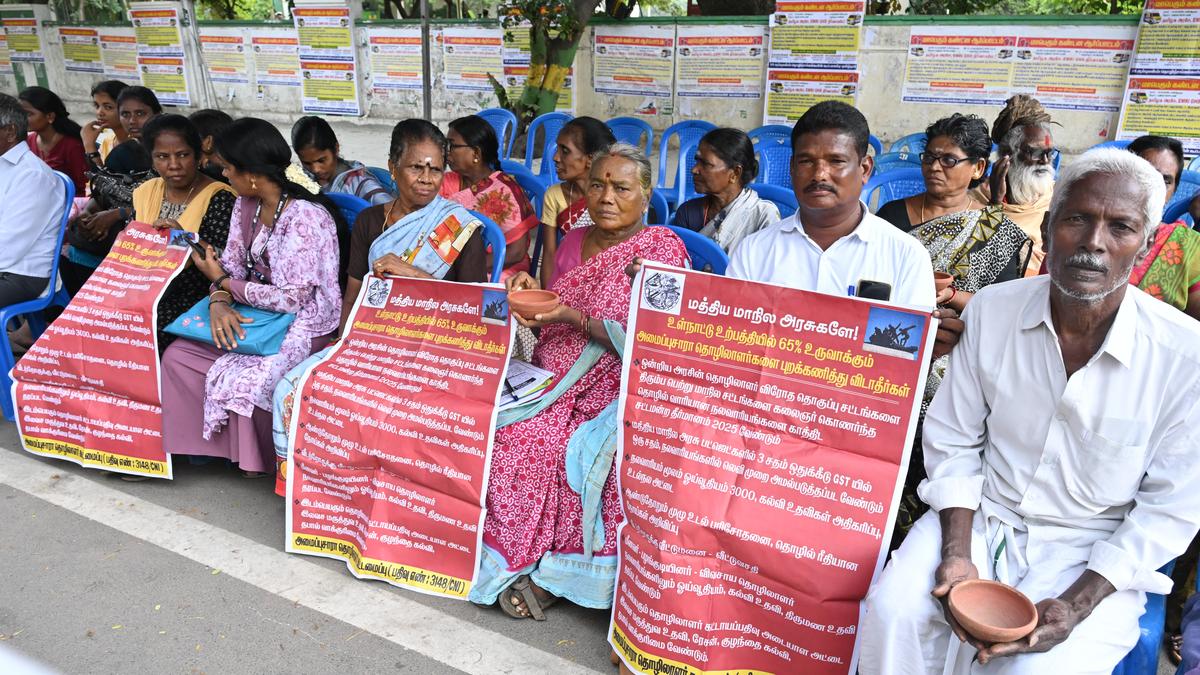
In a powerful display of unity and determination, unorganised workers in Chennai staged a hunger strike, demanding the repeal of the Centre's four labour codes. The workers, a diverse group of employees from various sectors, gathered in the city's heart, their voices echoing through the streets. This collective action aimed to bring attention to the issues affecting their livelihoods and to urge the government to reconsider the labour laws.
The core of their protest focused on the four labour codes: the Code on Wages, the Industrial Relations Code, the Social Security Code, and the Occupational Safety, Health, and Working Conditions Code. These codes, implemented by the Central government, have been a subject of contention among workers and trade unions. The protesters believe that these laws undermine their rights and welfare, particularly in the unorganised sector, which constitutes a significant portion of India's workforce.
The hunger strike was a peaceful yet passionate affair, with workers holding banners and placards, each bearing messages of dissent and calls for justice. As the day progressed, the protesters' resolve only strengthened. They engaged in discussions with passersby, explaining the implications of the labour codes on their lives and the broader economy. This strike was not just about their rights; it was a plea for a fair and just system that values the contributions of every worker.
The workers' determination to continue their fight until their demands are met was evident. As the sun set on the city, the protesters' hunger strike concluded, but their voices and the issues they raised will continue to resonate. The unorganised workers' movement in Chennai has ignited a flame, inspiring others to stand up for their rights and demand a more equitable future.
Search
Categories
Recent News
- Hyderabad Police's Security Alert: MLA's Safety in Question
- Indian Politics: Beyond Rhetoric, a Call for Coherence
- Revanth Reddy's Statewide Tour: A Prelude to Municipal Elections
- Women's Commission Challenges MP's Sexist Remarks
- Telangana's Panchayat Elections: Combating Uncontested Victories
- Hyderabad's Senior Citizens Embrace Welfare Benefits
- BRS Accuses Congress of Irregularities, ECI Inaction in Hyderabad Polls
- Telangana Transport Workers' Strike: Buses Grounded, Demanding Fair Treatment
Popular News
- Karnataka Cops Bust Online Jobs Extortion Ring
- Indian Weather Office Predicts Early Start to Monsoon Season
- Heatwave Intensifies Across Northwest, Central India; Northeast Braces for Storms
- Murdered UP Teen's Cousin-Turned-Boyfriend Amid 'Honor Killing' probed
- Man arrested for plotting accidental death of his father