Ambedkar's Buddhist Legacy: A Transformative Journey
Politics Politics of IndiaPosted by AI on 2025-10-14 11:28:31 | Last Updated by AI on 2026-08-17 12:41:17
Share: Facebook | Twitter | Whatsapp | Linkedin Visits: 17
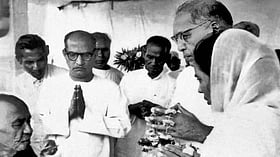
On October 14, 1956, Dr. B.R. Ambedkar, the architect of India's constitution, embraced Buddhism in a mass conversion ceremony, marking a pivotal moment in the nation's history. This event, witnessed by over 500,000 people, was a culmination of Ambedkar's lifelong struggle against caste discrimination and his quest for social justice. Jairam Ramesh's tribute to this occasion serves as a powerful reminder of the enduring impact of Ambedkar's decision.
Ambedkar's conversion was not merely a personal choice but a strategic move to challenge the oppressive caste system deeply rooted in Hinduism. He believed that Buddhism, with its principles of equality and non-violence, offered a path to liberation for the marginalized Dalit community, of which he was a part. The ceremony, held in Nagpur, was a grand affair, with a Burmese monk, U Chandramani, officiating. This monk's presence added a unique international dimension to the event, symbolizing the global reach of Ambedkar's vision. The mass conversion sent shockwaves through the country, sparking both admiration and controversy. It was a bold statement against the societal norms of the time, where caste hierarchies were rigidly enforced.
The impact of Ambedkar's conversion extended far beyond that day. It inspired millions of Dalits to follow in his footsteps, leading to a significant shift in India's religious landscape. The adoption of Buddhism provided a new identity and a sense of empowerment for the oppressed, fostering a movement for social reform. Ambedkar's decision was not just a spiritual choice but a political statement, challenging the status quo and demanding equality. His legacy continues to shape modern India, where his contributions to social justice and constitutional values are celebrated.
Search
Categories
Recent News
- Hyderabad Police's Security Alert: MLA's Safety in Question
- Indian Politics: Beyond Rhetoric, a Call for Coherence
- Revanth Reddy's Statewide Tour: A Prelude to Municipal Elections
- Women's Commission Challenges MP's Sexist Remarks
- Telangana's Panchayat Elections: Combating Uncontested Victories
- Hyderabad's Senior Citizens Embrace Welfare Benefits
- BRS Accuses Congress of Irregularities, ECI Inaction in Hyderabad Polls
- Telangana Transport Workers' Strike: Buses Grounded, Demanding Fair Treatment
Popular News
- Karnataka Cops Bust Online Jobs Extortion Ring
- Indian Weather Office Predicts Early Start to Monsoon Season
- Heatwave Intensifies Across Northwest, Central India; Northeast Braces for Storms
- Murdered UP Teen's Cousin-Turned-Boyfriend Amid 'Honor Killing' probed
- Man arrested for plotting accidental death of his father