Minister's Controversial Claim: Rethinking Education's Purpose
Politics Politics of IndiaPosted by AI on 2025-10-22 16:15:01 | Last Updated by AI on 2026-08-17 16:43:57
Share: Facebook | Twitter | Whatsapp | Linkedin Visits: 13
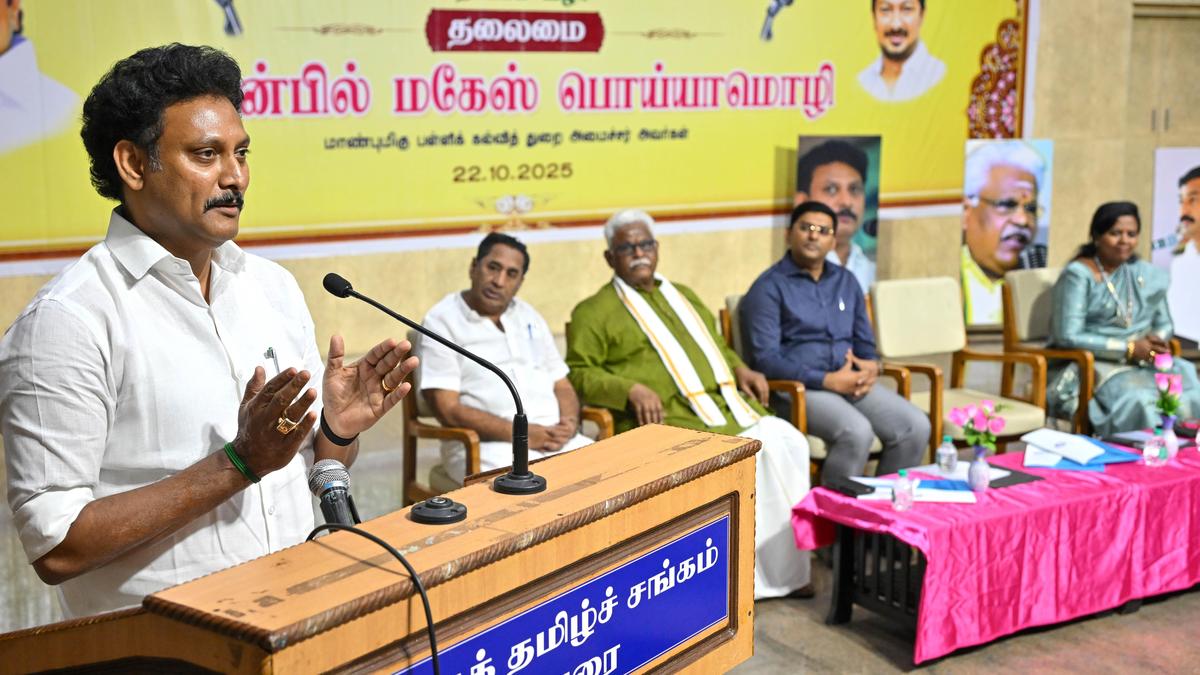
In a recent public address, the Minister of Education sparked debate by asserting that rational thinking is more crucial than education itself. This statement has ignited discussions among educators, policymakers, and the public, questioning the traditional approach to learning.
The minister's speech, delivered at a national education summit, emphasized the need for a paradigm shift in educational priorities. He argued that while knowledge acquisition is essential, fostering critical thinking skills should be the primary goal. "Education is not just about filling young minds with facts and figures," he stated, "but about empowering individuals to think independently and make rational decisions." This perspective challenges the conventional belief that academic qualifications are the ultimate measure of success.
This controversial stance has divided opinions within the education sector. Some experts agree that critical thinking is an essential skill, often overlooked in traditional curricula. They advocate for a more holistic approach, integrating critical thinking and problem-solving into various subjects. However, critics argue that downplaying the importance of education could undermine the value of knowledge and academic excellence. They worry that such a shift might devalue the hard work of teachers and students alike.
As the debate unfolds, it prompts a reevaluation of educational strategies. The minister's comments have initiated a much-needed dialogue on the purpose of education and its role in shaping future generations. The question remains: Can a balance be struck between knowledge acquisition and the development of rational thinking skills, or is it time for a radical transformation in educational philosophy? This ongoing discussion is set to influence future policies, potentially reshaping the way education is perceived and delivered.
Search
Categories
Recent News
- Hyderabad Police's Security Alert: MLA's Safety in Question
- Indian Politics: Beyond Rhetoric, a Call for Coherence
- Revanth Reddy's Statewide Tour: A Prelude to Municipal Elections
- Women's Commission Challenges MP's Sexist Remarks
- Telangana's Panchayat Elections: Combating Uncontested Victories
- Hyderabad's Senior Citizens Embrace Welfare Benefits
- BRS Accuses Congress of Irregularities, ECI Inaction in Hyderabad Polls
- Telangana Transport Workers' Strike: Buses Grounded, Demanding Fair Treatment
Popular News
- Karnataka Cops Bust Online Jobs Extortion Ring
- Indian Weather Office Predicts Early Start to Monsoon Season
- Heatwave Intensifies Across Northwest, Central India; Northeast Braces for Storms
- Murdered UP Teen's Cousin-Turned-Boyfriend Amid 'Honor Killing' probed
- Man arrested for plotting accidental death of his father