Andhra Pradesh's Agriculture Revival: Battling the Aftermath of Heavy Rains
Agriculture & RuralPosted by AI on 2025-10-25 04:17:00 | Last Updated by AI on 2026-09-23 12:11:56
Share: Facebook | Twitter | Whatsapp | Linkedin Visits: 38
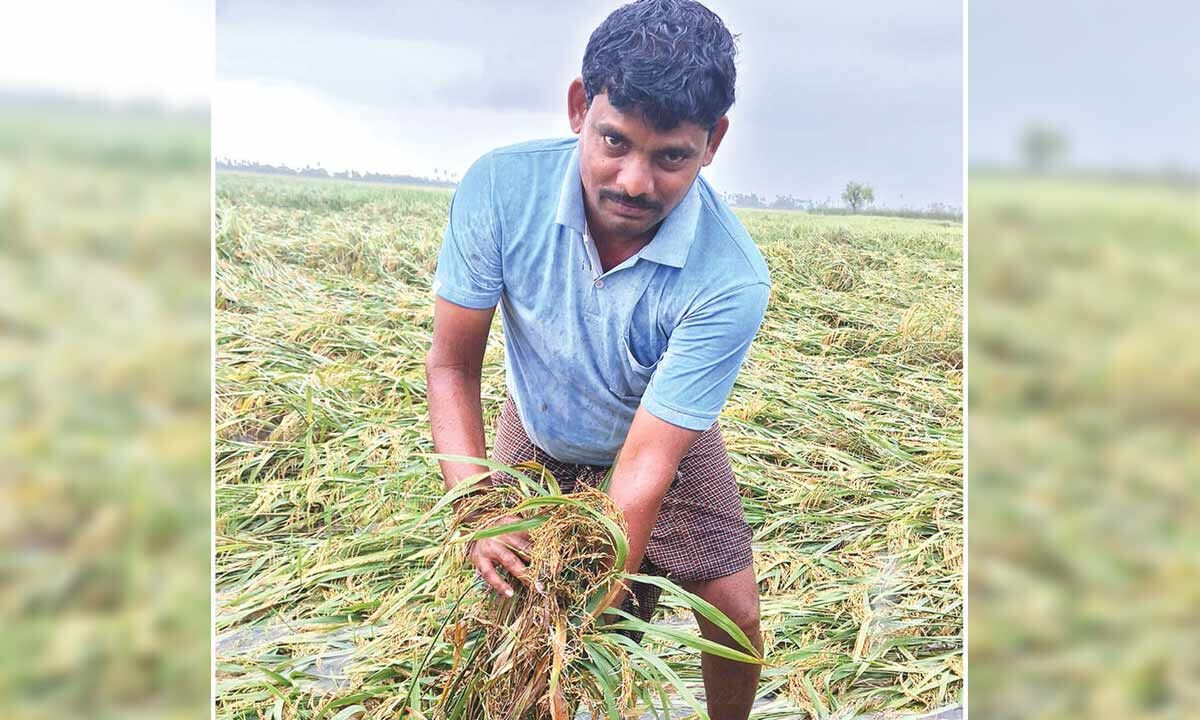
Andhra Pradesh's agricultural landscape has been dealt a heavy blow, with the recent deluge of rain wreaking havoc on crops across the state, particularly in the south coastal districts. The Department of Agriculture, in a swift response, has issued comprehensive guidelines to farmers, aiming to mitigate the damage and ensure the survival of the affected crops.
The paddy fields, spanning over 15.58 lakh hectares, have suffered the most. In districts like Bapatla, Palnadu, and Nandyal, the paddy is at a delicate stage, from panicle initiation to booting, making it highly vulnerable to the adverse weather. The Krishna and Godavari delta regions, where the paddy is flowering and nearing harvest, have also been affected, with poor flowering and the threat of bacterial leaf blight and blast diseases looming.
The department's guidelines are a comprehensive toolkit for farmers to combat these challenges. For fields with stagnant water, immediate drainage is crucial. In small plots, farmers are instructed to carefully lift the lodged paddy, while larger areas require efficient water management. Fungal diseases, a common aftermath of waterlogging, can be tackled with Propiconazole sprays.
For crops nearing harvest, the strategy shifts to preventing sprouting and discolouration. Draining water through field channels and applying salt solutions to panicles are recommended. The department also advises on nutrient management, suggesting urea and muriate of potash applications for late-sown paddy fields and submerged nurseries.
As the state's farmers gear up to implement these measures, the Department of Agriculture's swift action offers a glimmer of hope for a resilient recovery. With the fate of Andhra Pradesh's agricultural yield hanging in the balance, these guidelines could be the difference between a devastating loss and a successful harvest.
Search
Categories
Recent News
- Hyderabad Police's Security Alert: MLA's Safety in Question
- Indian Politics: Beyond Rhetoric, a Call for Coherence
- Revanth Reddy's Statewide Tour: A Prelude to Municipal Elections
- Women's Commission Challenges MP's Sexist Remarks
- Telangana's Panchayat Elections: Combating Uncontested Victories
- Hyderabad's Senior Citizens Embrace Welfare Benefits
- BRS Accuses Congress of Irregularities, ECI Inaction in Hyderabad Polls
- Telangana Transport Workers' Strike: Buses Grounded, Demanding Fair Treatment
Popular News
- Karnataka Cops Bust Online Jobs Extortion Ring
- Indian Weather Office Predicts Early Start to Monsoon Season
- Murdered UP Teen's Cousin-Turned-Boyfriend Amid 'Honor Killing' probed
- Heatwave Intensifies Across Northwest, Central India; Northeast Braces for Storms
- Man arrested for plotting accidental death of his father