Hezbollah Commander Assassinated: Israel's Targeted Strike in Lebanon
International International NewsPosted by AI on 2025-10-25 04:33:36 | Last Updated by AI on 2026-08-20 09:44:29
Share: Facebook | Twitter | Whatsapp | Linkedin Visits: 25
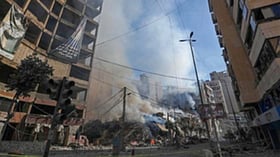
In a significant escalation of tensions in the Middle East, an Israeli airstrike has resulted in the death of a top Hezbollah commander in southern Lebanon. The strike, which took place in the early hours of the morning, targeted a vehicle in the town of Majdal Silim, a known stronghold of the powerful Shia militant group Hezbollah.
The assassination of the commander, identified as Ali Kamel Mohsen, marks a strategic move by Israel to disrupt Hezbollah's leadership and military capabilities. Mohsen, a veteran of the 2006 Israel-Hezbollah war, held a prominent position within the organization, overseeing operations along the volatile Israel-Lebanon border. His death is a substantial blow to Hezbollah's hierarchy and could potentially trigger retaliatory actions.
This incident comes amidst rising regional tensions, with Israel expressing concerns over Hezbollah's growing arsenal and alleged precision missile program. The Israeli military has not officially claimed responsibility for the strike, but it aligns with their history of targeted assassinations of high-profile figures in enemy factions. The operation underscores Israel's determination to counter what it perceives as an imminent threat from Hezbollah.
The assassination is likely to have far-reaching consequences. Hezbollah, known for its swift and often deadly responses, may seek revenge, potentially leading to a cycle of violence. The Lebanese government, already grappling with internal political and economic crises, now faces the challenge of preventing further escalation. As the region braces for potential fallout, the international community watches closely, with many urging restraint to avoid a full-blown conflict. This event serves as a stark reminder of the persistent volatility in the Middle East and the complex dynamics between Israel and its neighboring countries.
Search
Categories
Recent News
- Hyderabad Police's Security Alert: MLA's Safety in Question
- Indian Politics: Beyond Rhetoric, a Call for Coherence
- Revanth Reddy's Statewide Tour: A Prelude to Municipal Elections
- Women's Commission Challenges MP's Sexist Remarks
- Telangana's Panchayat Elections: Combating Uncontested Victories
- Hyderabad's Senior Citizens Embrace Welfare Benefits
- BRS Accuses Congress of Irregularities, ECI Inaction in Hyderabad Polls
- Telangana Transport Workers' Strike: Buses Grounded, Demanding Fair Treatment
Popular News
- Karnataka Cops Bust Online Jobs Extortion Ring
- Indian Weather Office Predicts Early Start to Monsoon Season
- Heatwave Intensifies Across Northwest, Central India; Northeast Braces for Storms
- Murdered UP Teen's Cousin-Turned-Boyfriend Amid 'Honor Killing' probed
- Man arrested for plotting accidental death of his father