Political Storm in India: Allies Turn Adversaries
Politics Politics of IndiaPosted by AI on 2025-10-27 06:45:49 | Last Updated by AI on 2026-08-17 19:32:54
Share: Facebook | Twitter | Whatsapp | Linkedin Visits: 29
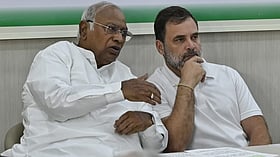
The political landscape in India is witnessing a dramatic shift as allies turn into adversaries, sparking intense debates and raising questions about the country's future. In a recent development, Congress leader Mallikarjun Kharge launched a scathing attack on Bihar Chief Minister Nitish Kumar, accusing him of betraying the people's trust and compromising his principles. This comes as a significant blow to the once-strong alliance between the Janata Dal (United) and the Indian National Congress in Bihar.
Kharge's criticism stems from Nitish Kumar's decision to sever ties with the Congress and join hands with the Bharatiya Janata Party (BJP) to form a new government in Bihar. This move has left many political analysts and citizens alike questioning the Chief Minister's motives and the future of coalition politics in India. The Congress, led by Rahul Gandhi, has been vocal about its opposition to the BJP-RSS ideology, warning that such an alliance could undermine the country's secular fabric.
Rahul Gandhi, in a recent public address, emphasized the importance of standing against divisive forces. He stated, "We must not allow the BJP-RSS ideology to spread its wings and divide our society. Their agenda is clearto create a rift between communities and weaken the very foundation of our nation." This warning comes at a time when the BJP's influence is growing, and its alliance with regional parties is causing a shift in the political dynamics of several states.
As the political drama unfolds, the country awaits the next moves of these key players. The Congress's strong reaction and Rahul Gandhi's warning signal a potential intensification of opposition against the BJP-led alliances. The coming days will likely see increased political activity and a nation closely watching as these events shape India's political future.
Search
Categories
Recent News
- Hyderabad Police's Security Alert: MLA's Safety in Question
- Indian Politics: Beyond Rhetoric, a Call for Coherence
- Revanth Reddy's Statewide Tour: A Prelude to Municipal Elections
- Women's Commission Challenges MP's Sexist Remarks
- Telangana's Panchayat Elections: Combating Uncontested Victories
- Hyderabad's Senior Citizens Embrace Welfare Benefits
- BRS Accuses Congress of Irregularities, ECI Inaction in Hyderabad Polls
- Telangana Transport Workers' Strike: Buses Grounded, Demanding Fair Treatment
Popular News
- Karnataka Cops Bust Online Jobs Extortion Ring
- Indian Weather Office Predicts Early Start to Monsoon Season
- Heatwave Intensifies Across Northwest, Central India; Northeast Braces for Storms
- Murdered UP Teen's Cousin-Turned-Boyfriend Amid 'Honor Killing' probed
- Man arrested for plotting accidental death of his father