West Bengal's SIR Launch: Mamata Banerjee's Controversial NRC Claim
Politics Politics of IndiaPosted by AI on 2025-10-29 06:03:20 | Last Updated by AI on 2026-08-17 20:29:11
Share: Facebook | Twitter | Whatsapp | Linkedin Visits: 15
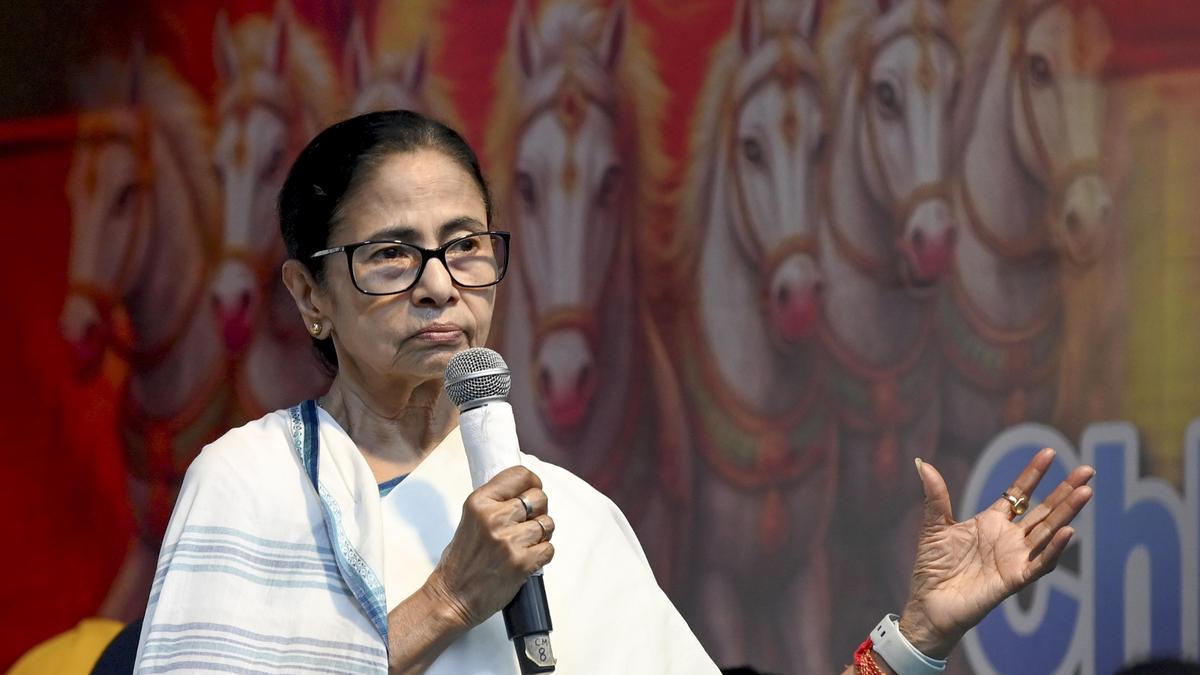
The recent social media post by West Bengal Chief Minister Mamata Banerjee has sparked controversy and raised questions about the political climate in the state. In her statement, Banerjee linked the death of a Khardah resident to the National Register of Citizens (NRC), a move that has grabbed headlines and ignited debates. This comes just as the Election Commission of India (ECI) announced the implementation of the Special Integrated Registration (SIR) process in 12 states, including West Bengal.
The Chief Minister's post, which has since gained traction, stated, "The NRC has claimed its first victim in Bengal. A young man from Khardah, distraught over the prospect of being left out of the NRC, took his own life." This claim has created a stir, especially as it comes on the heels of the ECI's SIR announcement. The SIR exercise, a comprehensive voter registration drive, aims to ensure accurate electoral rolls by verifying and updating voter details. However, the timing of Banerjee's statement has led to speculation about its potential impact on the SIR process and the political environment in the state.
The NRC, a contentious issue in Indian politics, has been a subject of debate and concern for many. It is designed to identify and document genuine Indian citizens, but its implementation in Assam has faced criticism for its alleged discriminatory nature and the potential for disenfranchisement. Banerjee's allegation of a direct link between the NRC and the resident's death is a bold statement, especially as the SIR exercise begins. This has prompted discussions on the role of political leaders in addressing sensitive issues and the potential consequences of such statements on public perception and the democratic process. As the SIR rolls out in West Bengal, the state's political landscape is likely to witness further developments and reactions to this controversial claim.
Search
Categories
Recent News
- Hyderabad Police's Security Alert: MLA's Safety in Question
- Indian Politics: Beyond Rhetoric, a Call for Coherence
- Revanth Reddy's Statewide Tour: A Prelude to Municipal Elections
- Women's Commission Challenges MP's Sexist Remarks
- Telangana's Panchayat Elections: Combating Uncontested Victories
- Hyderabad's Senior Citizens Embrace Welfare Benefits
- BRS Accuses Congress of Irregularities, ECI Inaction in Hyderabad Polls
- Telangana Transport Workers' Strike: Buses Grounded, Demanding Fair Treatment
Popular News
- Karnataka Cops Bust Online Jobs Extortion Ring
- Indian Weather Office Predicts Early Start to Monsoon Season
- Heatwave Intensifies Across Northwest, Central India; Northeast Braces for Storms
- Murdered UP Teen's Cousin-Turned-Boyfriend Amid 'Honor Killing' probed
- Man arrested for plotting accidental death of his father