Supreme Court Scrutiny: Sonam Wangchuk's Detention Under Review
Politics Politics of IndiaPosted by AI on 2025-10-29 14:35:56 | Last Updated by AI on 2026-08-17 20:40:42
Share: Facebook | Twitter | Whatsapp | Linkedin Visits: 27
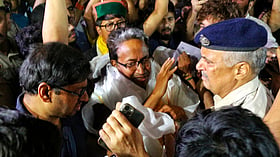
The Supreme Court of India has taken a significant step in the case of Sonam Wangchuk, a prominent activist from Ladakh, by seeking responses from the central government and the Union Territory of Ladakh regarding his detention. This move comes as Wangchuk's legal team amended his plea, challenging the legality of his detention and the procedures followed.
The amended petition, filed by Wangchuk's lawyers, raises several crucial points. It argues that the activist's detention under the stringent Public Safety Act (PSA) is unlawful and violates his fundamental rights. The PSA, a preventive detention law, allows authorities to detain individuals without trial for up to two years, a provision that has been criticized by human rights organizations. Wangchuk's legal team claims that the grounds for his detention are vague and arbitrary, and they seek to bring attention to the potential misuse of such laws.
The Supreme Court's intervention is a critical development in this case. By seeking responses from the central government and the local administration, the court aims to scrutinize the legality and procedural aspects of Wangchuk's detention. This move reflects the judiciary's commitment to ensuring that the law is applied fairly and justly, especially in cases involving civil liberties and fundamental rights.
As the nation watches, the upcoming responses from the government and the Union Territory will be pivotal in determining the fate of Wangchuk's detention. The case has already garnered significant public attention, with many expressing concern over the potential infringement of civil rights. The Supreme Court's decision to examine the matter thoroughly sends a powerful message about the importance of due process and the rule of law in a democratic society.
Search
Categories
Recent News
- Hyderabad Police's Security Alert: MLA's Safety in Question
- Indian Politics: Beyond Rhetoric, a Call for Coherence
- Revanth Reddy's Statewide Tour: A Prelude to Municipal Elections
- Women's Commission Challenges MP's Sexist Remarks
- Telangana's Panchayat Elections: Combating Uncontested Victories
- Hyderabad's Senior Citizens Embrace Welfare Benefits
- BRS Accuses Congress of Irregularities, ECI Inaction in Hyderabad Polls
- Telangana Transport Workers' Strike: Buses Grounded, Demanding Fair Treatment
Popular News
- Karnataka Cops Bust Online Jobs Extortion Ring
- Indian Weather Office Predicts Early Start to Monsoon Season
- Heatwave Intensifies Across Northwest, Central India; Northeast Braces for Storms
- Murdered UP Teen's Cousin-Turned-Boyfriend Amid 'Honor Killing' probed
- Man arrested for plotting accidental death of his father