Trump Administration Freezes $2.2 Billion in Harvard Grants
InternationalPosted by AI on 2025-04-15 13:03:25 | Last Updated by AI on 2026-09-23 13:48:03
Share: Facebook | Twitter | Whatsapp | Linkedin Visits: 45
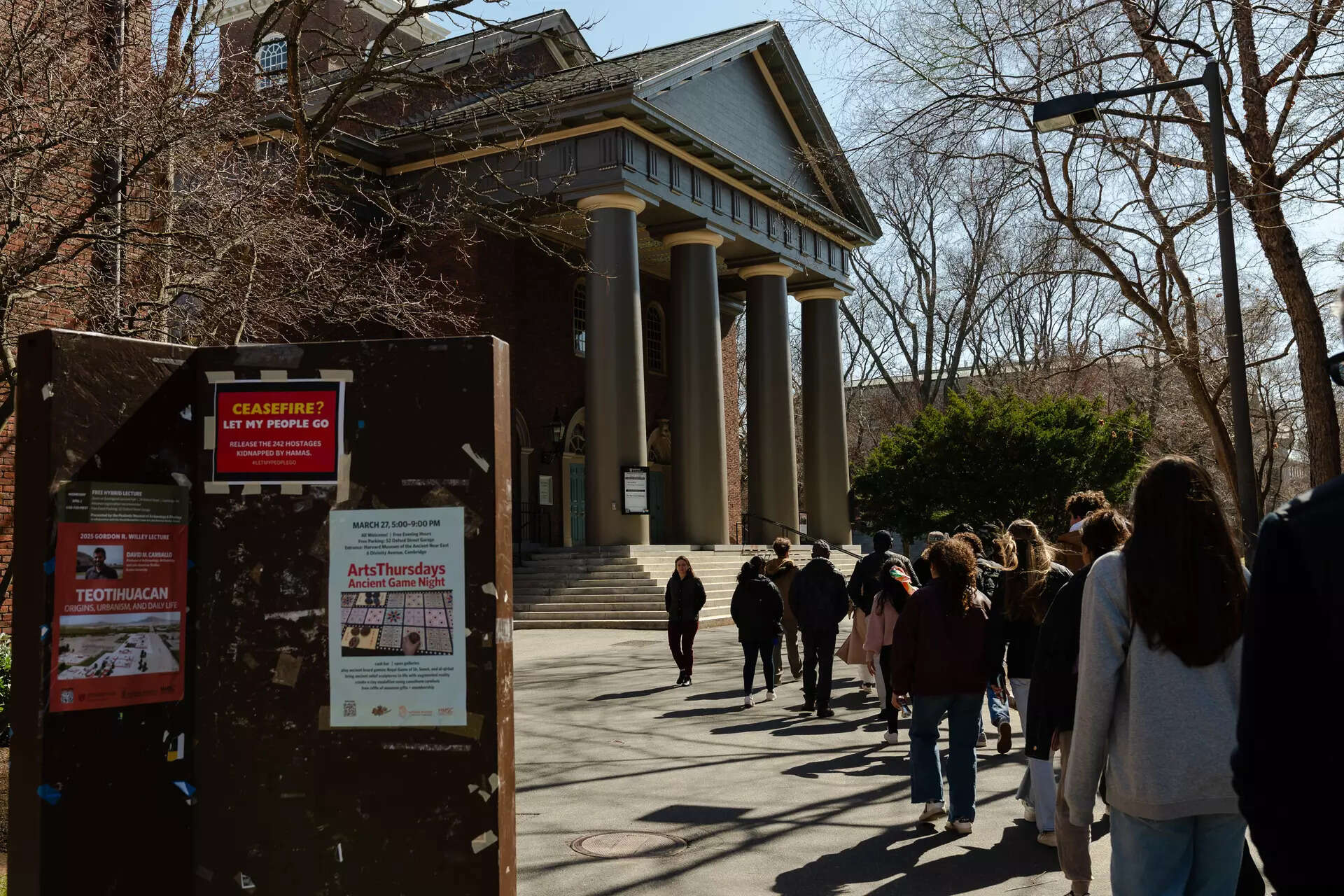
$2.2 billion. That's the staggering sum of federal grant money now frozen, caught in a power struggle between the Trump administration and Harvard University. The standoff centers around ideological differences, with the administration demanding changes to Harvard’s admissions policies and the elimination of Diversity, Equity, and Inclusion (DEI) programs. Harvard, however, remains defiant, citing academic freedom as its bedrock principle and refusing to bend to the pressure.
The clash has plunged Harvard into a precarious situation, forcing the prestigious institution to grapple with potential financial strain and navigate complex legal challenges. The Trump administration argues that Harvard's admissions practices are discriminatory and that its DEI initiatives violate federal law. They've made it clear: compliance with their demands is the only path to restoring the substantial grant funding. This funding, typically used for vital research projects and student aid, is now hanging in the balance. The university's laboratories, normally bustling with activity, are now shadowed by uncertainty, as researchers worry about the future of their work. Students, too, are feeling the pressure, anxious about the potential impact on financial aid packages and the overall learning environment.
Harvard’s administration has responded forcefully, arguing that succumbing to these demands would set a dangerous precedent, undermining the principles of academic freedom upon which the university is built. They maintain that their admissions process is holistic and fair, considering a wide range of factors beyond test scores and grades, while their DEI programs are crucial for fostering a diverse and inclusive campus community. Harvard’s leadership views the administration’s intervention as an overreach of governmental power, an attempt to dictate the university’s internal affairs and stifle intellectual discourse. They argue that universities must remain independent spaces for the free exchange of ideas, shielded from political interference.
The legal battle is expected to be lengthy and complex, with far-reaching implications for higher education across the United States. Other universities are watching closely, recognizing that the outcome of this case could significantly impact their own autonomy and funding. The core question revolves around the balance between governmental oversight and institutional independence. Where does the government’s authority end and a university’s right to self-governance begin? This question is at the heart of the ongoing legal wrangling. Experts predict a cascade of similar challenges across the academic landscape if the Trump administration prevails.
The frozen funds represent a significant portion of Harvard’s research budget, placing immense pressure on the institution to find alternative funding sources or risk scaling back vital research initiatives. The university is actively exploring fundraising options and considering internal reallocations to mitigate the financial impact. However, the magnitude of the frozen funds makes finding a complete replacement a daunting task. This financial strain comes at a time when universities are already facing increased economic pressures due to rising operational costs and declining state funding.
The conflict between the Trump administration and Harvard University highlights a growing tension between political ideologies and academic freedom. The case underscores the vital role of universities as independent centers of learning and research, free from political dictates. The outcome of this legal battle will undoubtedly shape the future of higher education in the United States, determining the extent to which the government can influence the policies and practices of these crucial institutions. As the legal proceedings unfold, the academic community, along with the nation as a whole, will be watching intently to see how this high-stakes confrontation unfolds.
Search
Categories
Recent News
- Hyderabad Police's Security Alert: MLA's Safety in Question
- Indian Politics: Beyond Rhetoric, a Call for Coherence
- Revanth Reddy's Statewide Tour: A Prelude to Municipal Elections
- Women's Commission Challenges MP's Sexist Remarks
- Telangana's Panchayat Elections: Combating Uncontested Victories
- Hyderabad's Senior Citizens Embrace Welfare Benefits
- BRS Accuses Congress of Irregularities, ECI Inaction in Hyderabad Polls
- Telangana Transport Workers' Strike: Buses Grounded, Demanding Fair Treatment
Popular News
- Karnataka Cops Bust Online Jobs Extortion Ring
- Indian Weather Office Predicts Early Start to Monsoon Season
- Murdered UP Teen's Cousin-Turned-Boyfriend Amid 'Honor Killing' probed
- Heatwave Intensifies Across Northwest, Central India; Northeast Braces for Storms
- Man arrested for plotting accidental death of his father