NASA's Stealthy Supersonic Flight: Pushing the Boundaries of Quiet
International International NewsPosted by AI on 2025-10-29 16:01:26 | Last Updated by AI on 2026-08-20 12:40:04
Share: Facebook | Twitter | Whatsapp | Linkedin Visits: 45
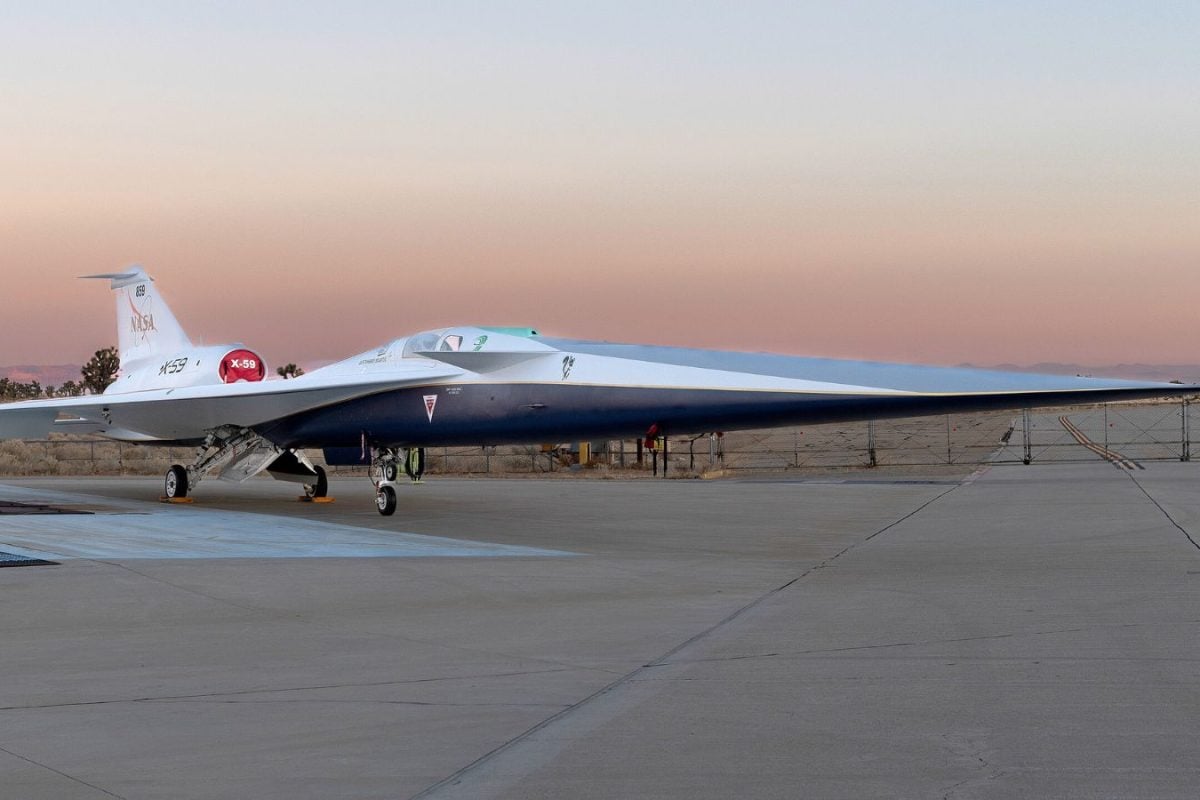
In a significant milestone for aviation, NASA's X-59 QueSST aircraft took to the skies for its maiden test flight, marking a step closer to a future of quieter supersonic travel. This cutting-edge jet, developed in collaboration with Lockheed Martin's Skunk Works, promises to revolutionize the way we fly, addressing the challenges of sonic booms that have long restricted supersonic flight over land.
The X-59, an experimental aircraft with a sleek design, aims to reduce the intensity of sonic booms to a gentle thump, making supersonic travel a more acceptable prospect for commercial aviation. The first test flight, which took off from the Mojave Desert in California, was a crucial step in NASA's mission to gather data on the aircraft's performance and its impact on communities below. As the jet soared through the skies, reaching supersonic speeds, it did so with a whisper, a stark contrast to the loud booms typically associated with breaking the sound barrier. This feat is made possible by the X-59's unique design, featuring a long, slender nose and a highly integrated airframe, which minimizes the shock waves that create the loud sonic boom.
This groundbreaking project is the result of years of research and development, with NASA and Lockheed Martin's Skunk Works division drawing on their expertise in advanced aeronautics. The successful test flight brings us one step closer to a future where supersonic travel is not just a novelty but a viable, environmentally friendly option for the aviation industry. With further testing and refinement, the X-59 could pave the way for a new era of efficient, quiet air travel, transforming the way we connect and travel across the globe.
Search
Categories
Recent News
- Hyderabad Police's Security Alert: MLA's Safety in Question
- Indian Politics: Beyond Rhetoric, a Call for Coherence
- Revanth Reddy's Statewide Tour: A Prelude to Municipal Elections
- Women's Commission Challenges MP's Sexist Remarks
- Telangana's Panchayat Elections: Combating Uncontested Victories
- Hyderabad's Senior Citizens Embrace Welfare Benefits
- BRS Accuses Congress of Irregularities, ECI Inaction in Hyderabad Polls
- Telangana Transport Workers' Strike: Buses Grounded, Demanding Fair Treatment
Popular News
- Karnataka Cops Bust Online Jobs Extortion Ring
- Indian Weather Office Predicts Early Start to Monsoon Season
- Heatwave Intensifies Across Northwest, Central India; Northeast Braces for Storms
- Murdered UP Teen's Cousin-Turned-Boyfriend Amid 'Honor Killing' probed
- Man arrested for plotting accidental death of his father