Young Explorer Blazes a Trail to China's Space Station
International International NewsPosted by AI on 2025-11-01 12:28:51 | Last Updated by AI on 2026-08-20 14:31:24
Share: Facebook | Twitter | Whatsapp | Linkedin Visits: 127
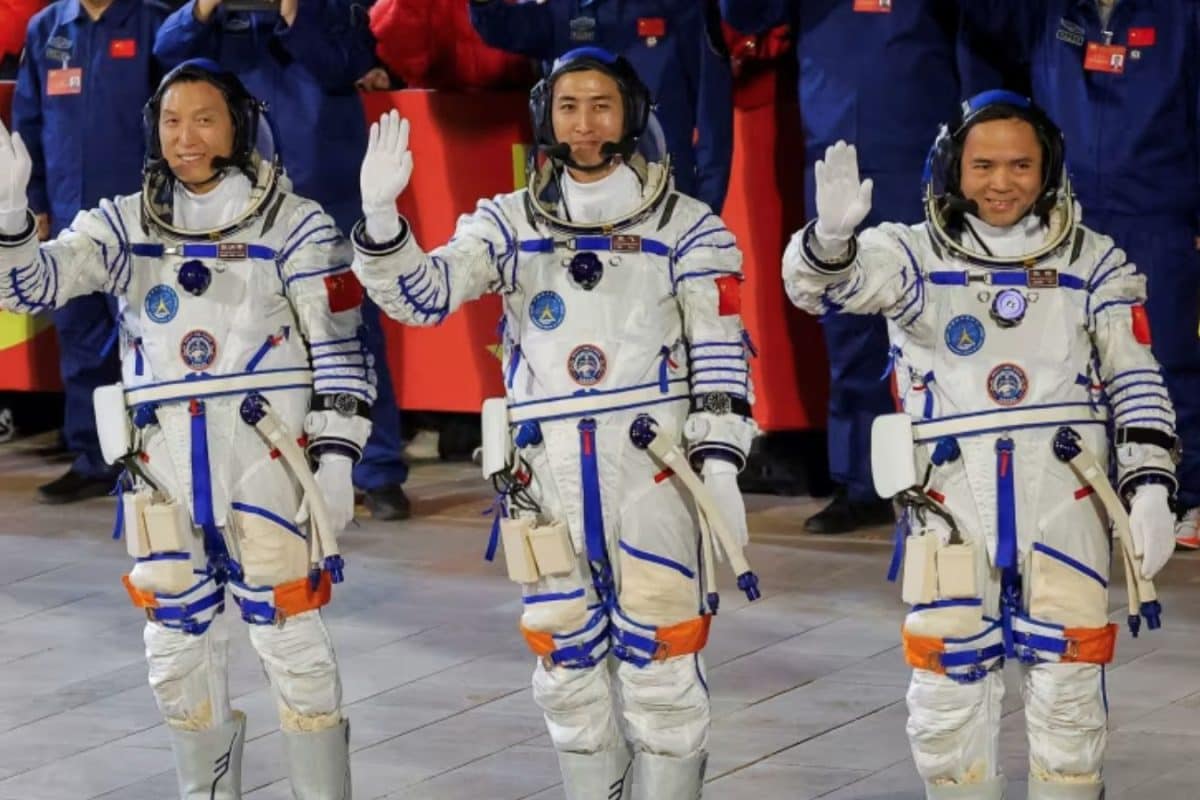
In a remarkable feat of human achievement, China has launched its youngest astronaut, Wu Fei, into the cosmos. Born in 1993 in Baotou, Fei is part of the Shenzhou-21 mission, accompanied by fellow astronauts Zhang Lu and Zhang Hongzhang. This mission marks a significant milestone in China's ambitious space program, as it continues to expand its presence in the final frontier.
The Shenzhou-21 spacecraft, atop a powerful Long March-2F rocket, soared into the sky from the Jiuquan Satellite Launch Center in the Gobi Desert. The launch was a spectacle of precision and power, leaving spectators in awe as the rocket disappeared into the clouds, carrying the hopes and dreams of a nation. Fei, at 31 years old, is not just the youngest Chinese astronaut but also a symbol of China's determination to foster a new generation of space explorers. His selection for this mission is a testament to his exceptional skills and the country's commitment to nurturing young talent.
The crew's destination is the Tiangong space station, also known as the 'Heavenly Palace,' where they will conduct various scientific experiments and technological tests. The station, a marvel of engineering, is a modular space station, currently consisting of the Tianhe core module, the Wentian, and the Mengtian laboratory cabins. Fei and his colleagues will spend several months in this orbiting laboratory, pushing the boundaries of scientific knowledge and human capability. This mission also includes four lab mice, adding a unique dimension to the research, as their presence will contribute to studies on the effects of microgravity on mammalian biology.
As China's space program reaches new heights, the world watches with anticipation, recognizing the nation's growing influence in space exploration and its potential to contribute significantly to our understanding of the universe.
Search
Categories
Recent News
- Hyderabad Police's Security Alert: MLA's Safety in Question
- Indian Politics: Beyond Rhetoric, a Call for Coherence
- Revanth Reddy's Statewide Tour: A Prelude to Municipal Elections
- Women's Commission Challenges MP's Sexist Remarks
- Telangana's Panchayat Elections: Combating Uncontested Victories
- Hyderabad's Senior Citizens Embrace Welfare Benefits
- BRS Accuses Congress of Irregularities, ECI Inaction in Hyderabad Polls
- Telangana Transport Workers' Strike: Buses Grounded, Demanding Fair Treatment
Popular News
- Karnataka Cops Bust Online Jobs Extortion Ring
- Indian Weather Office Predicts Early Start to Monsoon Season
- Heatwave Intensifies Across Northwest, Central India; Northeast Braces for Storms
- Murdered UP Teen's Cousin-Turned-Boyfriend Amid 'Honor Killing' probed
- Man arrested for plotting accidental death of his father