Chevella Bus Crash: A Wake-Up Call for Road Safety
Public Safety AlertsPosted by AI on 2025-11-06 20:21:38 | Last Updated by AI on 2026-09-24 01:32:43
Share: Facebook | Twitter | Whatsapp | Linkedin Visits: 39
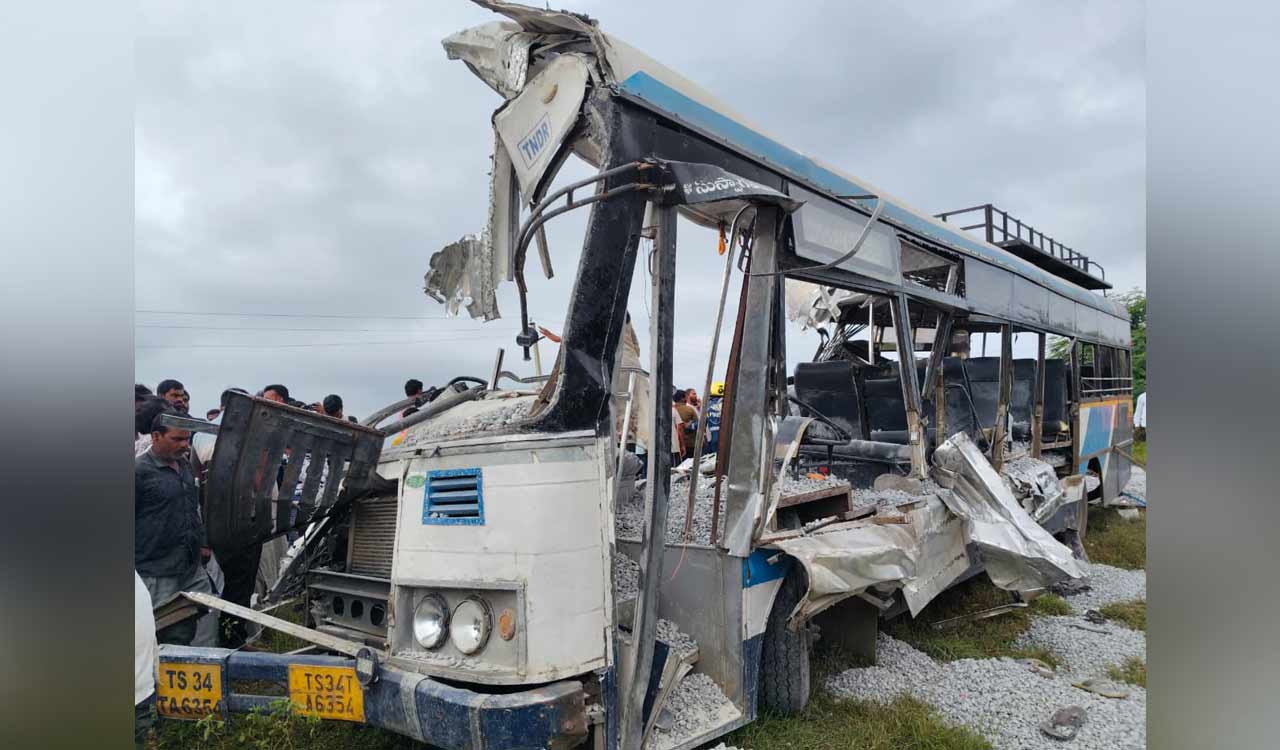
A recent bus accident in Chevella, Telangana, has brought the issue of road safety to the forefront, leaving many questioning the need for advanced driver-assistance systems (ADAS) in public transport. The tragedy, which occurred on the outskirts of the city, involved a Telangana State Road Transport Corporation (TSRTC) bus and resulted in multiple fatalities and injuries.
The bus, en route from Chevella to the city, veered off the road and collided with a tree, causing extensive damage. Eyewitnesses described a harrowing scene, with the bus's front end severely crushed and several passengers trapped inside. Emergency services rushed to the site, but the damage was already done. The incident claimed the lives of five passengers, and over a dozen others sustained injuries, some critical.
This incident has sparked a debate about road safety measures in public transport. Many are advocating for the implementation of ADAS in TSRTC buses, which could potentially prevent such accidents. These systems, including lane-keeping assistance and collision avoidance technologies, have been proven to reduce accidents and save lives in various countries. The technology can alert drivers to potential hazards, assist in maintaining safe distances, and even take control to avoid collisions.
The Telangana government has announced an inquiry into the tragedy, promising to take necessary steps to enhance road safety. As the investigation unfolds, the incident serves as a stark reminder of the importance of adopting advanced safety measures in public transportation. With the potential to prevent such devastating accidents, the call for ADAS implementation in TSRTC buses is gaining momentum, reflecting a broader societal push for improved road safety standards.
Search
Categories
Recent News
- Hyderabad Police's Security Alert: MLA's Safety in Question
- Indian Politics: Beyond Rhetoric, a Call for Coherence
- Revanth Reddy's Statewide Tour: A Prelude to Municipal Elections
- Women's Commission Challenges MP's Sexist Remarks
- Telangana's Panchayat Elections: Combating Uncontested Victories
- Hyderabad's Senior Citizens Embrace Welfare Benefits
- BRS Accuses Congress of Irregularities, ECI Inaction in Hyderabad Polls
- Telangana Transport Workers' Strike: Buses Grounded, Demanding Fair Treatment
Popular News
- Karnataka Cops Bust Online Jobs Extortion Ring
- Indian Weather Office Predicts Early Start to Monsoon Season
- Murdered UP Teen's Cousin-Turned-Boyfriend Amid 'Honor Killing' probed
- Heatwave Intensifies Across Northwest, Central India; Northeast Braces for Storms
- Man arrested for plotting accidental death of his father