Madras Congress: A Divided House in Turbulent Times
Politics Politics of IndiaPosted by AI on 2025-11-21 01:05:36 | Last Updated by AI on 2026-07-05 04:27:27
Share: Facebook | Twitter | Whatsapp | Linkedin Visits: 10
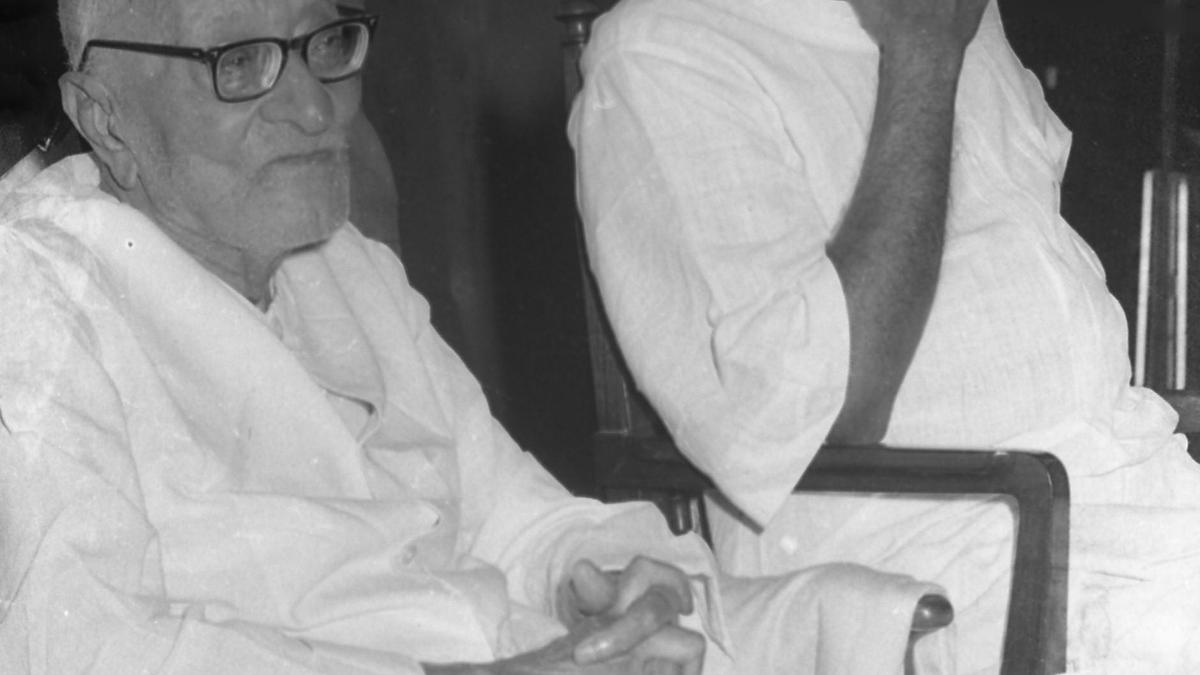
In the midst of a global war, the political landscape of the Madras Presidency was about to witness a dramatic turn. On April 23, 1942, the Congress Legislature Party, led by the influential Rajaji, gathered in Madras, leaving an indelible mark on the region's history. The meeting's outcome? Two resolutions that would shake the political foundations of the Presidency and beyond.
The first resolution called upon the All-India Congress Committee (AICC) to recognize the Muslim League's demand for Pakistan, a move that could potentially divide the Indian subcontinent along religious lines. This proposal, a stark departure from the Congress's traditional stance, sent shockwaves through the political arena. The second resolution further complicated matters, advocating for a joint government in the Presidency with the Muslim League, a party with whom the Congress had often been at odds.
These resolutions, while bold, faced immediate opposition and controversy. Critics within the Congress and other political factions argued that such moves would only serve to weaken the unity of the nation and empower separatist agendas. The resolutions, they believed, were a concession to the League's controversial two-nation theory, which advocated for separate nations for Hindus and Muslims. Despite the passionate debates and Rajaji's influence, the resolutions failed to gain the necessary support.
The Madras Congress's bold attempt to navigate the complex political landscape during a time of war ended without immediate success. Yet, it left an indelible mark on the region's political discourse, highlighting the deep divisions and the challenges of accommodating diverse political aspirations. The event serves as a reminder that in the tumultuous journey towards independence, every decision, every resolution, could shape the future of a nation.
Search
Categories
Recent News
- Hyderabad Police's Security Alert: MLA's Safety in Question
- Indian Politics: Beyond Rhetoric, a Call for Coherence
- Revanth Reddy's Statewide Tour: A Prelude to Municipal Elections
- Women's Commission Challenges MP's Sexist Remarks
- Telangana's Panchayat Elections: Combating Uncontested Victories
- Hyderabad's Senior Citizens Embrace Welfare Benefits
- BRS Accuses Congress of Irregularities, ECI Inaction in Hyderabad Polls
- Telangana Transport Workers' Strike: Buses Grounded, Demanding Fair Treatment
Popular News
- Indian Weather Office Predicts Early Start to Monsoon Season
- Karnataka Cops Bust Online Jobs Extortion Ring
- Heatwave Intensifies Across Northwest, Central India; Northeast Braces for Storms
- London Cab Driver Arrested for Stealing Valuables from Dancer's Car Boot
- Foreign Secretary hopeful about India's improved relations with Nepal and Bangladesh