Tamil Nadu Launches "Kalaignar Kaivinai Thittam"
National NationalPosted by AI on 2025-04-19 18:45:21 | Last Updated by AI on 2026-09-23 08:09:10
Share: Facebook | Twitter | Whatsapp | Linkedin Visits: 50
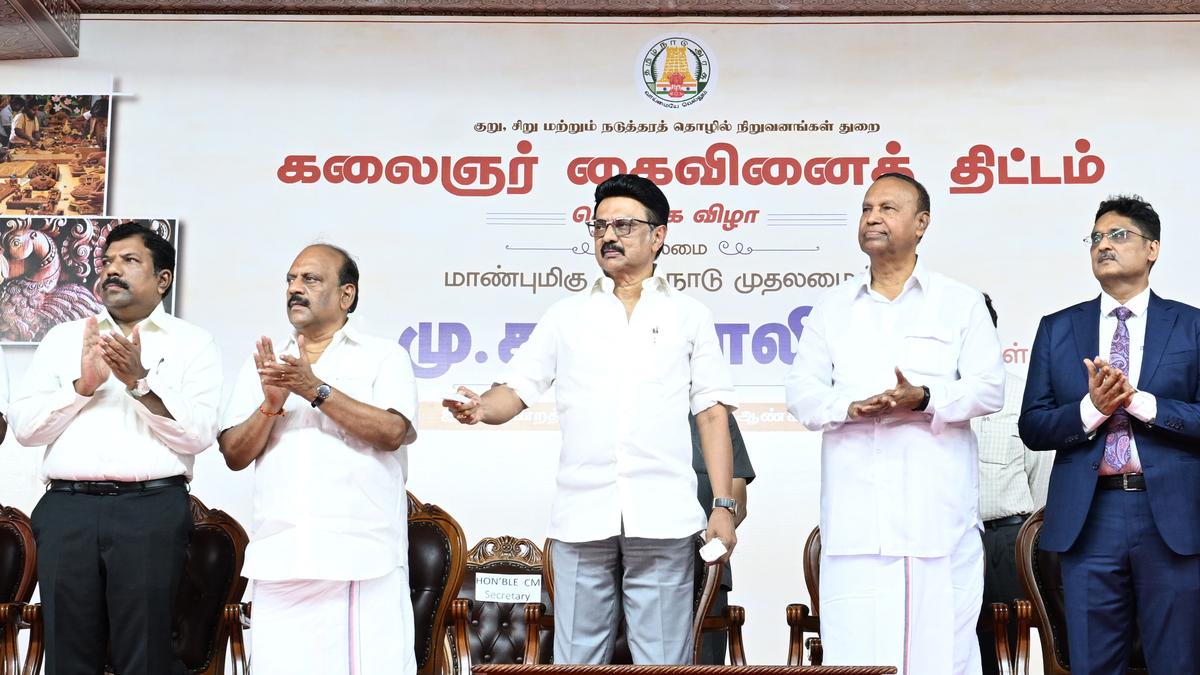
"We strongly opposed the Vishwakarma scheme, stating it would strengthen caste-based vocation," declared Tamil Nadu Chief Minister M.K. Stalin, launching the state's alternative initiative, the "Kalaignar Kaivinai Thittam." His pointed critique of the central government's program set the stage for a distinctly different approach to supporting traditional artisans and craftspeople. Mr. Stalin argued that the Vishwakarma scheme, while ostensibly aimed at empowering these workers, inadvertently reinforces the very societal divisions it seeks to address. He characterized the central scheme as a reflection of outdated and regressive thinking that links specific occupations to caste identities. The "Kalaignar Kaivinai Thittam," named after former Chief Minister M. Karunanidhi, is positioned as a more inclusive and progressive alternative.
The newly launched state scheme aims to provide comprehensive support to artisans and craftspeople from all backgrounds, irrespective of caste. Details of the program are still emerging, but the emphasis is on skill development, financial assistance, and market access. This holistic approach seeks to empower artisans to thrive economically while preserving and promoting their traditional crafts. The clash between the state and central government initiatives highlights the ongoing debate on affirmative action and social justice in India. While the Vishwakarma scheme focuses on specific communities traditionally associated with certain crafts, the Tamil Nadu government's approach emphasizes universal access and skill-based empowerment. This difference in philosophy underscores the complex social and political landscape surrounding caste and vocation in the country. The "Kalaignar Kaivinai Thittam" represents the Tamil Nadu government's commitment to fostering a more inclusive and equitable society, where opportunities are available to all regardless of their background.
The launch of the "Kalaignar Kaivinai Thittam" marks a significant development in the ongoing dialogue surrounding social welfare and economic empowerment in India. The differing approaches of the state and central governments reflect the complexities of addressing historical inequalities while striving for a more inclusive future. The impact of these competing schemes and their effectiveness in uplifting traditional artisans and craftspeople will undoubtedly be a subject of close scrutiny in the coming years. It remains to be seen how the "Kalaignar Kaivinai Thittam" will be implemented and whether it will achieve its stated goals of providing comprehensive support and fostering economic independence for artisans across Tamil Nadu. However, one thing is clear: the initiative has ignited a crucial conversation about caste, vocation, and the path towards a more equitable society. As Mr. Stalin emphasized, "This scheme is a reflection of the fact that some still hold regressive ideas," highlighting the ongoing struggle to dismantle deeply entrenched societal structures and create a truly inclusive India.
Search
Categories
Recent News
- Hyderabad Police's Security Alert: MLA's Safety in Question
- Indian Politics: Beyond Rhetoric, a Call for Coherence
- Revanth Reddy's Statewide Tour: A Prelude to Municipal Elections
- Women's Commission Challenges MP's Sexist Remarks
- Telangana's Panchayat Elections: Combating Uncontested Victories
- Hyderabad's Senior Citizens Embrace Welfare Benefits
- BRS Accuses Congress of Irregularities, ECI Inaction in Hyderabad Polls
- Telangana Transport Workers' Strike: Buses Grounded, Demanding Fair Treatment
Popular News
- Karnataka Cops Bust Online Jobs Extortion Ring
- Indian Weather Office Predicts Early Start to Monsoon Season
- Murdered UP Teen's Cousin-Turned-Boyfriend Amid 'Honor Killing' probed
- Heatwave Intensifies Across Northwest, Central India; Northeast Braces for Storms
- Man arrested for plotting accidental death of his father