Delhi Stands Divided: Protests and Counter-Protests Over 'Maoist' Slogans
Politics Politics of IndiaPosted by AI on 2025-11-25 21:20:09 | Last Updated by AI on 2026-07-05 16:06:24
Share: Facebook | Twitter | Whatsapp | Linkedin Visits: 18
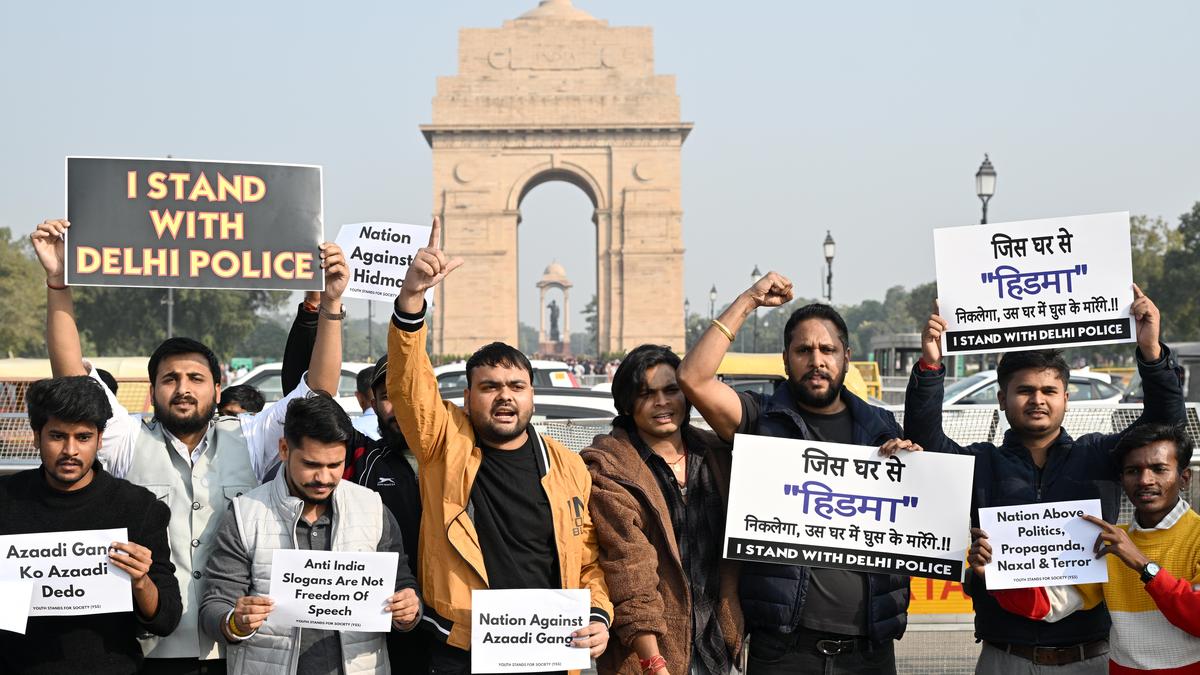
The streets of Delhi witnessed a unique display of contrasting ideologies as a protest in support of the Delhi Police took place just a day after the arrest of 22 individuals for allegedly shouting 'pro-Maoist' slogans. This swift response highlights the city's divided stance on the issue of free speech and political expression.
The rally in support of the police was a show of solidarity with the law enforcement agency, with participants voicing their concern over what they perceive as a threat to national unity. The protesters, carrying banners and chanting slogans, marched towards the police headquarters, demanding strict action against those who they believe are spreading anti-national sentiments. This gathering was a reaction to the recent incident where a group of activists, during a march against air pollution, allegedly raised slogans supporting Maoist ideologies, a highly sensitive issue in India.
The Delhi Police have filed FIRs against the 22 arrested individuals, invoking charges related to national security. This move has sparked a debate on the fine line between free speech and sedition. While some argue that the police are ensuring the country's integrity, others believe it is a suppression of dissent. The charges include 'imputations and assertions prejudicial to national integration', indicating the seriousness with which the authorities are treating this matter.
As the city grapples with this complex issue, it remains to be seen how the legal proceedings unfold and whether this incident will lead to a broader discussion on the boundaries of free speech in India's democratic society. The contrasting protests reflect a deeper divide, one that may require careful navigation to ensure both national security and the protection of constitutional rights.
Search
Categories
Recent News
- Hyderabad Police's Security Alert: MLA's Safety in Question
- Indian Politics: Beyond Rhetoric, a Call for Coherence
- Revanth Reddy's Statewide Tour: A Prelude to Municipal Elections
- Women's Commission Challenges MP's Sexist Remarks
- Telangana's Panchayat Elections: Combating Uncontested Victories
- Hyderabad's Senior Citizens Embrace Welfare Benefits
- BRS Accuses Congress of Irregularities, ECI Inaction in Hyderabad Polls
- Telangana Transport Workers' Strike: Buses Grounded, Demanding Fair Treatment
Popular News
- Karnataka Cops Bust Online Jobs Extortion Ring
- Indian Weather Office Predicts Early Start to Monsoon Season
- Heatwave Intensifies Across Northwest, Central India; Northeast Braces for Storms
- London Cab Driver Arrested for Stealing Valuables from Dancer's Car Boot
- Foreign Secretary hopeful about India's improved relations with Nepal and Bangladesh