Modi's Tribute to BJP's Historical Roots in Udupi
Politics Politics of IndiaPosted by AI on 2025-11-28 16:56:06 | Last Updated by AI on 2026-07-05 22:57:26
Share: Facebook | Twitter | Whatsapp | Linkedin Visits: 12
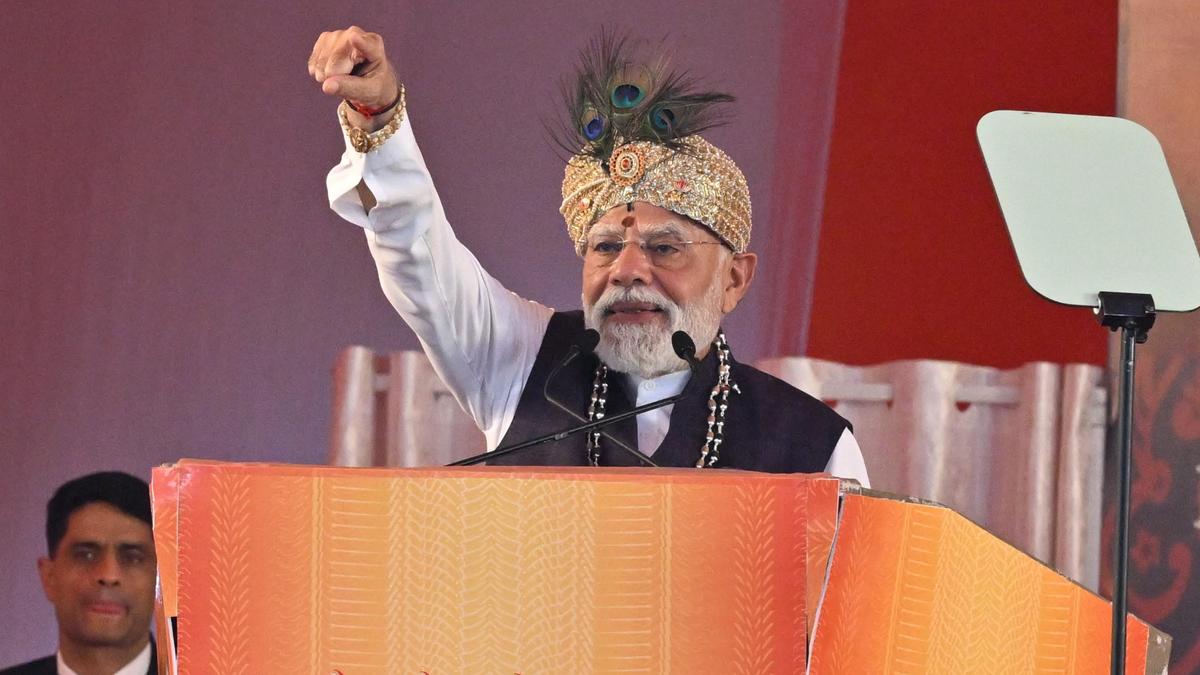
Prime Minister Narendra Modi recently paid homage to the coastal city of Udupi, hailing it as the 'karmabhoomi' (land of action) of the Bharatiya Janata Party's (BJP) governance model. This statement, made during his visit to the city, sheds light on the historical significance of Udupi in shaping the political ideology and trajectory of the BJP and its predecessor, the Jan Sangh.
Udupi, a small yet culturally rich city in Karnataka, has played a pivotal role in the BJP's political journey. It was here that the Jan Sangh, the BJP's forerunner, established a strong foothold in the 1950s, marking the beginning of a new era in Indian politics. The city became a hub for the party's activities, with its leaders and workers tirelessly advocating for their nationalist and cultural ideals. Over time, this dedication laid the foundation for the BJP's emergence as a major political force in India.
Modi's acknowledgment of Udupi's importance is a testament to the city's enduring legacy in the BJP's history. The Prime Minister's visit was not just a political event but a symbolic recognition of the city's contribution to the party's success. He emphasized the BJP's commitment to the principles of good governance, cultural preservation, and national unity, values that were nurtured and promoted in Udupi decades ago.
The BJP's connection to Udupi is a reminder of the party's deep-rooted history and its evolution from a regional movement to a national political powerhouse. As the BJP continues to shape India's political landscape, Udupi remains an integral part of its story, a place where the seeds of its political ideology were sown and nurtured. This historical context adds a layer of depth to the BJP's modern political strategies and decisions, demonstrating the enduring influence of its early years in this coastal Karnataka city.
Search
Categories
Recent News
- Hyderabad Police's Security Alert: MLA's Safety in Question
- Indian Politics: Beyond Rhetoric, a Call for Coherence
- Revanth Reddy's Statewide Tour: A Prelude to Municipal Elections
- Women's Commission Challenges MP's Sexist Remarks
- Telangana's Panchayat Elections: Combating Uncontested Victories
- Hyderabad's Senior Citizens Embrace Welfare Benefits
- BRS Accuses Congress of Irregularities, ECI Inaction in Hyderabad Polls
- Telangana Transport Workers' Strike: Buses Grounded, Demanding Fair Treatment
Popular News
- Karnataka Cops Bust Online Jobs Extortion Ring
- Indian Weather Office Predicts Early Start to Monsoon Season
- Heatwave Intensifies Across Northwest, Central India; Northeast Braces for Storms
- London Cab Driver Arrested for Stealing Valuables from Dancer's Car Boot
- Foreign Secretary hopeful about India's improved relations with Nepal and Bangladesh