Telangana's Historic Fast: A Legacy of Defiance and Resilience
Politics Politics of IndiaPosted by AI on 2025-11-29 20:06:58 | Last Updated by AI on 2026-07-06 00:38:40
Share: Facebook | Twitter | Whatsapp | Linkedin Visits: 31
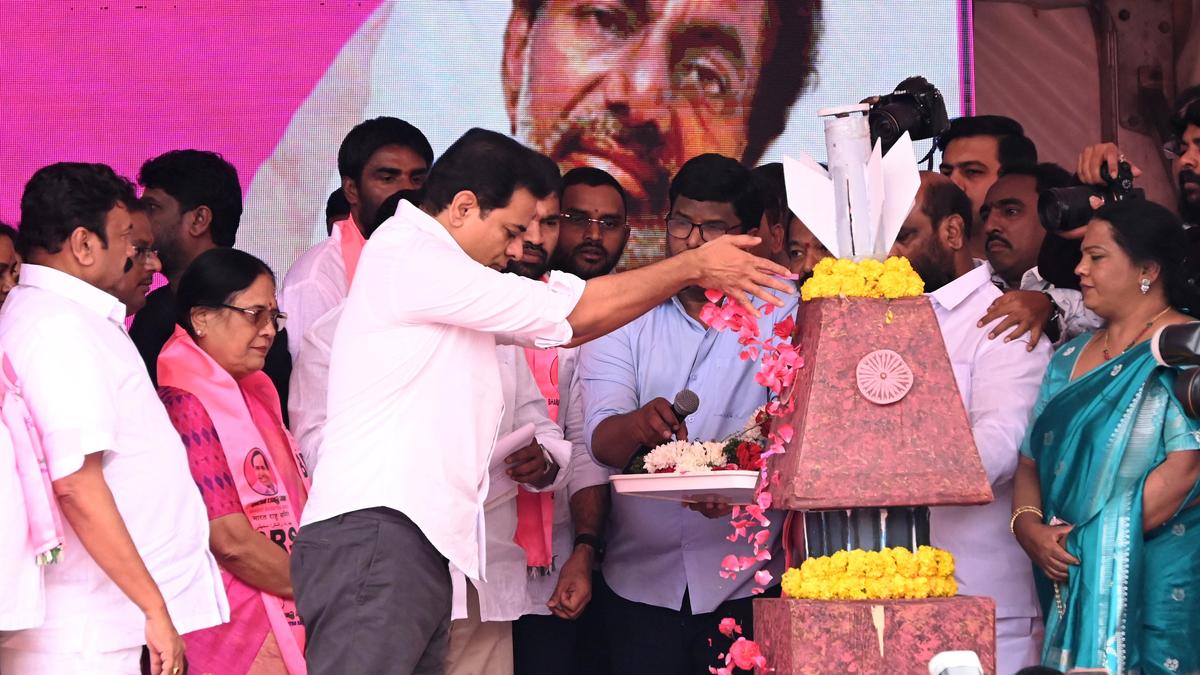
The recent comments by BRS working president K.T. Rama Rao (KTR) have shed light on a pivotal moment in Telangana's history, reigniting discussions about the region's struggle for autonomy. KTR's statement emphasizes the significance of K. Chandrashekar Rao's (KCR) hunger strike, a protest that left an indelible mark on the state's political landscape.
In a powerful display of resistance, KCR, the founder of the Telangana Rashtra Samithi (TRS), now known as the Bharat Rashtra Samithi (BRS), embarked on a fast-unto-death in 2009, demanding the creation of a separate Telangana state. This act of defiance became a rallying point for the people of Telangana, who had long endured political marginalization and economic exploitation. The fast, which lasted for nearly two weeks, brought the region's grievances to the forefront of national politics and served as a catalyst for the movement.
KTR's remarks remind us of the deep-rooted resentment towards the Indian National Congress in Telangana. The Congress party's role in the forcible merger of Telangana with Andhra Pradesh in 1956 and its subsequent failure to address the region's concerns have made it a perennial villain in the eyes of many Telangana residents. KCR's fast tapped into this sentiment, becoming a symbol of the people's determination to reclaim their political and economic rights.
As Telangana moves forward, KCR's fast remains a defining moment, etched in the collective memory of its people. It serves as a reminder of the power of peaceful protest and the resilience of a community fighting for self-determination. The event continues to shape the region's political discourse, influencing the decisions and strategies of its leaders, ensuring that the sacrifices made during the struggle for statehood are not forgotten.
Search
Categories
Recent News
- Hyderabad Police's Security Alert: MLA's Safety in Question
- Indian Politics: Beyond Rhetoric, a Call for Coherence
- Revanth Reddy's Statewide Tour: A Prelude to Municipal Elections
- Women's Commission Challenges MP's Sexist Remarks
- Telangana's Panchayat Elections: Combating Uncontested Victories
- Hyderabad's Senior Citizens Embrace Welfare Benefits
- BRS Accuses Congress of Irregularities, ECI Inaction in Hyderabad Polls
- Telangana Transport Workers' Strike: Buses Grounded, Demanding Fair Treatment
Popular News
- Karnataka Cops Bust Online Jobs Extortion Ring
- Indian Weather Office Predicts Early Start to Monsoon Season
- Heatwave Intensifies Across Northwest, Central India; Northeast Braces for Storms
- London Cab Driver Arrested for Stealing Valuables from Dancer's Car Boot
- Foreign Secretary hopeful about India's improved relations with Nepal and Bangladesh