JNU Student Polls Halted Amid Security Concerns
Politics Politics of IndiaPosted by AI on 2025-04-22 13:16:42 | Last Updated by AI on 2026-09-23 17:12:45
Share: Facebook | Twitter | Whatsapp | Linkedin Visits: 51
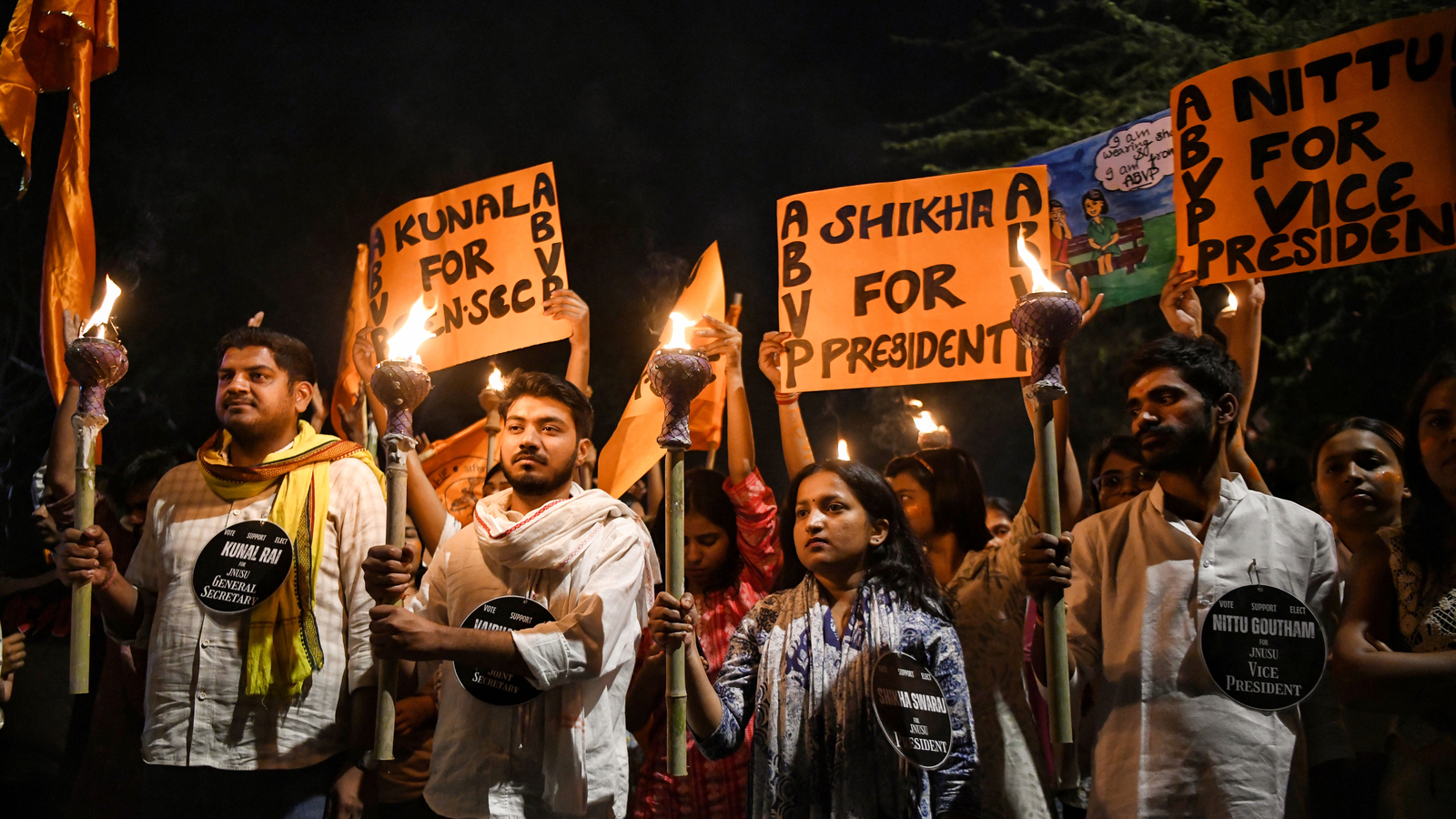
Have Jawaharlal Nehru University (JNU) student elections become too volatile? The university's election committee has taken the drastic step of suspending the entire polling process, citing a "serious breakdown in campus security" and a hostile environment. This unprecedented move throws the future of student representation at the prestigious institution into uncertainty.
The election committee's decision comes after reports of escalating tensions and potential security breaches on the JNU campus. While the specifics of these incidents remain unclear, the committee's statement paints a picture of a campus environment deemed unsafe for conducting free and fair elections. The gravity of the situation is underscored by the decision to halt the entire process rather than address individual incidents. This raises serious questions about the underlying issues that have led to such a breakdown in campus security.
The JNU student union elections have historically been a vibrant expression of student political engagement. Known for their passionate debates and strong ideological affiliations, the elections often serve as a microcosm of national political discourse. However, in recent years, these elections have also been marred by controversies and occasional disruptions. The current situation represents a significant escalation, potentially signaling a deeper malaise within the campus community.
The election committee's demand for police protection further highlights the perceived threat to the electoral process. It suggests that the internal security mechanisms within the university are considered insufficient to maintain order and ensure the safety of students participating in the elections. The involvement of external law enforcement agencies in campus affairs is often a contentious issue, raising concerns about academic freedom and institutional autonomy. However, the committee's request indicates a belief that police presence is necessary to restore a sense of security and allow the elections to proceed.
The suspension of the JNU student union elections throws the future of student representation into question. It remains unclear when, or if, the elections will be rescheduled. The university administration faces the difficult task of addressing the underlying security concerns and creating an environment conducive to free and fair elections. This will require a concerted effort to foster dialogue, de-escalate tensions, and rebuild trust within the campus community. The broader implications of this situation extend beyond JNU, raising concerns about the state of student politics and the challenges of maintaining a peaceful and democratic environment on university campuses across the country. The next steps taken by the JNU administration, the student body, and law enforcement agencies will be critical in determining the future of student representation at the university and setting a precedent for handling similar situations elsewhere.
Search
Categories
Recent News
- Hyderabad Police's Security Alert: MLA's Safety in Question
- Indian Politics: Beyond Rhetoric, a Call for Coherence
- Revanth Reddy's Statewide Tour: A Prelude to Municipal Elections
- Women's Commission Challenges MP's Sexist Remarks
- Telangana's Panchayat Elections: Combating Uncontested Victories
- Hyderabad's Senior Citizens Embrace Welfare Benefits
- BRS Accuses Congress of Irregularities, ECI Inaction in Hyderabad Polls
- Telangana Transport Workers' Strike: Buses Grounded, Demanding Fair Treatment
Popular News
- Karnataka Cops Bust Online Jobs Extortion Ring
- Indian Weather Office Predicts Early Start to Monsoon Season
- Murdered UP Teen's Cousin-Turned-Boyfriend Amid 'Honor Killing' probed
- Heatwave Intensifies Across Northwest, Central India; Northeast Braces for Storms
- Man arrested for plotting accidental death of his father