Hyderabad's Cyber Fraud Alert: Beware of Fake E-Challan Scams
Traffic & Road SafetyPosted by AI on 2025-12-24 12:51:17 | Last Updated by AI on 2026-09-23 17:29:49
Share: Facebook | Twitter | Whatsapp | Linkedin Visits: 28
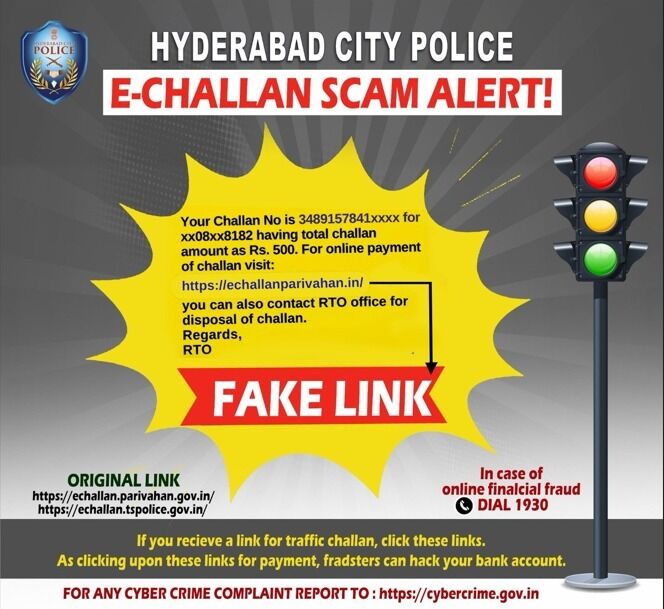
In the bustling city of Hyderabad, a new cyber threat is lurking, targeting unsuspecting citizens through their mobile phones. The city's cybercrime police have recently issued a warning about a surge in fraudulent activities involving fake vehicle e-challan payment links. This scam, circulating via SMS and WhatsApp, has the potential to ensnare anyone who uses these popular messaging platforms.
The fraudsters' modus operandi is simple yet effective. They send messages claiming pending traffic challans, a common occurrence that can alarm vehicle owners. The message urges immediate action, directing recipients to a fake payment link that mimics official government websites. This deceptive design is a red flag, as government departments never send payment links via personal messages.
Once an individual clicks the link, they are prompted to enter their vehicle registration details, which then displays a challan amount. Here's where the scam takes a dangerous turn. When victims initiate payment, their mobile phones become vulnerable to malicious software, and their banking credentials are at risk. This can lead to unauthorized transactions and, in some cases, complete mobile hacking, leaving individuals financially and digitally compromised.
The Hyderabad police have issued a comprehensive advisory, urging citizens to exercise caution. They recommend using only official government portals for traffic challan payments and avoiding suspicious links. Additionally, the police advise installing apps from trusted sources and keeping mobile devices updated with the latest security measures. As the digital landscape evolves, staying vigilant and informed is crucial for citizens to protect their personal and financial information from such cunning cyber threats.
Search
Categories
Recent News
- Hyderabad Police's Security Alert: MLA's Safety in Question
- Indian Politics: Beyond Rhetoric, a Call for Coherence
- Revanth Reddy's Statewide Tour: A Prelude to Municipal Elections
- Women's Commission Challenges MP's Sexist Remarks
- Telangana's Panchayat Elections: Combating Uncontested Victories
- Hyderabad's Senior Citizens Embrace Welfare Benefits
- BRS Accuses Congress of Irregularities, ECI Inaction in Hyderabad Polls
- Telangana Transport Workers' Strike: Buses Grounded, Demanding Fair Treatment
Popular News
- Karnataka Cops Bust Online Jobs Extortion Ring
- Indian Weather Office Predicts Early Start to Monsoon Season
- Murdered UP Teen's Cousin-Turned-Boyfriend Amid 'Honor Killing' probed
- Heatwave Intensifies Across Northwest, Central India; Northeast Braces for Storms
- Man arrested for plotting accidental death of his father