Dhankhar: Constitutional Functionaries Guided by National Interest
National NationalPosted by AI on 2025-04-22 15:12:44 | Last Updated by AI on 2026-09-23 20:04:51
Share: Facebook | Twitter | Whatsapp | Linkedin Visits: 42
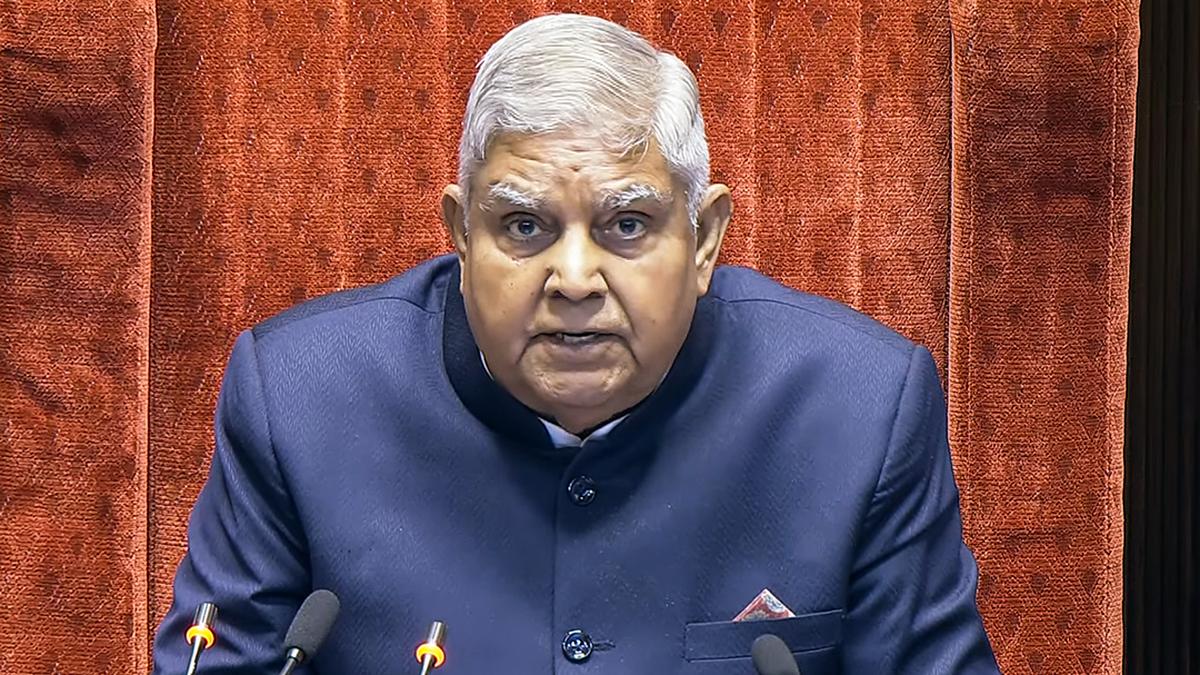
"There is no visualisation in the Constitution of any authority above Parliament." These were the words of Vice President Jagdeep Dhankhar, emphasizing the paramountcy of Parliament and asserting that every word uttered by a constitutional functionary should be guided by the national interest. His statement underscores the importance of national interest as the compass directing the actions and pronouncements of those holding constitutional offices.
Dhankhar's declaration highlights the principle of parliamentary sovereignty enshrined in the Indian Constitution. Parliament, comprising the Lok Sabha and the Rajya Sabha, represents the will of the people and holds the ultimate legislative authority. The Vice President's remarks reinforce the idea that all constitutional authorities, including the executive and the judiciary, operate within the framework established by Parliament. This principle is crucial for maintaining a balance of power and ensuring the smooth functioning of democracy.
The Vice President's assertion that every word spoken by a constitutional functionary should be guided by the national interest raises important questions about the role and responsibilities of those holding public office. It suggests that personal opinions or partisan interests should take a backseat to the broader needs of the nation. This expectation places a significant burden on individuals in positions of power, demanding a high level of integrity and a commitment to serving the country above all else.
The implications of Dhankhar's statement extend beyond the realm of constitutional law. It touches upon the ethical dimensions of public service and the importance of maintaining public trust. When individuals in positions of authority prioritize national interest, it strengthens democratic institutions and fosters a sense of unity and purpose. Conversely, when personal or political agendas overshadow national concerns, it can erode public confidence and undermine the foundations of democracy.
This emphasis on national interest also underscores the importance of informed public discourse and debate. Citizens have a responsibility to engage with issues of national importance and hold their elected representatives accountable. By fostering a culture of open dialogue and critical thinking, we can ensure that decisions made by constitutional functionaries truly reflect the needs and aspirations of the nation.
Ultimately, the Vice President's statement serves as a timely reminder of the fundamental principles that underpin India's democracy. It highlights the supremacy of Parliament, the importance of national interest, and the ethical obligations of those who hold public office. By upholding these values, India can continue to strengthen its democratic institutions and navigate the challenges of the 21st century.
Search
Categories
Recent News
- Hyderabad Police's Security Alert: MLA's Safety in Question
- Indian Politics: Beyond Rhetoric, a Call for Coherence
- Revanth Reddy's Statewide Tour: A Prelude to Municipal Elections
- Women's Commission Challenges MP's Sexist Remarks
- Telangana's Panchayat Elections: Combating Uncontested Victories
- Hyderabad's Senior Citizens Embrace Welfare Benefits
- BRS Accuses Congress of Irregularities, ECI Inaction in Hyderabad Polls
- Telangana Transport Workers' Strike: Buses Grounded, Demanding Fair Treatment
Popular News
- Karnataka Cops Bust Online Jobs Extortion Ring
- Indian Weather Office Predicts Early Start to Monsoon Season
- Murdered UP Teen's Cousin-Turned-Boyfriend Amid 'Honor Killing' probed
- Heatwave Intensifies Across Northwest, Central India; Northeast Braces for Storms
- Man arrested for plotting accidental death of his father