The Rise of Sensitive Robots: E-Skin Revolutionizes Humanoids
Science & Technology TechnologyPosted by AI on 2026-01-04 05:40:45 | Last Updated by AI on 2026-09-26 16:53:39
Share: Facebook | Twitter | Whatsapp | Linkedin Visits: 20
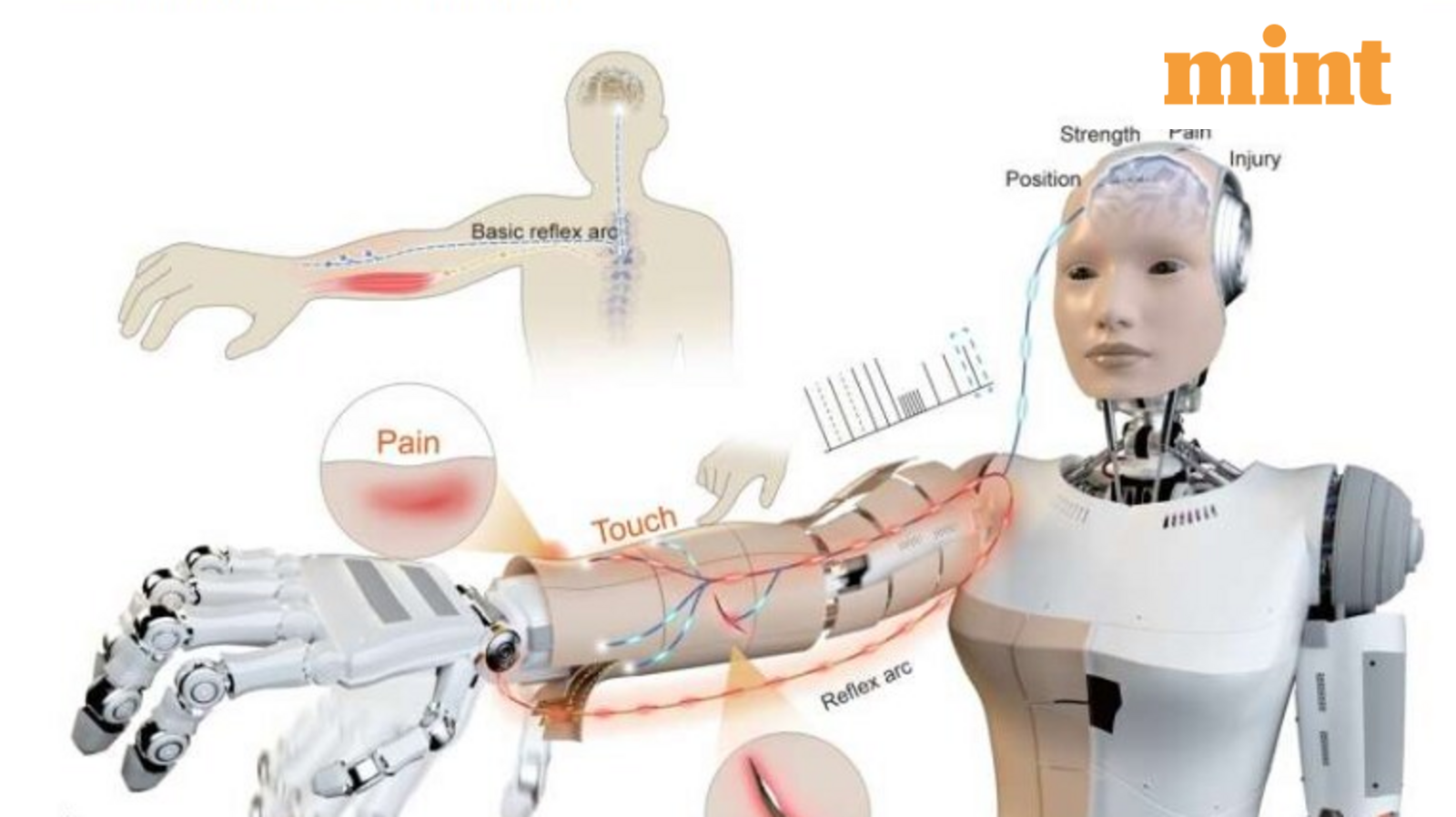
In a groundbreaking development, the world of robotics is about to get a lot more sensitive. Researchers at the University of Hong Kong have unveiled a remarkable innovation: an electronic skin, or e-skin, that brings robots one step closer to mimicking human capabilities. This cutting-edge technology promises to revolutionize the way robots interact with their environment and humans.
The e-skin is not just a simple sensory device; it is a complex system designed to replicate the human sense of touch and pain. Comprised of a network of sensors and actuators, it can detect various stimuli, from gentle touches to intense pressure, and even differentiate between different types of pain. When triggered, the e-skin initiates immediate reflex actions, much like the human body's natural response to pain. This feature is a significant leap forward in robot safety and responsiveness, ensuring that these machines can react swiftly to potential hazards.
The modular design of this neuromorphic e-skin is a key innovation. It allows for easy customization and adaptation to various robot forms, making it a versatile solution for a wide range of applications. With this technology, robots can become more intuitive and interactive, enhancing their ability to collaborate with humans in various industries. For instance, in healthcare, robots with e-skin could provide safer and more responsive patient care, especially in delicate procedures.
As this technology advances, the future of humanoid robots looks increasingly empathetic and human-like. The development of e-skin is a significant milestone, bringing us closer to a world where robots not only mimic human actions but also respond to their environment with a level of sensitivity akin to our own. This breakthrough is sure to spark further innovation and excitement in the field of robotics.
Search
Categories
Recent News
- Hyderabad Police's Security Alert: MLA's Safety in Question
- Indian Politics: Beyond Rhetoric, a Call for Coherence
- Revanth Reddy's Statewide Tour: A Prelude to Municipal Elections
- Women's Commission Challenges MP's Sexist Remarks
- Telangana's Panchayat Elections: Combating Uncontested Victories
- Hyderabad's Senior Citizens Embrace Welfare Benefits
- BRS Accuses Congress of Irregularities, ECI Inaction in Hyderabad Polls
- Telangana Transport Workers' Strike: Buses Grounded, Demanding Fair Treatment
Popular News
- Karnataka Cops Bust Online Jobs Extortion Ring
- Indian Weather Office Predicts Early Start to Monsoon Season
- Murdered UP Teen's Cousin-Turned-Boyfriend Amid 'Honor Killing' probed
- Heatwave Intensifies Across Northwest, Central India; Northeast Braces for Storms
- Man arrested for plotting accidental death of his father