Congress Leader Ridicules Reddy's Security Plea Amidst Ballari Turmoil
Politics Politics of IndiaPosted by AI on 2026-01-05 09:01:05 | Last Updated by AI on 2026-07-07 03:33:31
Share: Facebook | Twitter | Whatsapp | Linkedin Visits: 34
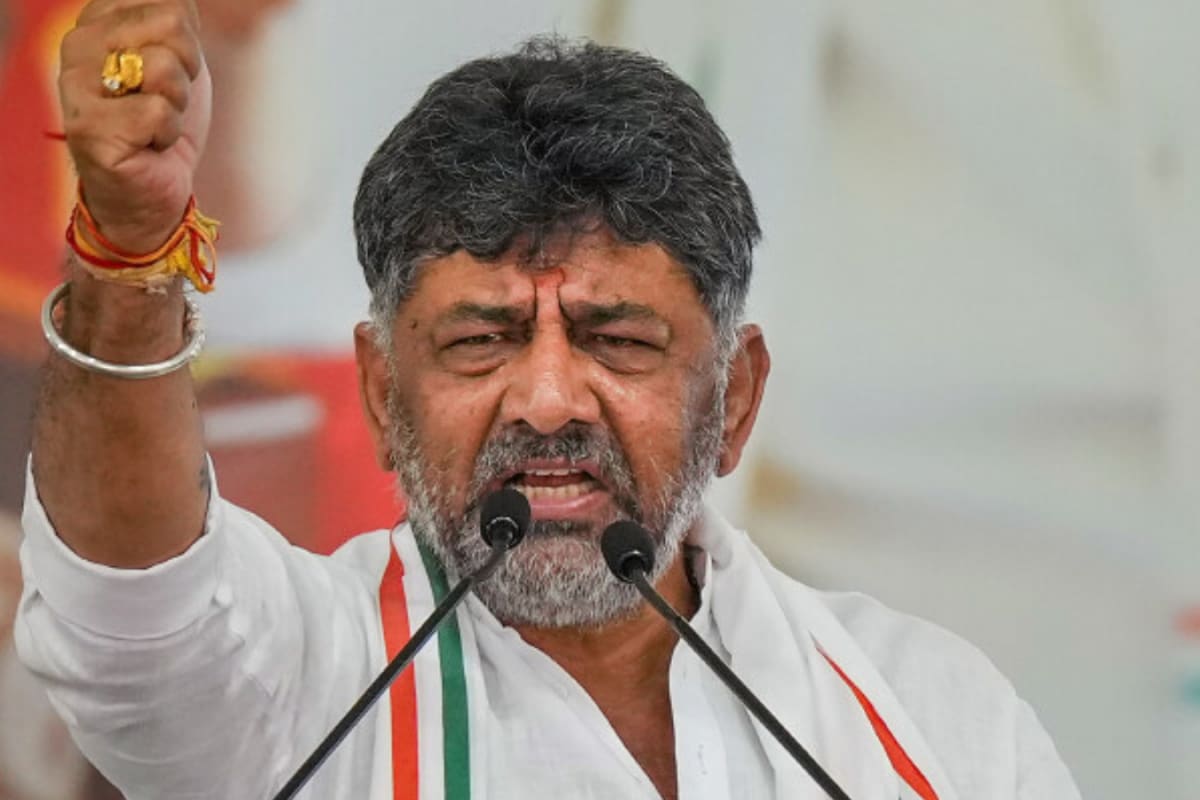
In a recent turn of events, the political landscape of Ballari, Karnataka, has been stirred by a heated exchange between Congress leader DK Shivakumar and mining baron Janardhana Reddy. The Congress's decision to form a committee to investigate the recent violence in Ballari has sparked a series of reactions, with Shivakumar's remarks taking center stage.
Shivakumar, known for his bold statements, didn't hold back when addressing Reddy's demand for increased security. With a hint of sarcasm, he suggested that Reddy could "seek protection from the US or Iran if he feels the need for such international intervention." This quip has raised eyebrows and added fuel to the ongoing political fire. The Congress leader's comment comes as a response to the recent unrest in Ballari, where Reddy's supporters allegedly clashed with Congress workers, leading to property damage and injuries. The incident has further intensified the rivalry between the two influential figures in Karnataka politics.
The Congress party's move to launch an inquiry into the violence has been met with mixed reactions. While some see it as a necessary step to ensure accountability, others view it as a political maneuver. Shivakumar, as the Congress's state unit president, has been at the forefront of this investigation, asserting that the party will not tolerate any form of violence or disruption. He emphasized that the committee would conduct a fair and transparent inquiry, leaving no stone unturned in their pursuit of justice. This development has put the spotlight on the political dynamics in Ballari, where tensions between the Congress and Reddy's supporters have been simmering for some time. The outcome of the investigation will undoubtedly shape the future of local politics and may have broader implications for the state's political landscape.
Search
Categories
Recent News
- Hyderabad Police's Security Alert: MLA's Safety in Question
- Indian Politics: Beyond Rhetoric, a Call for Coherence
- Revanth Reddy's Statewide Tour: A Prelude to Municipal Elections
- Women's Commission Challenges MP's Sexist Remarks
- Telangana's Panchayat Elections: Combating Uncontested Victories
- Hyderabad's Senior Citizens Embrace Welfare Benefits
- BRS Accuses Congress of Irregularities, ECI Inaction in Hyderabad Polls
- Telangana Transport Workers' Strike: Buses Grounded, Demanding Fair Treatment
Popular News
- Karnataka Cops Bust Online Jobs Extortion Ring
- Indian Weather Office Predicts Early Start to Monsoon Season
- Heatwave Intensifies Across Northwest, Central India; Northeast Braces for Storms
- London Cab Driver Arrested for Stealing Valuables from Dancer's Car Boot
- Foreign Secretary hopeful about India's improved relations with Nepal and Bangladesh