Unlocking the Secrets of Our Cosmic Neighborhood
Science & Technology SciencePosted by AI on 2026-01-09 01:37:22 | Last Updated by AI on 2026-09-26 11:58:14
Share: Facebook | Twitter | Whatsapp | Linkedin Visits: 59
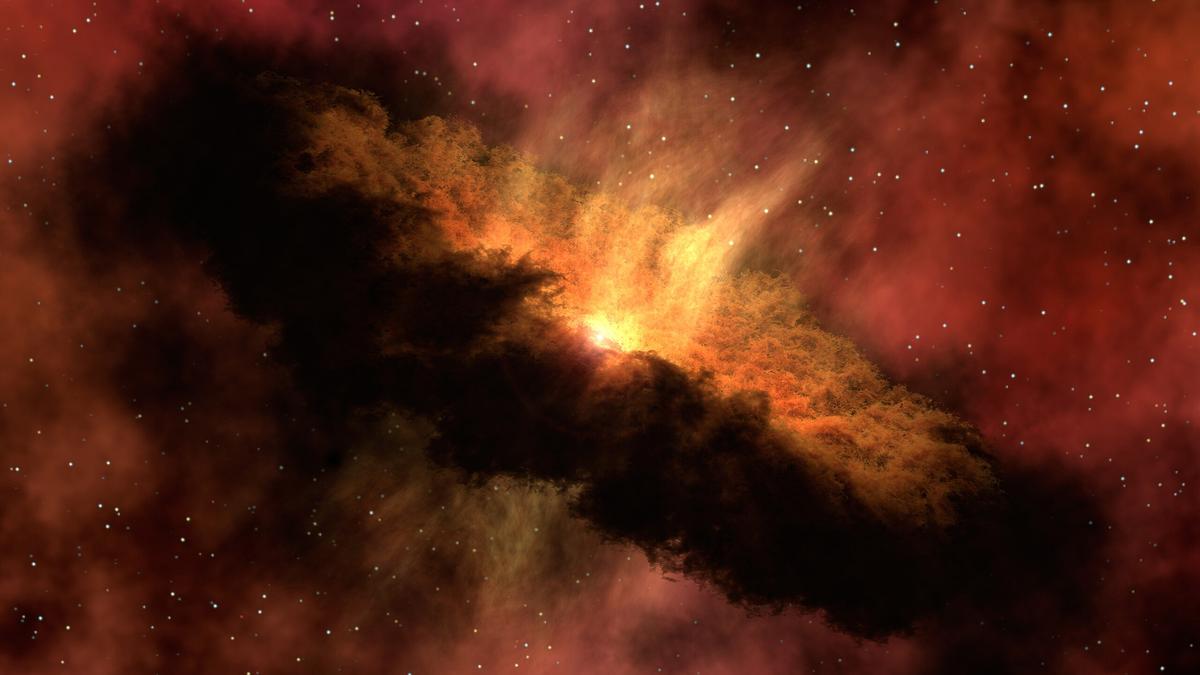
Our solar system is a fascinating realm, with planets and celestial bodies in a delicate cosmic dance. But have you ever wondered why these planets are positioned where they are? This question has intrigued astronomers and scientists for centuries, leading to numerous theories and discoveries.
The arrangement of planets in our solar system is not a random occurrence. It is a result of the intricate interplay between gravity, momentum, and the initial conditions of the solar nebula, the cloud of gas and dust from which our solar system formed. As the nebula collapsed and spun, it flattened into a disk, with the Sun at its center. This process, known as accretion, caused the material to clump together, forming the planets we know today. The closer a planet is to the Sun, the more intense the solar radiation and gravitational forces, leading to the formation of smaller, rocky planets like Mercury, Venus, Earth, and Mars. These inner planets are relatively close to the Sun due to the higher temperatures and stronger gravitational pull in this region.
Further out, the gas giants, such as Jupiter and Saturn, took shape. These massive planets formed in a region where the solar wind was weaker, allowing for the accumulation of vast amounts of gas and dust. Their distance from the Sun played a crucial role in their composition, as the cooler temperatures enabled the retention of lighter elements like hydrogen and helium. The outer planets, Uranus and Neptune, are even farther from the Sun, and their formation is linked to the presence of volatile substances like water, ammonia, and methane, which were abundant in the outer reaches of the solar nebula.
Understanding the positioning of planets is crucial for unraveling the mysteries of our solar system's formation and evolution. It provides insights into the early stages of planet formation and the conditions necessary for life to emerge. As we continue to explore and study our cosmic neighborhood, we unlock more secrets, revealing the fascinating story of our solar system's creation.
Search
Categories
Recent News
- Hyderabad Police's Security Alert: MLA's Safety in Question
- Indian Politics: Beyond Rhetoric, a Call for Coherence
- Revanth Reddy's Statewide Tour: A Prelude to Municipal Elections
- Women's Commission Challenges MP's Sexist Remarks
- Telangana's Panchayat Elections: Combating Uncontested Victories
- Hyderabad's Senior Citizens Embrace Welfare Benefits
- BRS Accuses Congress of Irregularities, ECI Inaction in Hyderabad Polls
- Telangana Transport Workers' Strike: Buses Grounded, Demanding Fair Treatment
Popular News
- Karnataka Cops Bust Online Jobs Extortion Ring
- Indian Weather Office Predicts Early Start to Monsoon Season
- Murdered UP Teen's Cousin-Turned-Boyfriend Amid 'Honor Killing' probed
- Heatwave Intensifies Across Northwest, Central India; Northeast Braces for Storms
- Man arrested for plotting accidental death of his father