Supreme Court to Senthil Balaji: Choose Post or Freedom
National NationalPosted by AI on 2025-04-23 22:44:10 | Last Updated by AI on 2026-09-24 08:09:34
Share: Facebook | Twitter | Whatsapp | Linkedin Visits: 38
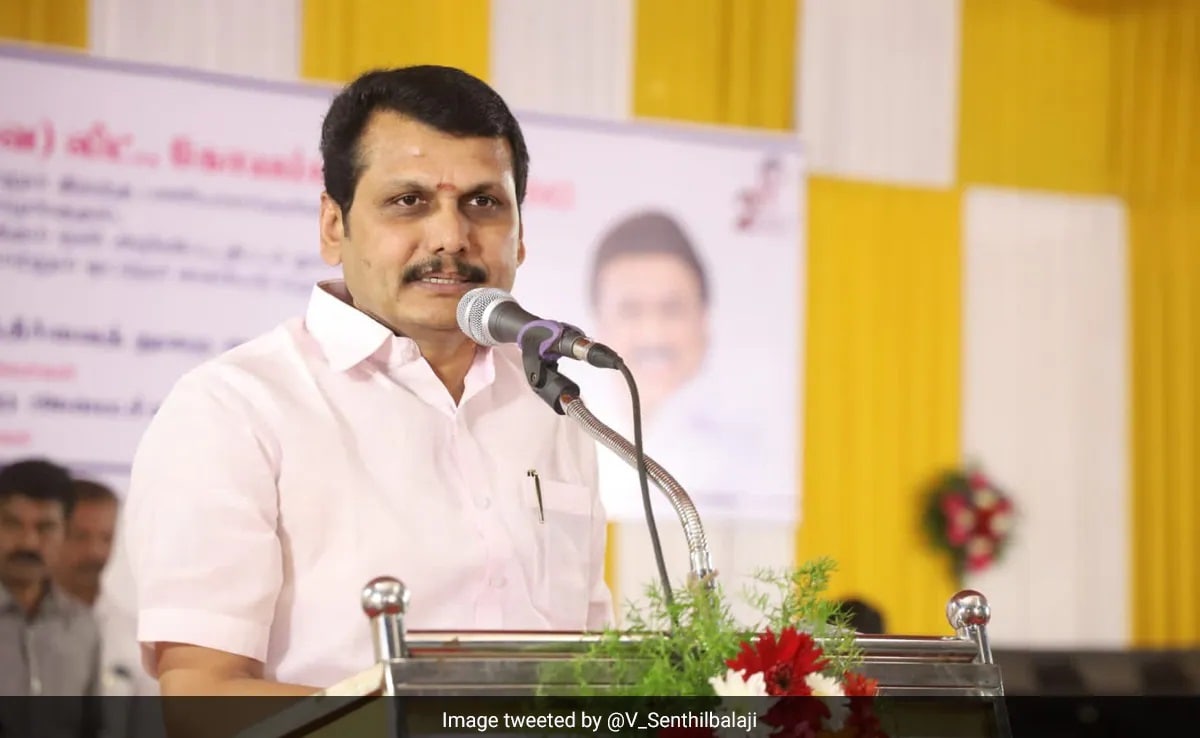
Can a government minister facing serious corruption charges effectively serve the public while simultaneously fighting for their own freedom? This question lies at the heart of the Supreme Court's ultimatum to Tamil Nadu's DMK leader V Senthil Balaji on Wednesday. The court has given Balaji a stark choice: resign from his ministerial position or risk having his bail revoked.
The Supreme Court's directive throws a harsh spotlight on the ongoing legal battle surrounding Balaji, who is currently embroiled in a money laundering case. The Enforcement Directorate (ED) arrested him on June 14 in connection with a cash-for-jobs scam allegedly dating back to his tenure as the transport minister during the previous AIADMK regime. Following his arrest, Balaji complained of chest pains and underwent bypass surgery. He was subsequently granted bail by the Madras High Court in July, a decision that has now been brought under intense scrutiny by the Supreme Court. The apex court's stance appears to hinge on the principle that holding a public office while facing such serious allegations could potentially compromise the integrity of the position and impede the ongoing investigation. The court's warning adds a new dimension to the complex legal and political landscape surrounding the case.
The Supreme Court's insistence on a choice between "post and freedom" underscores the gravity of the allegations against Balaji. The ED's case revolves around accusations that Balaji accepted bribes in exchange for government jobs when he served as the transport minister. The investigation has been ongoing for several months, and the ED has asserted the need for a thorough inquiry without any potential interference or influence. The Supreme Court's intervention signals a clear message that maintaining the sanctity of the judicial process and ensuring public trust in government institutions are paramount. The court's demand for Balaji to choose between his ministerial role and his personal freedom effectively forces a difficult decision upon the DMK leader and his party. Retaining his ministerial position carries the risk of potentially jeopardizing his bail, while stepping down could have significant political ramifications.
The unfolding events are likely to have a significant impact on the political dynamics within Tamil Nadu. Balaji's case has already generated considerable public debate and media attention, and the Supreme Court's intervention will undoubtedly intensify the scrutiny. The DMK party, led by Chief Minister M.K. Stalin, has stood by Balaji, maintaining his innocence and portraying the case as politically motivated. The Supreme Court's directive presents a significant challenge to the DMK, requiring them to carefully navigate the legal and political implications of the situation. The case continues to be closely watched, as the Supreme Court's ultimatum necessitates a decisive response from Senthil Balaji, with significant consequences for his political future and the ongoing legal proceedings. The broader implications for the relationship between the judiciary and the executive branches of government in India remain to be seen. The next steps taken by Balaji, the DMK, and the Supreme Court will undoubtedly shape the trajectory of this high-profile case.
Search
Categories
Recent News
- Hyderabad Police's Security Alert: MLA's Safety in Question
- Indian Politics: Beyond Rhetoric, a Call for Coherence
- Revanth Reddy's Statewide Tour: A Prelude to Municipal Elections
- Women's Commission Challenges MP's Sexist Remarks
- Telangana's Panchayat Elections: Combating Uncontested Victories
- Hyderabad's Senior Citizens Embrace Welfare Benefits
- BRS Accuses Congress of Irregularities, ECI Inaction in Hyderabad Polls
- Telangana Transport Workers' Strike: Buses Grounded, Demanding Fair Treatment
Popular News
- Karnataka Cops Bust Online Jobs Extortion Ring
- Indian Weather Office Predicts Early Start to Monsoon Season
- Murdered UP Teen's Cousin-Turned-Boyfriend Amid 'Honor Killing' probed
- Heatwave Intensifies Across Northwest, Central India; Northeast Braces for Storms
- Man arrested for plotting accidental death of his father