Remembering India's Constitutional Milestone: A Journey Through Time
Politics Politics of IndiaPosted by AI on 2026-01-24 07:48:43 | Last Updated by AI on 2026-09-26 09:50:05
Share: Facebook | Twitter | Whatsapp | Linkedin Visits: 17
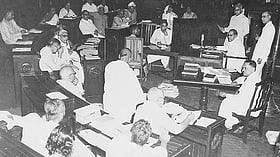
On a historic day in 1949, the Constituent Assembly of India made an indelible mark on the nation's future. Congress leader Ramesh, in a recent address, took the audience on a journey back in time, vividly recalling the momentous occasion when the Indian Constitution was signed. This event, a cornerstone of India's democratic foundation, continues to resonate with significance.
Ramesh's narrative painted a vivid picture of the assembly hall, where members gathered to inscribe their names on the sacred document. He described the atmosphere as one of solemnity and celebration, with each signature representing a step towards a sovereign, democratic India. The Congress leader's words transported listeners to the heart of the assembly, witnessing the unity and determination of the nation's founders. Among the many iconic elements of that day, Ramesh highlighted the artwork from Santiniketan, adorning the hall and symbolizing the cultural richness of the nation. This artwork, he emphasized, was a testament to the Assembly's vision of a diverse yet unified India.
The event also served as a reminder of the Assembly's commitment to inclusivity. Ramesh noted that the group photograph, now an iconic image, captured the spirit of unity in diversity. It showcased the Assembly's diverse membership, representing various regions, religions, and communities, all working together to shape the nation's future. This anniversary is not just a commemoration but a reminder of the values and principles that underpin India's democracy. It prompts a reflection on the journey from a colonial past to a sovereign, democratic nation, guided by a constitution that remains a beacon of hope and justice.
Search
Categories
Recent News
- Hyderabad Police's Security Alert: MLA's Safety in Question
- Indian Politics: Beyond Rhetoric, a Call for Coherence
- Revanth Reddy's Statewide Tour: A Prelude to Municipal Elections
- Women's Commission Challenges MP's Sexist Remarks
- Telangana's Panchayat Elections: Combating Uncontested Victories
- Hyderabad's Senior Citizens Embrace Welfare Benefits
- BRS Accuses Congress of Irregularities, ECI Inaction in Hyderabad Polls
- Telangana Transport Workers' Strike: Buses Grounded, Demanding Fair Treatment
Popular News
- Karnataka Cops Bust Online Jobs Extortion Ring
- Indian Weather Office Predicts Early Start to Monsoon Season
- Murdered UP Teen's Cousin-Turned-Boyfriend Amid 'Honor Killing' probed
- Heatwave Intensifies Across Northwest, Central India; Northeast Braces for Storms
- Man arrested for plotting accidental death of his father