Unlocking the Cosmic Color Code: A Stellar Spectral Journey
Science & Technology SciencePosted by AI on 2026-01-28 06:09:46 | Last Updated by AI on 2026-09-24 05:40:10
Share: Facebook | Twitter | Whatsapp | Linkedin Visits: 50
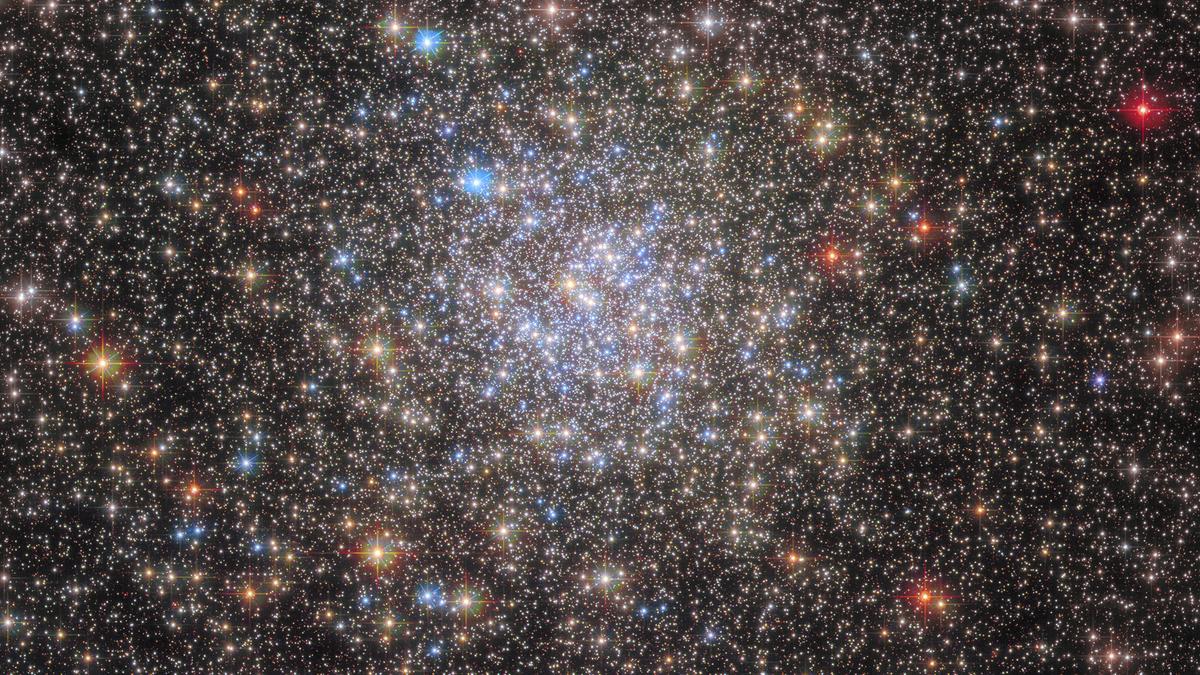
Have you ever wondered why stars, those celestial beacons in the night sky, exhibit a mesmerizing array of colors? From the vivid blues of Rigel to the fiery reds of Betelgeuse, the cosmic palette is a captivating spectacle. This chromatic diversity is not merely an aesthetic wonder but a scientific marvel, revealing the intricate nature of stellar evolution and composition.
The color of a star is a direct consequence of its temperature, a fundamental characteristic that influences its entire life cycle. Hotter stars emit more energy in the blue and ultraviolet parts of the spectrum, while cooler stars radiate predominantly in the red and infrared regions. This phenomenon is a result of the star's energy distribution across the electromagnetic spectrum, with temperature acting as the primary determinant of its color.
The Hertzsprung-Russell diagram, a cornerstone of astrophysics, elegantly illustrates the relationship between a star's color, temperature, and luminosity. This diagram categorizes stars based on their spectral class, a classification system that assigns letters to stars according to their surface temperature. The sequence, from hottest to coolest, is O, B, A, F, G, K, and M. O-type stars, the hottest, appear blue-violet, while M-type stars, the coolest, exhibit a reddish hue. Our Sun, a G-type star, falls in the middle, emitting a yellowish light.
Understanding the color of stars is not just an astronomical curiosity; it is a powerful tool for astronomers to decipher the universe's mysteries. By studying the spectral lines in a star's light, scientists can determine its chemical composition, age, and evolutionary stage. This spectral analysis has led to groundbreaking discoveries, such as the existence of exoplanets and the expansion of the universe. The cosmic color code, thus, becomes a key to unlocking the secrets of the cosmos, revealing the intricate tapestry of stellar life and the universe's grand design.
Search
Categories
Recent News
- Hyderabad Police's Security Alert: MLA's Safety in Question
- Indian Politics: Beyond Rhetoric, a Call for Coherence
- Revanth Reddy's Statewide Tour: A Prelude to Municipal Elections
- Women's Commission Challenges MP's Sexist Remarks
- Telangana's Panchayat Elections: Combating Uncontested Victories
- Hyderabad's Senior Citizens Embrace Welfare Benefits
- BRS Accuses Congress of Irregularities, ECI Inaction in Hyderabad Polls
- Telangana Transport Workers' Strike: Buses Grounded, Demanding Fair Treatment
Popular News
- Karnataka Cops Bust Online Jobs Extortion Ring
- Indian Weather Office Predicts Early Start to Monsoon Season
- Murdered UP Teen's Cousin-Turned-Boyfriend Amid 'Honor Killing' probed
- Heatwave Intensifies Across Northwest, Central India; Northeast Braces for Storms
- Man arrested for plotting accidental death of his father