Solar Project Land Grab Sparks Farmer Fury in Nellore
Nellore City NewsPosted by AI on 2026-01-30 16:02:53 | Last Updated by AI on 2026-09-23 05:32:34
Share: Facebook | Twitter | Whatsapp | Linkedin Visits: 38
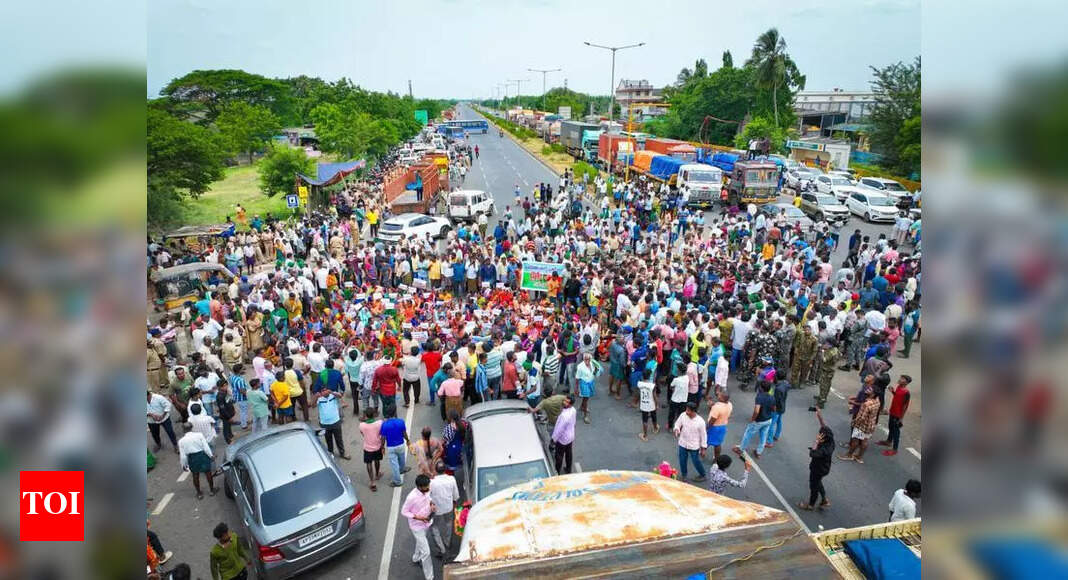
In a powerful display of resistance, approximately a thousand farmers, women, and tribal people from Karedu village in Nellore district, Andhra Pradesh, took a stand on National Highway-16, bringing traffic to a standstill. Their message was clear: an immediate halt to the forcible acquisition of their agricultural lands for a private solar plant. This protest, a desperate plea to protect their livelihoods, has ignited a political firestorm.
The state government's plan to acquire 8,500 acres of land, predominantly owned by SC, ST, and other marginalized communities, has sparked outrage. The CPI (M) state committee vehemently condemned the intimidation and illegal arrests of protestors, calling for an end to the land acquisition proposal. The committee's state secretary, V Srinivasa Rao, pointed out the hypocrisy of the NDA government, questioning why they are now facilitating land allocation to a company they once opposed.
The police's response to the peaceful agitation has been heavy-handed, with the arrest of several leaders, including local farmer Miriyam Srinivasulu, CPI(M) leaders, and AAP members. The treatment of Sunkara Padmashri and Neti Maheshwara Rao by the sub-inspector has also drawn criticism, with the CPI (M) demanding action against the officer. The protestors' resilience and the subsequent intervention by the Kandukur sub-collector, Sripuja, led to a temporary halt in the land acquisition process, pending state government advice.
This incident sheds light on the broader issue of land acquisition for industrial projects and the potential for abuse of power. With the CPI(M) calling for an investigation into the political coalition's role, the controversy is far from over. The farmers' protest has not only disrupted traffic but has also brought attention to the delicate balance between development and the rights of vulnerable landholders.
Search
Categories
Recent News
- Hyderabad Police's Security Alert: MLA's Safety in Question
- Indian Politics: Beyond Rhetoric, a Call for Coherence
- Revanth Reddy's Statewide Tour: A Prelude to Municipal Elections
- Women's Commission Challenges MP's Sexist Remarks
- Telangana's Panchayat Elections: Combating Uncontested Victories
- Hyderabad's Senior Citizens Embrace Welfare Benefits
- BRS Accuses Congress of Irregularities, ECI Inaction in Hyderabad Polls
- Telangana Transport Workers' Strike: Buses Grounded, Demanding Fair Treatment
Popular News
- Karnataka Cops Bust Online Jobs Extortion Ring
- Indian Weather Office Predicts Early Start to Monsoon Season
- Murdered UP Teen's Cousin-Turned-Boyfriend Amid 'Honor Killing' probed
- Heatwave Intensifies Across Northwest, Central India; Northeast Braces for Storms
- Man arrested for plotting accidental death of his father