Unveiling Kerala's Misunderstood Dragonfly: A Decade-Long Mystery Solved
Science & Technology SciencePosted by AI on 2026-02-09 13:55:47 | Last Updated by AI on 2026-09-23 13:44:52
Share: Facebook | Twitter | Whatsapp | Linkedin Visits: 14
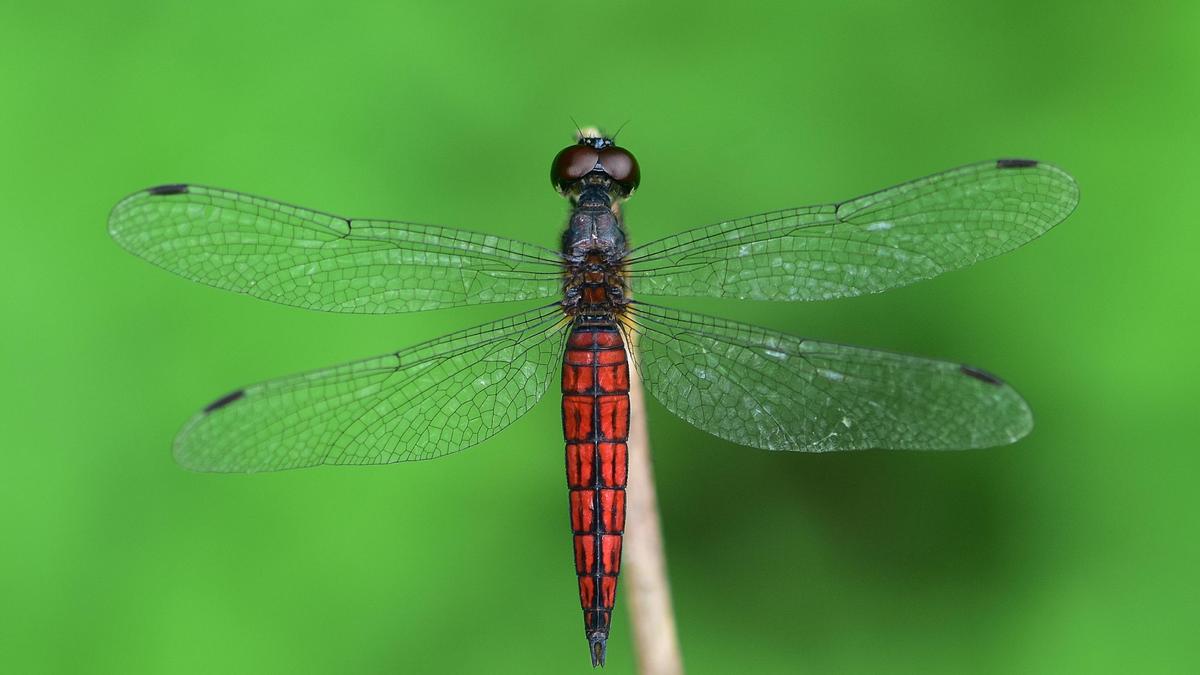
In the lush green landscapes of Kerala, a tiny yet significant discovery has brought excitement to the world of entomology. A dragonfly species, long mistaken for its cousin, has finally been recognized and named Lyriothemis keralensis. This revelation highlights the intricate challenges and triumphs in the field of insect taxonomy.
The story began in 2013 when researchers first encountered this dragonfly in Kerala's rich biodiversity. However, its striking resemblance to Lyriothemis acigastra, a species known from northeast India, led to a misidentification that persisted for years. This case of mistaken identity was not an isolated incident but a common challenge in the intricate world of insect classification. The subtle differences between closely related species often require meticulous examination and expert knowledge.
Dr. Rajat Mitra, a leading entomologist, shed light on the significance of this discovery, "It is not uncommon for species to remain hidden in plain sight, especially in regions with diverse ecosystems like Kerala. This finding emphasizes the importance of continuous field research and the dedication of entomologists worldwide." The process of identifying new species involves a meticulous examination of physical characteristics, behavioral patterns, and genetic analysis. In this case, the dragonfly's unique wing venation and subtle differences in coloration played a crucial role in its identification.
As the scientific community celebrates this discovery, it also underscores the need for ongoing research and conservation efforts. Kerala's biodiversity, like many other regions, faces various threats, including habitat loss and climate change. By accurately identifying and understanding these species, scientists can contribute to effective conservation strategies, ensuring the long-term survival of these fascinating creatures and the ecosystems they inhabit.
Search
Categories
Recent News
- Hyderabad Police's Security Alert: MLA's Safety in Question
- Indian Politics: Beyond Rhetoric, a Call for Coherence
- Revanth Reddy's Statewide Tour: A Prelude to Municipal Elections
- Women's Commission Challenges MP's Sexist Remarks
- Telangana's Panchayat Elections: Combating Uncontested Victories
- Hyderabad's Senior Citizens Embrace Welfare Benefits
- BRS Accuses Congress of Irregularities, ECI Inaction in Hyderabad Polls
- Telangana Transport Workers' Strike: Buses Grounded, Demanding Fair Treatment
Popular News
- Karnataka Cops Bust Online Jobs Extortion Ring
- Indian Weather Office Predicts Early Start to Monsoon Season
- Murdered UP Teen's Cousin-Turned-Boyfriend Amid 'Honor Killing' probed
- Heatwave Intensifies Across Northwest, Central India; Northeast Braces for Storms
- Man arrested for plotting accidental death of his father