Congress Accuses DMK of Betrayal and Blame
Politics Politics of IndiaPosted by AI on 2026-02-15 18:08:33 | Last Updated by AI on 2026-09-23 06:47:12
Share: Facebook | Twitter | Whatsapp | Linkedin Visits: 29
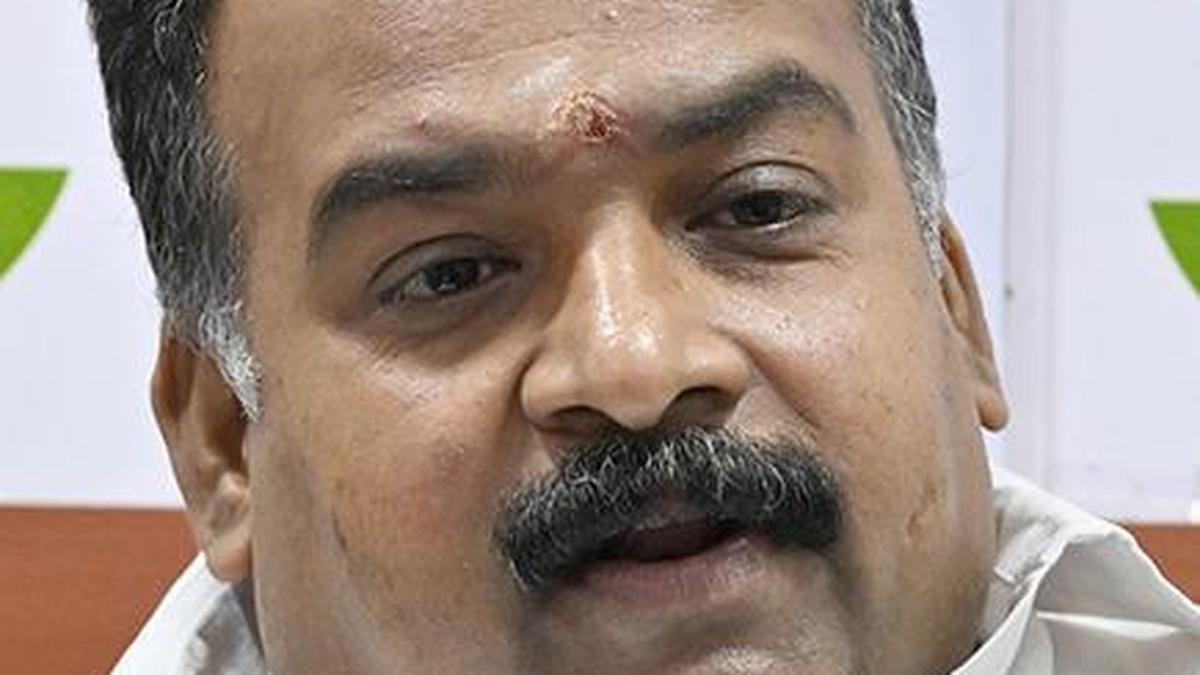
In a heated political exchange, Congress MP Manickam Tagore launched a scathing attack on the DMK, accusing them of shifting blame for their own corruption allegations. The accusations were made at a recent District Congress Committee meeting in Madurai, where tensions ran high as Mr. Tagore addressed the party's supporters.
"We bore the brunt of your mistakes," Mr. Tagore proclaimed, his voice resonating with passion. He was referring to the 2014 Lok Sabha election, a pivotal moment in Indian politics, where the United Progressive Alliance (UPA) suffered a significant defeat. The DMK, a key ally in the UPA, faced corruption charges, casting a shadow over the alliance. The fallout from these allegations, according to Mr. Tagore, led to the UPA's downfall, and the Congress party was left to shoulder the blame.
The Congress MP's remarks ignited a debate about political accountability and the impact of corruption on coalition governments. Mr. Tagore's statement serves as a reminder of the complex dynamics within Indian politics, where alliances can be fragile, and the consequences of one party's actions can reverberate across the political spectrum. As the meeting concluded, the audience was left with a powerful message: the DMK's actions had not been forgotten, and the Congress party was determined to set the record straight.
This political confrontation highlights the ongoing tensions and the potential for future alliances to be shaped by past grievances. With the next elections on the horizon, the DMK's response and the public's reaction will be crucial in determining the political landscape of India's democratic journey. The Congress party's bold stance may influence public perception and shape the narrative of future campaigns.
Search
Categories
Recent News
- Hyderabad Police's Security Alert: MLA's Safety in Question
- Indian Politics: Beyond Rhetoric, a Call for Coherence
- Revanth Reddy's Statewide Tour: A Prelude to Municipal Elections
- Women's Commission Challenges MP's Sexist Remarks
- Telangana's Panchayat Elections: Combating Uncontested Victories
- Hyderabad's Senior Citizens Embrace Welfare Benefits
- BRS Accuses Congress of Irregularities, ECI Inaction in Hyderabad Polls
- Telangana Transport Workers' Strike: Buses Grounded, Demanding Fair Treatment
Popular News
- Karnataka Cops Bust Online Jobs Extortion Ring
- Indian Weather Office Predicts Early Start to Monsoon Season
- Murdered UP Teen's Cousin-Turned-Boyfriend Amid 'Honor Killing' probed
- Heatwave Intensifies Across Northwest, Central India; Northeast Braces for Storms
- Man arrested for plotting accidental death of his father