Supreme Court Seeks Mosque Panel's Response in Sambhal Well Dispute
National NationalPosted by AI on 2025-04-29 22:18:45 | Last Updated by AI on 2026-09-26 00:15:53
Share: Facebook | Twitter | Whatsapp | Linkedin Visits: 36
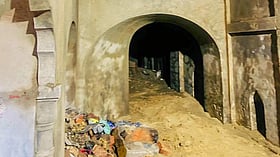
Where does a centuries-old well end and a place of worship begin? This question lies at the heart of a property dispute surrounding the Shahi Jama Masjid in Sambhal, Uttar Pradesh, now under scrutiny by the Supreme Court of India. A recent status report submitted to the court asserts that the disputed well is "totally outside" the mosque's premises, prompting the court to seek a response from the mosque's management committee.
The Shahi Jama Masjid, a Mughal-era structure, stands as a testament to a bygone era. Its historical significance adds another layer of complexity to the ongoing legal battle. The disputed well, located near the mosque, has become the focal point of contention, with its ownership and historical context being fiercely debated. The status report, the details of which have not been fully disclosed publicly, contends that the well is entirely separate from the mosque, potentially impacting claims of ownership and usage rights. The Supreme Court's intervention underscores the gravity of the situation, indicating a need for clarity and resolution. The court's request for a response from the mosque's management committee signals a commitment to due process and a balanced consideration of all perspectives.
The committee's response will be a crucial piece of the puzzle. Their arguments, supported by historical evidence and legal precedents, will be weighed against the claims made in the status report. The Supreme Court will then have the challenging task of deciphering the historical record and applying the relevant legal frameworks to arrive at a just verdict. This case highlights the complexities that often arise when historical claims intersect with contemporary legal disputes. The delicate balance between preserving historical heritage and upholding property rights requires careful consideration, especially when dealing with structures as culturally significant as the Shahi Jama Masjid.
The implications of the Supreme Courts eventual decision extend beyond the immediate parties involved. The ruling could set a precedent for similar disputes across India, impacting the management and preservation of historical sites. It could also influence how communities interact with their shared heritage, emphasizing the importance of accurate historical records and clear legal frameworks. The case serves as a reminder of the ongoing dialogue between the past and the present, and how the courts play a crucial role in navigating these complex interactions. As the mosque committee prepares its response, the nation awaits the Supreme Courts decision, hoping for a resolution that respects both historical significance and the rule of law.
Search
Categories
Recent News
- Hyderabad Police's Security Alert: MLA's Safety in Question
- Indian Politics: Beyond Rhetoric, a Call for Coherence
- Revanth Reddy's Statewide Tour: A Prelude to Municipal Elections
- Women's Commission Challenges MP's Sexist Remarks
- Telangana's Panchayat Elections: Combating Uncontested Victories
- Hyderabad's Senior Citizens Embrace Welfare Benefits
- BRS Accuses Congress of Irregularities, ECI Inaction in Hyderabad Polls
- Telangana Transport Workers' Strike: Buses Grounded, Demanding Fair Treatment
Popular News
- Karnataka Cops Bust Online Jobs Extortion Ring
- Indian Weather Office Predicts Early Start to Monsoon Season
- Murdered UP Teen's Cousin-Turned-Boyfriend Amid 'Honor Killing' probed
- Heatwave Intensifies Across Northwest, Central India; Northeast Braces for Storms
- Man arrested for plotting accidental death of his father