Supreme Court to Bar Council: Leave Academics to Experts
National NationalPosted by AI on 2025-04-29 22:22:53 | Last Updated by AI on 2026-09-26 01:08:05
Share: Facebook | Twitter | Whatsapp | Linkedin Visits: 38
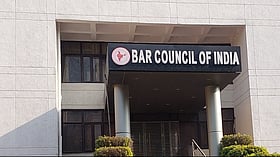
"Why interfere in academic affairs?" The Supreme Court of India posed this pointed question to the Bar Council of India (BCI) during a recent hearing, challenging the council's controversial 2021 decision to discontinue the one-year LLM program in India and derecognize foreign LLM degrees. This decision sent ripples of concern through the legal education landscape, impacting aspiring legal professionals across the country. The court's sharp rebuke signals a potential turning point in the ongoing legal battle.
The courtroom was abuzz with anticipation as the bench addressed the pleas challenging the BCI's authority in making such sweeping changes. The petitioners argued that the BCI had overstepped its mandate by venturing into academic matters, a domain best left to experts and academic institutions. The BCI's 2021 decision effectively invalidated one-year LLM programs offered by Indian universities, simultaneously casting a shadow of uncertainty over the validity of LLM degrees obtained from foreign institutions. This created significant confusion and apprehension among students who had invested time and resources in pursuing these qualifications. The core issue revolves around the BCI's justification for its decision. The council argued that it aimed to standardize legal education and maintain quality control. However, the petitioners contended that the BCI lacked the necessary expertise to dictate academic curriculum and standards. They emphasized that universities and academic bodies are better equipped to make informed decisions about program structures and content. The courtroom exchanges highlighted the fundamental disagreement between the two sides regarding the BCI's jurisdiction and the potential ramifications of its actions on legal education in India.
The Supreme Court's intervention offers a glimmer of hope for those impacted by the BCI's decision. The justices' questioning of the BCI's authority suggests a critical examination of the council's role in academic matters. The court's stance could potentially lead to a reversal of the 2021 decision, restoring the validity of one-year LLM programs and foreign LLM degrees. The outcome of this case will have far-reaching consequences for legal education in India. It will define the boundaries of the BCI's powers and determine the future of postgraduate legal studies. A decision in favor of the petitioners could reaffirm the autonomy of academic institutions in shaping curriculum and standards, while a ruling in favor of the BCI could consolidate its control over legal education. The case continues, with the legal community eagerly awaiting the Supreme Court's final verdict. The decision will not only impact individual students and institutions but will also shape the direction of legal education and the legal profession in India for years to come.
Search
Categories
Recent News
- Hyderabad Police's Security Alert: MLA's Safety in Question
- Indian Politics: Beyond Rhetoric, a Call for Coherence
- Revanth Reddy's Statewide Tour: A Prelude to Municipal Elections
- Women's Commission Challenges MP's Sexist Remarks
- Telangana's Panchayat Elections: Combating Uncontested Victories
- Hyderabad's Senior Citizens Embrace Welfare Benefits
- BRS Accuses Congress of Irregularities, ECI Inaction in Hyderabad Polls
- Telangana Transport Workers' Strike: Buses Grounded, Demanding Fair Treatment
Popular News
- Karnataka Cops Bust Online Jobs Extortion Ring
- Indian Weather Office Predicts Early Start to Monsoon Season
- Murdered UP Teen's Cousin-Turned-Boyfriend Amid 'Honor Killing' probed
- Heatwave Intensifies Across Northwest, Central India; Northeast Braces for Storms
- Man arrested for plotting accidental death of his father