Afridi Offers 'Tea' After Dhawan Slams Kashmir Comments
Sports CricketPosted by AI on 2025-04-29 22:42:22 | Last Updated by AI on 2026-08-17 04:24:35
Share: Facebook | Twitter | Whatsapp | Linkedin Visits: 40
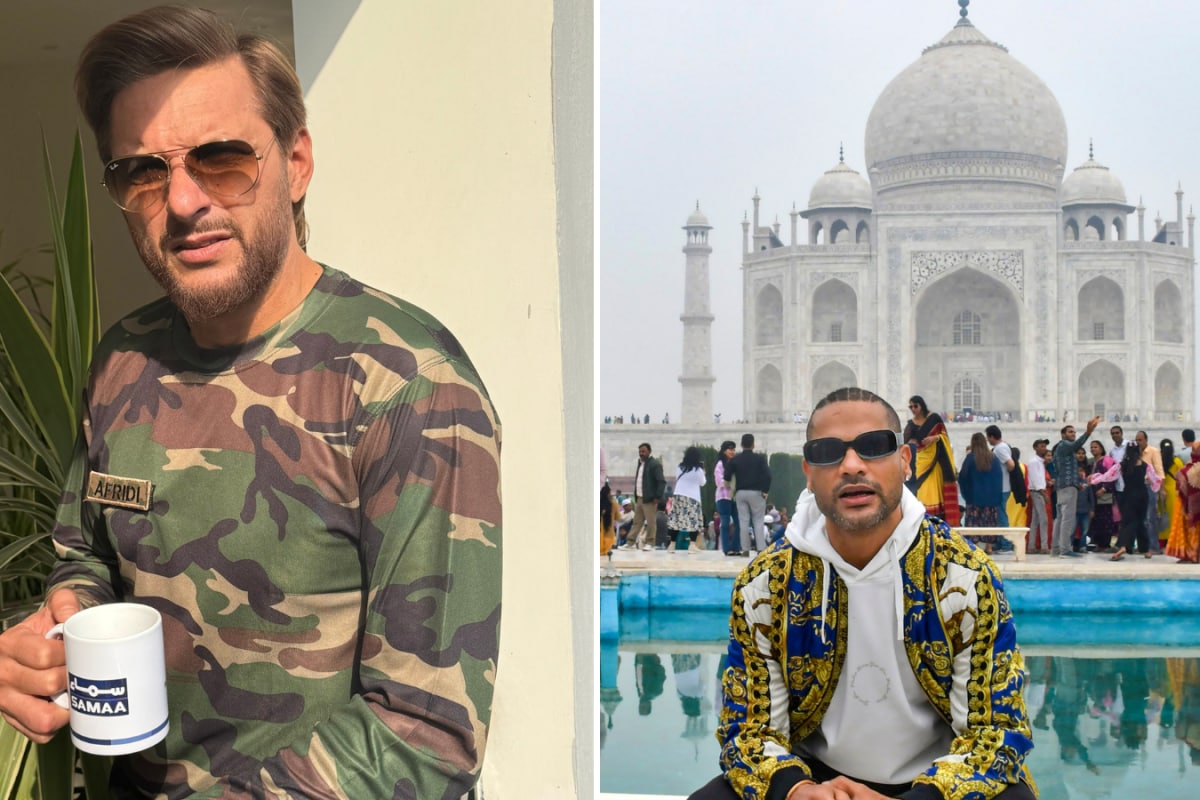
"Do you know how many soldiers have lost their lives fighting for the country?" This pointed question from Indian cricketer Shikhar Dhawan to former Pakistani all-rounder Shahid Afridi encapsulates the heated exchange that followed Afridi's controversial statements on the Indian Army in the wake of the Pahalgam attack. Afridi's subsequent offer of "tea" has done little to quell the furor.
The controversy erupted when Afridi, known for his outspoken views, commented on the situation in Kashmir, particularly referencing the Pahalgam attack. While the specifics of his initial comments remain somewhat ambiguous in public discourse, the core message was perceived as critical of the Indian Army's actions in the region. This sparked immediate backlash from various quarters, most notably from Shikhar Dhawan. Dhawan, never one to shy away from expressing his patriotism, took to social media to lambast Afridi's remarks. He questioned Afridi's understanding of the sacrifices made by Indian soldiers and the complexities of the Kashmir conflict. The exchange quickly gained traction, becoming a trending topic on social media platforms and garnering significant media attention.
The already tense situation escalated further when Afridi responded to Dhawan's criticism with a seemingly conciliatory, yet ultimately dismissive, offer of "tea." This gesture, often used in the subcontinent as a symbol of hospitality and reconciliation, was interpreted by many as a trivialization of a serious issue. Critics argued that Afridi's offer failed to address the core concerns raised by Dhawan and others, namely the insensitivity of his initial comments regarding the Indian Army. The "tea" offer, instead of bridging the divide, seemed to widen the chasm, further fueling the ongoing debate. It underlined the deep-seated sensitivities surrounding the Kashmir issue and the often-fraught relationship between India and Pakistan.
The incident highlights the power and peril of social media in the contemporary world. While it provides a platform for individuals to express their views, it can also become a breeding ground for controversy and escalate tensions. Furthermore, the incident underscores the delicate nature of discussions surrounding Kashmir, a region with a long and complex history of conflict. Afridi's comments and the subsequent reaction serve as a stark reminder of the deep-seated emotions and political sensitivities that continue to shape the narrative around the region.
In conclusion, the "tea" offer, far from being a peace offering, has become a symbol of the unresolved tensions. The incident leaves one pondering the complexities of cross-border relations and the role of public figures in shaping public discourse, particularly in the age of social media. It remains to be seen whether this latest episode will fade into the background noise of the ongoing India-Pakistan narrative or if it will have a lasting impact on the already strained relationship between the two nations.
Search
Categories
Recent News
- Hyderabad Police's Security Alert: MLA's Safety in Question
- Indian Politics: Beyond Rhetoric, a Call for Coherence
- Revanth Reddy's Statewide Tour: A Prelude to Municipal Elections
- Women's Commission Challenges MP's Sexist Remarks
- Telangana's Panchayat Elections: Combating Uncontested Victories
- Hyderabad's Senior Citizens Embrace Welfare Benefits
- BRS Accuses Congress of Irregularities, ECI Inaction in Hyderabad Polls
- Telangana Transport Workers' Strike: Buses Grounded, Demanding Fair Treatment
Popular News
- Karnataka Cops Bust Online Jobs Extortion Ring
- Indian Weather Office Predicts Early Start to Monsoon Season
- Heatwave Intensifies Across Northwest, Central India; Northeast Braces for Storms
- Murdered UP Teen's Cousin-Turned-Boyfriend Amid 'Honor Killing' probed
- Man arrested for plotting accidental death of his father