Siddaramaiah: Mann Ki Baat Monologue, Debate Democracy's Hallmark
National NationalPosted by AI on 2025-05-01 00:25:45 | Last Updated by AI on 2026-09-26 01:07:12
Share: Facebook | Twitter | Whatsapp | Linkedin Visits: 34
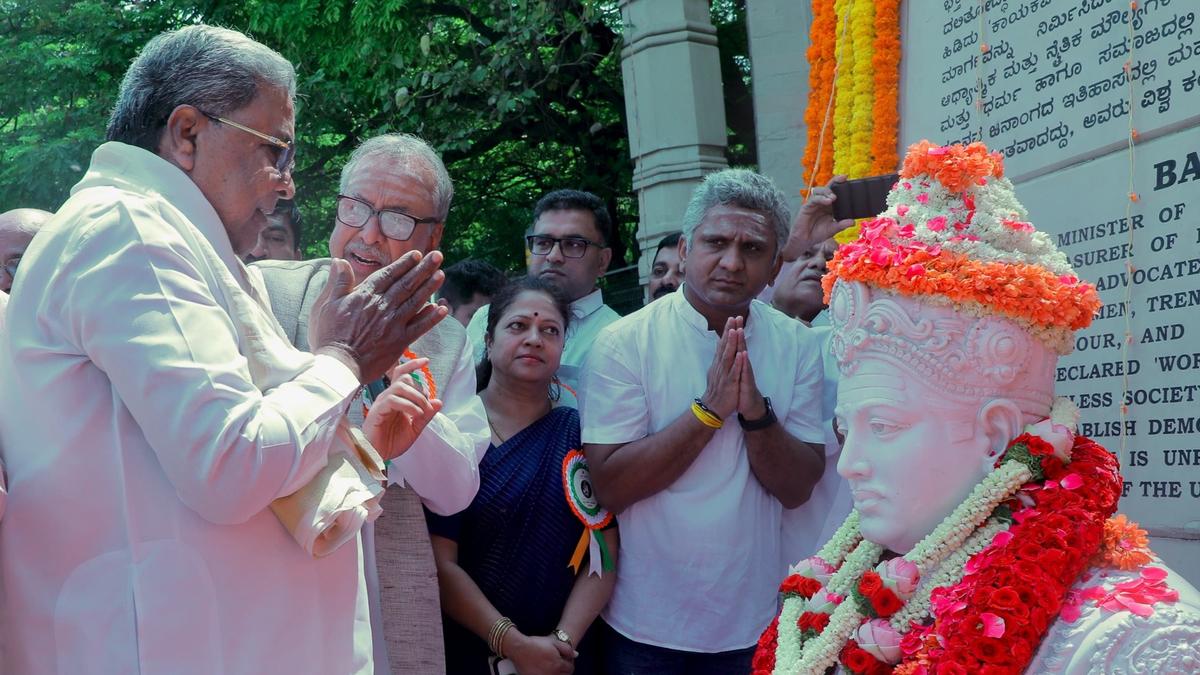
"Debate is the defining character of democracy," declared Karnataka Chief Minister Siddaramaiah at a Basava Jayanti celebration, drawing a sharp contrast with Prime Minister Narendra Modi's monthly radio address, Mann Ki Baat, which he characterized as a one-way street. The Chief Minister's remarks, delivered amidst the vibrant festivities commemorating the 12th-century social reformer Basaveshwara, sparked a discussion about the nature of public discourse in India's democratic landscape. Siddaramaiah's presence at the event underscored the importance of Basaveshwara's teachings, particularly his emphasis on social justice and equality, within the state's cultural fabric.
The Basava Jayanti celebration, steeped in tradition and reverence, served as a platform for the Chief Minister to engage with the community and address their concerns. He affirmed his government's commitment to considering various demands aimed at promoting and spreading the Sharana ideology, the philosophical underpinnings of Basaveshwara's social reforms. This ideology, centered on principles of egalitarianism and spiritual unity, continues to resonate deeply within Karnataka and beyond. The Chief Minister's acknowledgment of these demands signifies the continuing relevance of Basaveshwara's teachings in contemporary society. He reiterated the government's dedication to fostering an inclusive society that reflects the core values of the Sharana movement.
Siddaramaiah's critique of Mann Ki Baat as a monologue, devoid of the back-and-forth exchange inherent in a true dialogue, highlighted a key difference in approaches to public communication. While acknowledging the reach and popularity of the Prime Minister's radio address, the Chief Minister emphasized the crucial role of debate and discussion in a healthy democracy. He argued that a robust exchange of ideas, where diverse perspectives are not only heard but actively engaged with, is essential for informed decision-making and genuine progress. This pointed commentary on the nature of public discourse in the country adds another layer to the ongoing debate about the effectiveness and inclusivity of different communication strategies.
The juxtaposition of these two distinct communication styles the top-down broadcast of Mann Ki Baat and the interactive, deliberative model championed by Siddaramaiah raises important questions about the future of political engagement in India. How can technology and traditional forms of communication be utilized to foster more inclusive and participatory dialogue? As India navigates the complexities of the 21st century, finding the right balance between disseminating information and facilitating meaningful conversation will be crucial for strengthening democratic values and ensuring that all voices are heard.
The Chief Minister's remarks, delivered against the backdrop of Basaveshwara's teachings of social harmony and equality, serve as a potent reminder of the importance of open dialogue and inclusive governance in a vibrant democracy. By linking the principles of the Sharana movement with the need for robust public debate, Siddaramaiah offered a powerful vision for a more just and equitable society, one where every voice contributes to the ongoing conversation about India's future.
Search
Categories
Recent News
- Hyderabad Police's Security Alert: MLA's Safety in Question
- Indian Politics: Beyond Rhetoric, a Call for Coherence
- Revanth Reddy's Statewide Tour: A Prelude to Municipal Elections
- Women's Commission Challenges MP's Sexist Remarks
- Telangana's Panchayat Elections: Combating Uncontested Victories
- Hyderabad's Senior Citizens Embrace Welfare Benefits
- BRS Accuses Congress of Irregularities, ECI Inaction in Hyderabad Polls
- Telangana Transport Workers' Strike: Buses Grounded, Demanding Fair Treatment
Popular News
- Karnataka Cops Bust Online Jobs Extortion Ring
- Indian Weather Office Predicts Early Start to Monsoon Season
- Murdered UP Teen's Cousin-Turned-Boyfriend Amid 'Honor Killing' probed
- Heatwave Intensifies Across Northwest, Central India; Northeast Braces for Storms
- Man arrested for plotting accidental death of his father