Free Food vs. Development: Supreme Court Questions Poverty Approach
National NationalPosted by AI on 2025-05-01 00:35:53 | Last Updated by AI on 2026-09-26 02:02:14
Share: Facebook | Twitter | Whatsapp | Linkedin Visits: 37
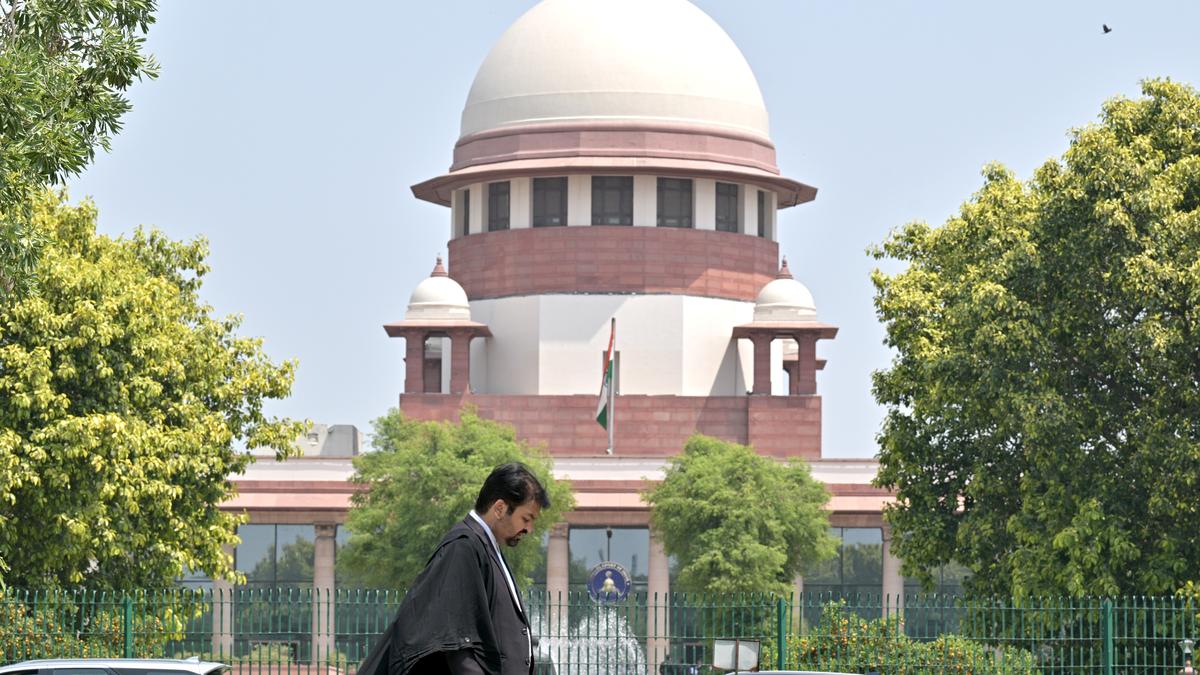
"Is the nation still grappling with the same poverty levels as a decade ago?" This pointed question from the Supreme Court bench underscored a critical debate during a recent hearing on food security petitions. The court acknowledged the ease with which states can procure and distribute free rations from the central government, but questioned whether this approach truly addresses the root causes of poverty. The justices emphasized the importance of parallel efforts in employment generation and infrastructure development, hinting at a need for a more holistic strategy beyond just food distribution.
The hearing delved into the complexities of food security, examining the current system where states receive rations from the central government and distribute them freely to eligible citizens. While acknowledging the crucial role of such programs in alleviating immediate hunger, the court expressed concern over the long-term implications and the burden on taxpayers. The justices probed the effectiveness of these programs in genuinely uplifting people from poverty, suggesting that simply providing free food may not be a sustainable solution. They highlighted the 2011 Census as a benchmark, questioning whether any significant progress has been made in reducing poverty levels since then. This prompted a discussion on the need for updated poverty data to accurately assess the impact of existing welfare programs.
The court's focus shifted to the significance of employment generation and infrastructure development as crucial elements in combating poverty. The justices argued that providing sustainable livelihood opportunities and investing in essential infrastructure are equally, if not more, important than distributing free rations. They underscored the need for a multi-pronged approach, emphasizing that true progress requires a combination of immediate relief measures and long-term development initiatives. The discussions also touched upon the financial implications of these free food programs, with the court acknowledging the strain on the national exchequer and the ultimate burden falling on taxpayers.
The hearing highlighted a fundamental question: Is providing free food sufficient to eradicate poverty, or does it merely address the symptoms while neglecting the underlying disease? The Supreme Courts emphasis on employment generation and infrastructure development suggests a push for a more comprehensive approach to poverty alleviation, one that moves beyond mere subsistence and focuses on empowering individuals to become self-reliant. The courts observations underscore the need for a thorough reassessment of existing welfare programs and a renewed focus on sustainable development initiatives. The next steps likely involve a more detailed examination of the government's poverty alleviation strategies, perhaps prompting a fresh debate on the most effective way to address this complex issue.
Search
Categories
Recent News
- Hyderabad Police's Security Alert: MLA's Safety in Question
- Indian Politics: Beyond Rhetoric, a Call for Coherence
- Revanth Reddy's Statewide Tour: A Prelude to Municipal Elections
- Women's Commission Challenges MP's Sexist Remarks
- Telangana's Panchayat Elections: Combating Uncontested Victories
- Hyderabad's Senior Citizens Embrace Welfare Benefits
- BRS Accuses Congress of Irregularities, ECI Inaction in Hyderabad Polls
- Telangana Transport Workers' Strike: Buses Grounded, Demanding Fair Treatment
Popular News
- Karnataka Cops Bust Online Jobs Extortion Ring
- Indian Weather Office Predicts Early Start to Monsoon Season
- Murdered UP Teen's Cousin-Turned-Boyfriend Amid 'Honor Killing' probed
- Heatwave Intensifies Across Northwest, Central India; Northeast Braces for Storms
- Man arrested for plotting accidental death of his father