Supreme Court Reinforces Limited Judicial Review of Arbitral Awards
National NationalPosted by AI on 2025-05-01 00:37:18 | Last Updated by AI on 2026-09-26 02:02:11
Share: Facebook | Twitter | Whatsapp | Linkedin Visits: 36
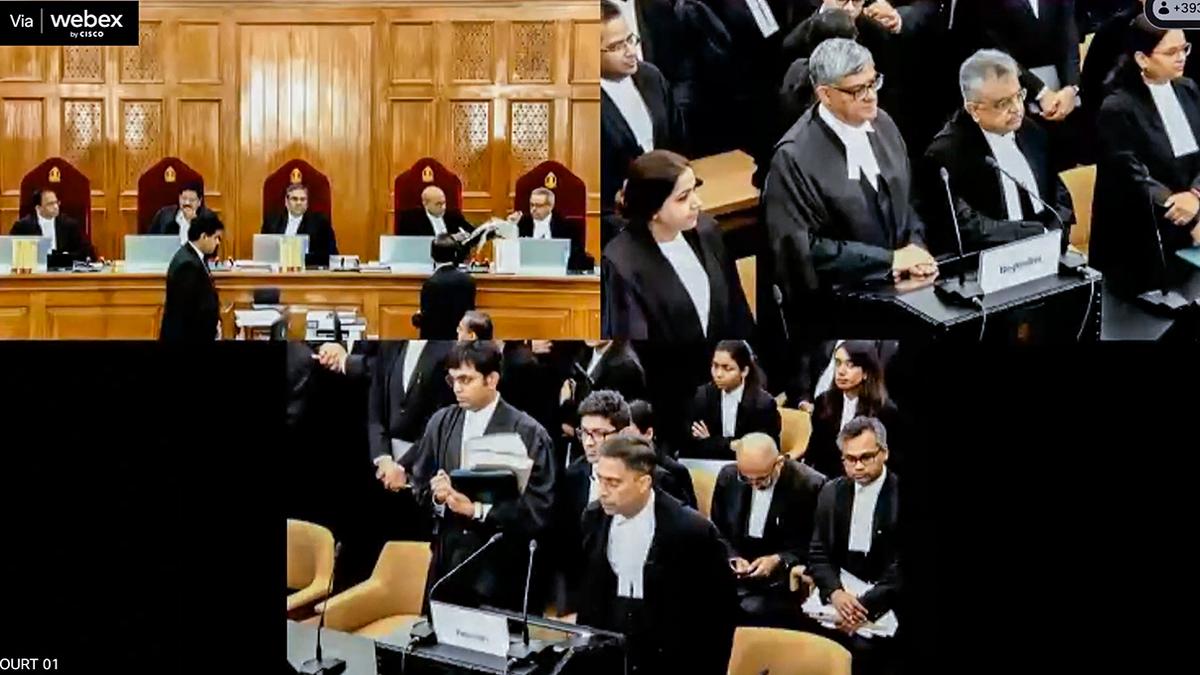
How much power should courts have to intervene in arbitration, a process designed for speed and finality? The Supreme Court of India recently tackled this question, reaffirming the limited scope of judicial intervention in arbitral awards, even in cases of "patent illegality." This decision, stemming from a dispute between the South Eastern Railway and a contractor, has significant implications for the future of arbitration in India.
The case revolved around a contractual dispute between the South Eastern Railway and a private contractor. Disagreements arose, leading to arbitration proceedings. The arbitrator's award was subsequently challenged in court, sparking a legal battle that eventually reached the Supreme Court. The central issue was the interpretation of Section 34 of the Arbitration and Conciliation Act, 1996, which outlines the grounds for setting aside an arbitral award.
The Supreme Court upheld the principle that courts should not interfere with arbitral awards merely because they disagree with the arbitrator's interpretation of the law or facts. Intervention is justified only under specific circumstances, primarily when the award violates the fundamental policy of Indian law or is contrary to "justice or morality." The Court emphasized that "patent illegality" as a ground for setting aside an award must be interpreted narrowly. An award can be deemed patently illegal only if it is based on an interpretation of the law so flawed that no reasonable person could have arrived at such a conclusion.
The Court clarified that an error in applying the law or appreciating evidence does not automatically constitute "patent illegality." The error must be so egregious that it shocks the conscience of the court and undermines the basic principles of justice. This cautious approach underscores the Court's respect for the autonomy of the arbitral process and its desire to minimize judicial interference. The decision reinforces the idea that arbitration should be a final and binding method of dispute resolution, offering a quicker and less cumbersome alternative to traditional litigation.
This ruling has significant implications for businesses operating in India. It provides greater certainty and predictability to the arbitration process, making it a more attractive option for resolving commercial disputes. By limiting judicial intervention, the Supreme Court has strengthened the integrity and efficiency of arbitration, encouraging parties to trust in the process and abide by the arbitrator's decisions. This move also aligns with India's efforts to promote a pro-arbitration environment and attract foreign investment.
The decision highlights the delicate balance between ensuring the fairness of arbitral awards and respecting the finality of the process. It underscores the Supreme Court's commitment to fostering a robust arbitration framework in India, one that encourages efficient dispute resolution and minimizes the burden on the already overloaded judicial system. This landmark judgment is likely to shape the landscape of arbitration in India for years to come, providing much-needed clarity and stability to businesses engaged in commercial contracts.
Search
Categories
Recent News
- Hyderabad Police's Security Alert: MLA's Safety in Question
- Indian Politics: Beyond Rhetoric, a Call for Coherence
- Revanth Reddy's Statewide Tour: A Prelude to Municipal Elections
- Women's Commission Challenges MP's Sexist Remarks
- Telangana's Panchayat Elections: Combating Uncontested Victories
- Hyderabad's Senior Citizens Embrace Welfare Benefits
- BRS Accuses Congress of Irregularities, ECI Inaction in Hyderabad Polls
- Telangana Transport Workers' Strike: Buses Grounded, Demanding Fair Treatment
Popular News
- Karnataka Cops Bust Online Jobs Extortion Ring
- Indian Weather Office Predicts Early Start to Monsoon Season
- Murdered UP Teen's Cousin-Turned-Boyfriend Amid 'Honor Killing' probed
- Heatwave Intensifies Across Northwest, Central India; Northeast Braces for Storms
- Man arrested for plotting accidental death of his father