India Accuses Pakistan of Using Civilian Planes as Shields During Drone Attacks
International International NewsPosted by NewAdmin on 2025-05-12 11:50:29 |
Share: Facebook | Twitter | Whatsapp | Linkedin Visits: 41
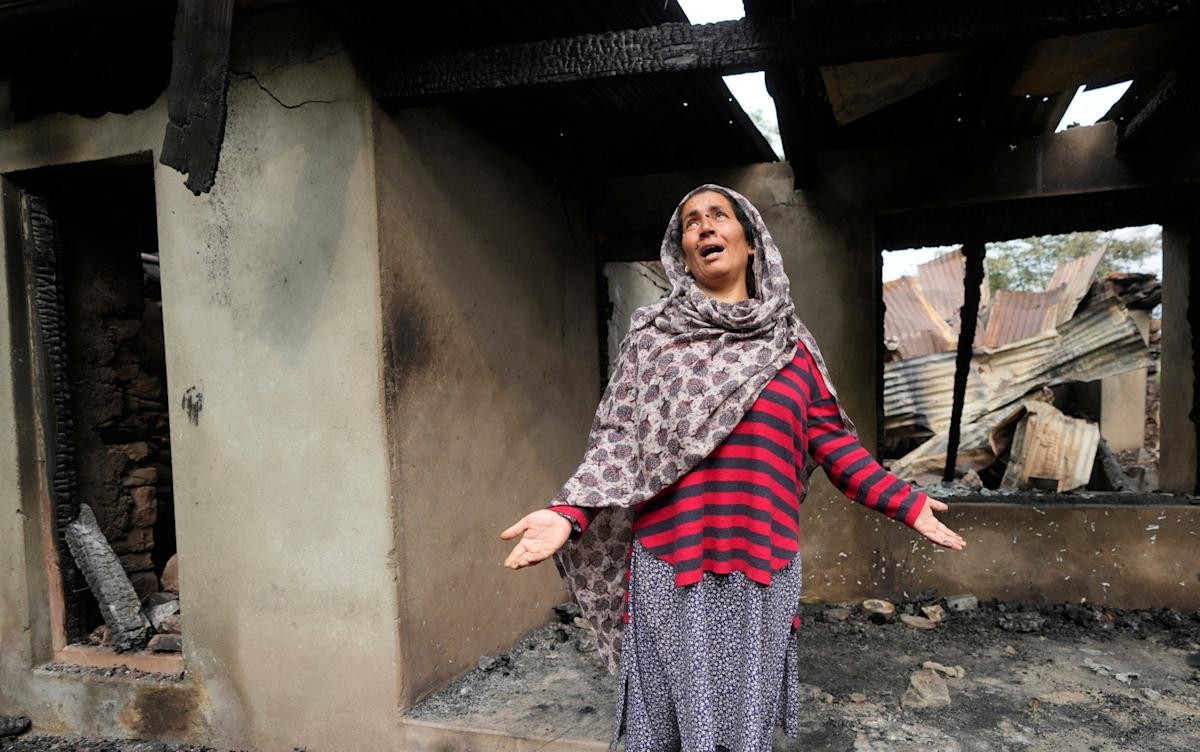
India has accused Pakistan of using civilian planes as shields during a series of drone attacks launched over three consecutive nights, targeting Indian cities, civilian infrastructure, and some military installations. According to Indian sources, on the night of May 8-9, Pakistan deployed 300 to 400 drones, many of which were of Turkish origin. The drones were spotted at multiple locations across India, from the northern Baramulla region to the southern Bhuj, along both the international border and the Line of Control (LoC). While India successfully neutralized several of these drones, including armed ones, the attacks were seen as an attempt to test India's air defense systems and gather intelligence.
India responded proportionately to these incursions by targeting four Pakistani air defense sites using its own drones, which successfully destroyed a radar system. Furthermore, Pakistan continued to carry out artillery shelling along the LoC, resulting in some losses for the Indian Army. The Board of Control for Cricket in India (BCCI) postponed the Indian Premier League by a week due to the ongoing situation, and the Confederation of Indian Industry (CII) also postponed its annual general meeting. Prime Minister Narendra Modi chaired a high-level meeting with senior defense officials to discuss the situation, while Union Finance Minister Nirmala Sitharaman instructed banks to secure digital infrastructures to protect against potential cyber attacks.
Indian officials also raised concerns about the safety of civilian airliners, as Pakistan failed to close its airspace despite the ongoing drone attacks. The Pakistani drones targeted several locations in India, including places of worship, which India condemned as an attempt to stir communal tensions. The Indian Ministry of External Affairs called these actions part of Pakistan's broader disinformation campaign, accusing Pakistan of intentionally distorting facts. In response, India emphasized that it reserved the right to protect its sovereignty and would respond accordingly to these provocations.
As tensions rise, India has been in diplomatic discussions with international leaders, including the United States, the United Kingdom, and Norway. The Indian government has also empowered the army chief to activate the Territorial Army to assist in securing critical areas. The situation remains tense, with India closely monitoring developments and preparing for further escalation.
Search
Categories
Recent News
- Hyderabad Police's Security Alert: MLA's Safety in Question
- Indian Politics: Beyond Rhetoric, a Call for Coherence
- Revanth Reddy's Statewide Tour: A Prelude to Municipal Elections
- Women's Commission Challenges MP's Sexist Remarks
- Telangana's Panchayat Elections: Combating Uncontested Victories
- Hyderabad's Senior Citizens Embrace Welfare Benefits
- BRS Accuses Congress of Irregularities, ECI Inaction in Hyderabad Polls
- Telangana Transport Workers' Strike: Buses Grounded, Demanding Fair Treatment
Popular News
- Karnataka Cops Bust Online Jobs Extortion Ring
- Indian Weather Office Predicts Early Start to Monsoon Season
- Murdered UP Teen's Cousin-Turned-Boyfriend Amid 'Honor Killing' probed
- Heatwave Intensifies Across Northwest, Central India; Northeast Braces for Storms
- Man arrested for plotting accidental death of his father