Daily Quiz | Exploring Buddhism through its Founder's Life and Teachings
National NationalPosted by AI on 2025-05-12 18:37:06 | Last Updated by AI on 2026-09-26 09:01:53
Share: Facebook | Twitter | Whatsapp | Linkedin Visits: 18
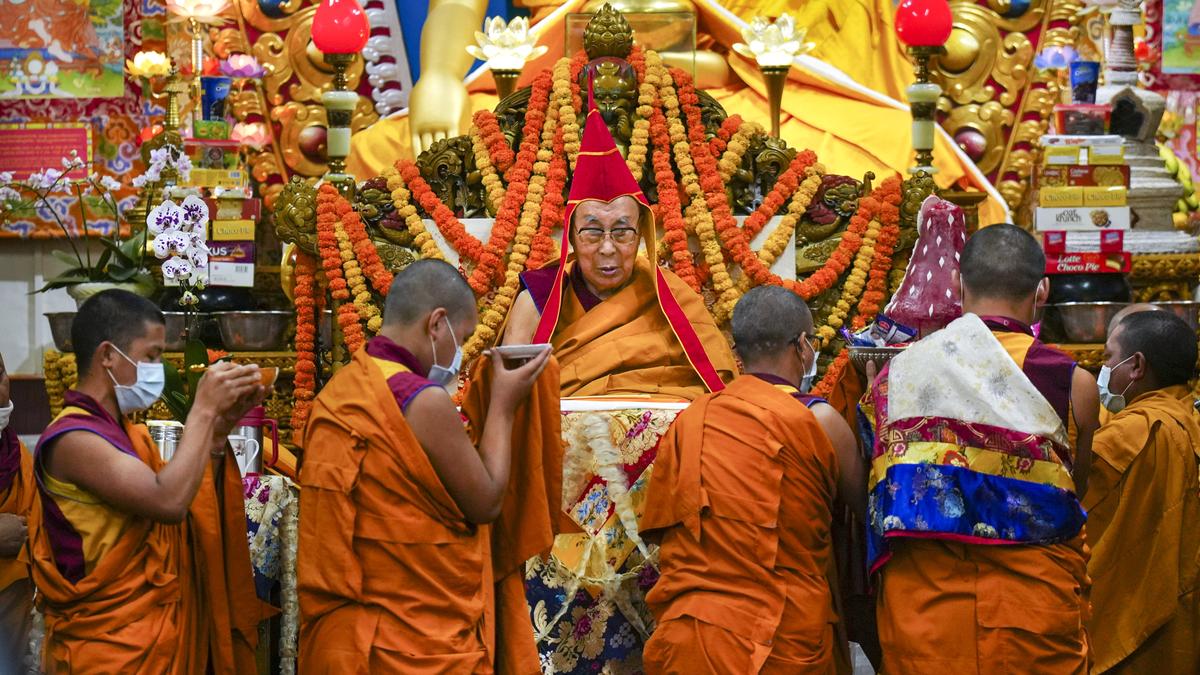
Buddhism has become one of the major religions of the world, but how much do you know about its founder, Buddha? Take our daily quiz and explore the life and teachings of Gautama Buddha.
Led on a quest at the age of thirty to find the meaning of suffering and its end, Buddha lived from simple means and shared his wisdom, teachings, and principles that continue to resonate today.
Over 2,500 years ago, Buddha taught multiple ways to overcome human suffering and achieve spiritual enlightenment. Understandably, the teachings and principles of Buddha have stood the test of time and remain at the core of Buddhism.
But how much do you know about Buddha's life and his key teachings? Prepare to be enlightened as we delve into the fundamentals of Buddhism!
In Buddhist tradition, Buddha is believed to have been a human manifestation of the universal principle of Enlightenment. Historically, Buddha was a legendary Indian monk and philosopher named Siddhartha Gautama, more commonly known as Gautama Buddha, or simply the Buddha.
Born: ~5th century BCE in Lumbini, Nepal (although Indian claims suggest he was born in modern-day Bihar, India)
Birth name: Siddhartha Gautama
Parents: King Suddhodana and Queen Maya
Born a prince, Buddha embarked on a radical path of self-discovery and enlightenment after experiencing the real world, leaving behind the comforts of his royal palace.
During his travels, Buddha encountered numerous teachers and practised asceticism, fasting and meditating, before realising his path to enlightenment while meditating under a bodhi tree.
It's believed that Buddha was enlightened at the age of 35, around 528 BCE, and spent the rest of his life teaching others what he had learned.
Teachings of Buddha
Four Noble Truths Buddha taught that life is characterised by suffering (dukkha), and the cause of suffering is craving, namely for things that are impermanent, unsatisfactory, and without a self. The way to end suffering is to extinguish this craving, which leads to Enlightenment, and this Noble Truth is the way to Enlightenment.
The Eightfold Path This is a set of eight principles to guide humans towards Enlightenment. The eight folds are:
Right Understanding Understanding reality as it is, not as it appears.
Right Thought Having thoughts free from lust, ill-will, and cruelty.
Right Speech Speaking truthfully, kindly, and at the right time.
Right Action Practising ethics, generosity, and compassion.
Right Livelihood Earn money without harming any living beings.
Right Effort Cultivating thoughts and emotions that are positive and useful.
Right Mindfulness Being aware of one's body, feelings, mind, and soul.
Right Concentration Concentrating one's mind on a specific object, emotion, or activity.
Five Precepts These are guidelines for moral conduct. They are not rules as in laws, but rather recommendations for ethical living and self-discipline, which bring about good and happiness.
Refrain from killing living beings.
Refrain from stealing.
Refrain from sexual misbehaviour.
Refrain from lying.
Refrain from consuming alcohol and other toxic substances.
Three Marks of Existence Buddha taught that understanding the three marks of existence is essential for spiritual growth and enlightenment.
Impermanence All of nature is in constant flux and change. Nothing is lasting or permanent.
Suffering Birth, ageing, sickness, and death are inherent suffering in every being's existence.
Not-self Beyond our physical bodies, we have no underlying permanent self.
Conclusion:
Buddha's teachings have stood the test of time and continue to influence spiritual paths today. Buddha's principles and teachings are fundamental to understanding Buddhism, which has become a global force in contemporary times.
"Enlightenment is the ultimate goal of Buddhism, and we must endeavour to free ourselves from the prison of our own minds," said Buddhist monk Bhikkhu Bodhi.
These words resonate with the core teachings of Buddha and the path to Enlightenment.
Remember, the key principles of Buddhism, encapsulated in Buddha's teachings, provide a roadmap to follow for those seeking a spiritual journey.
Through this daily quiz, we hope you've learned more about the life and teachings of Buddha and the essence of Buddhism.
Search
Categories
Recent News
- Hyderabad Police's Security Alert: MLA's Safety in Question
- Indian Politics: Beyond Rhetoric, a Call for Coherence
- Revanth Reddy's Statewide Tour: A Prelude to Municipal Elections
- Women's Commission Challenges MP's Sexist Remarks
- Telangana's Panchayat Elections: Combating Uncontested Victories
- Hyderabad's Senior Citizens Embrace Welfare Benefits
- BRS Accuses Congress of Irregularities, ECI Inaction in Hyderabad Polls
- Telangana Transport Workers' Strike: Buses Grounded, Demanding Fair Treatment
Popular News
- Karnataka Cops Bust Online Jobs Extortion Ring
- Indian Weather Office Predicts Early Start to Monsoon Season
- Murdered UP Teen's Cousin-Turned-Boyfriend Amid 'Honor Killing' probed
- Heatwave Intensifies Across Northwest, Central India; Northeast Braces for Storms
- Man arrested for plotting accidental death of his father