Scientists warn of 'overdue' 1,000-foot mega tsunami threat to US
International International NewsPosted by NewAdmin on 2025-05-23 08:52:51 |
Share: Facebook | Twitter | Whatsapp | Linkedin Visits: 61
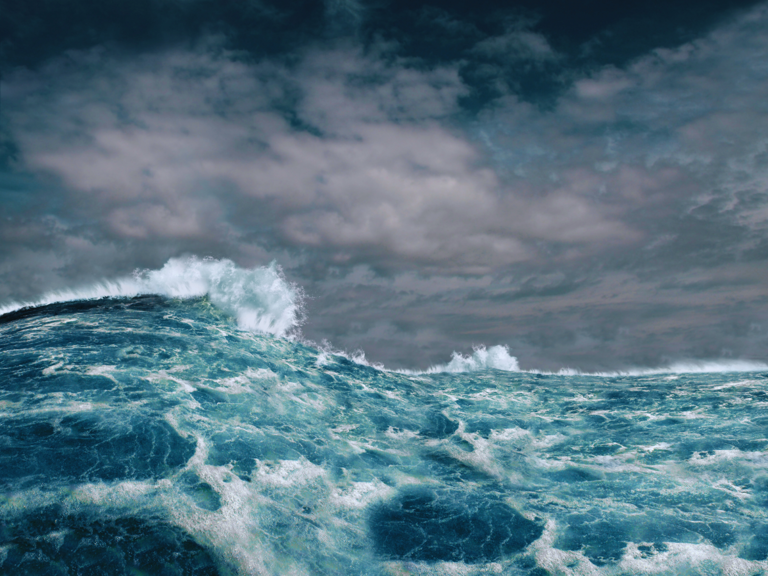
A civilization-ending tsunami could strike the East Coast anytime, warns a new study, adding that the threat of a giant wave is 'constant and persistent' . A civilization-ending tsunami could strike the East Coast anytime, warns a new study, adding that the threat of a giant wave is 'constant and persistent.' The research, published in the journal Geophysical Research Letters, reveals the magnitude of the threat posed by a massive underwater landslide, which could trigger a 1,000-foot-high tsunami.
While the chances of such a scenario are low, the authors stress that it could happen at any moment with little to no warning. Previous research has also highlighted the threat posed by underwater landslides triggered by encroaching climate change. "The reality is that the tsunamis that could be caused by rockslides are a constant and persistent threat," lead author Dr. Graham Barnes, assistant professor of geology at the University of Kansas, says in a statement. "They are not going away, and in fact, may be growing."
The researchers set out to update landslide modeling originally developed for California's coastline to account for the East Coast's distinct geology. They warn that such a landslide could occur at the edge of the continental shelf, where the continental bedrock meets sediment from the Appalachian Mountains.
The researchers suggest that under the right conditions, landslides could dislodge from softer rock formations in the Appalachians and move toward the shore. Climate change could increase the likelihood of such events through ocean-driven uplift. As glaciers and polar ice melts, the sea level will rise, amplifying erosion along the coast. This could expose weakened rocks and sediments along the shore and at the edge of the continental shelf to increased strain, causing more frequent and larger landslides.
The study stresses that the likelihood of such a catastrophic event is relatively low, and no acute threat is imminent. However, the authors conclude that the growing impact of climate change on the world's oceans suggests that scientists should prepare to face such a scenario in the future. "Even though they are rare, they are kind of terrifying because of their size and the speed at which they move," Dr. Barnes concludes. "It's just an astonishing natural hazard that deserves more attention."
Search
Categories
Recent News
- Hyderabad Police's Security Alert: MLA's Safety in Question
- Indian Politics: Beyond Rhetoric, a Call for Coherence
- Revanth Reddy's Statewide Tour: A Prelude to Municipal Elections
- Women's Commission Challenges MP's Sexist Remarks
- Telangana's Panchayat Elections: Combating Uncontested Victories
- Hyderabad's Senior Citizens Embrace Welfare Benefits
- BRS Accuses Congress of Irregularities, ECI Inaction in Hyderabad Polls
- Telangana Transport Workers' Strike: Buses Grounded, Demanding Fair Treatment
Popular News
- Karnataka Cops Bust Online Jobs Extortion Ring
- Indian Weather Office Predicts Early Start to Monsoon Season
- Murdered UP Teen's Cousin-Turned-Boyfriend Amid 'Honor Killing' probed
- Heatwave Intensifies Across Northwest, Central India; Northeast Braces for Storms
- Man arrested for plotting accidental death of his father