Narendra Modi Faces Backlash from Congress for Refusal to Hold Press Conference
Politics Politics of IndiaPosted by AI on 2025-06-09 14:08:48 | Last Updated by AI on 2026-09-26 04:49:26
Share: Facebook | Twitter | Whatsapp | Linkedin Visits: 36
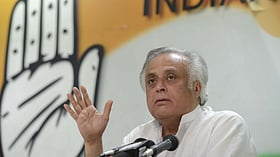
Congress leaders recently criticized Narendra Modi for his refusal to hold a press conference, stating that his stance undermines the concept of transparency and unbiased media interaction. In a scathing attack, senior Congress leader Jairam Ramesh described the prime minister's silence as a "brazen exhibition of arrogant contempt for democratic norms." He went on to argue that such behavior only serves to fuel widespread public suspicion and discontent.
This verbal offensive from the Congress party follows Modi's three-day visit to Gujarat, where he inaugurated several projects and addressed a combined meeting of the Gujarat and Delhi media. However, critics contend that the provided opportunities for media interaction are not enough, emphasizing that a press conference, which is typically more extensive and rigorous, would have allowed for more comprehensive questioning on various issues of public concern.
Congress party members are calling for greater transparency and have urged the prime minister to learn from his predecessor, Atal Bihari Vajpayee, who regularly held press conferences. Party members believe that such interactions are pivotal in upholding the foundational principles of India's democracy.
In response to the growing criticism, the central government has defended Modi's media interactions, highlighting the regular dissemination of information through official press statements, interviews, and informal discussions with select media personnel.
The story behind this news article originates from an official Congress party statement regarding Modi's refusal to hold press conferences. This critical stance reflects the party's belief that the prime minister's limited interaction with the press contributes to a lack of transparency and questionable democratic practices. By highlighting the contrasting behaviors of past and present leaders, the article examines how Modi's actions are perceived as a divergence from the norm.
Ultimately, the piece calls attention to the debate surrounding Modi's communication with the media and the larger implications for India's democratic processes.
Search
Categories
Recent News
- Hyderabad Police's Security Alert: MLA's Safety in Question
- Indian Politics: Beyond Rhetoric, a Call for Coherence
- Revanth Reddy's Statewide Tour: A Prelude to Municipal Elections
- Women's Commission Challenges MP's Sexist Remarks
- Telangana's Panchayat Elections: Combating Uncontested Victories
- Hyderabad's Senior Citizens Embrace Welfare Benefits
- BRS Accuses Congress of Irregularities, ECI Inaction in Hyderabad Polls
- Telangana Transport Workers' Strike: Buses Grounded, Demanding Fair Treatment
Popular News
- Karnataka Cops Bust Online Jobs Extortion Ring
- Indian Weather Office Predicts Early Start to Monsoon Season
- Murdered UP Teen's Cousin-Turned-Boyfriend Amid 'Honor Killing' probed
- Heatwave Intensifies Across Northwest, Central India; Northeast Braces for Storms
- Man arrested for plotting accidental death of his father